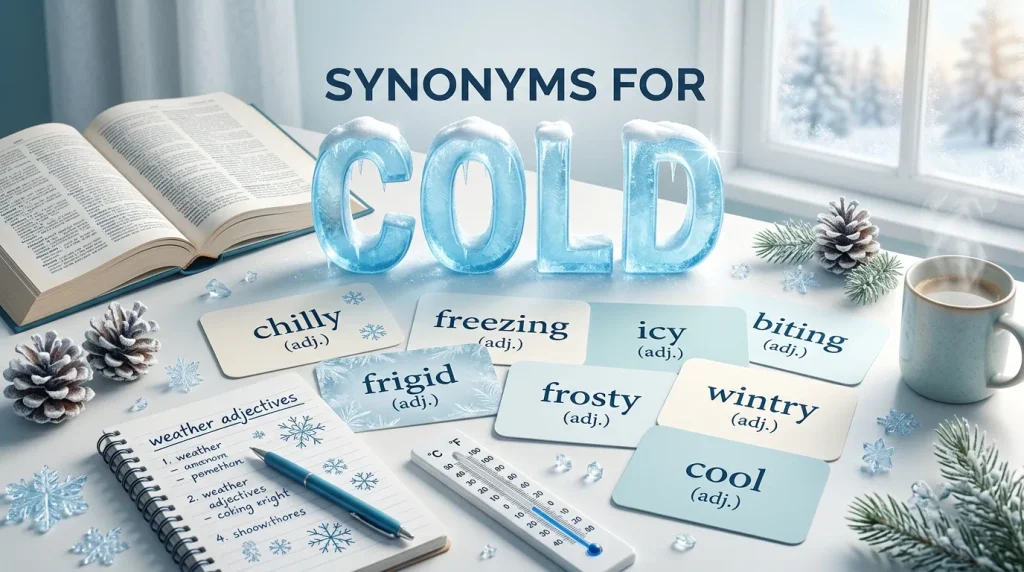
A synonym for cold is chilly, freezing, or icy. These words describe low temperatures or an unfriendly attitude. When you look up synonyms for cold, you will find choices like frosty, frigid, and wintry that fit weather, food, and feelings.
Ali woke up to a strange silence. Frost painted white flowers on his window. The weather app showed minus five, but one word could not capture the biting air outside.
He typed ‘synonyms for cold’ and found chilly, freezing, frosty, and frigid. ‘It is not just cold,’ he told his brother, ‘it is absolutely freezing today.’ His brother laughed and grabbed a thicker jacket.
Students can describe winter scenes with vivid words in essays. Bloggers can paint cozy pictures for readers. Content writers can set the perfect mood in stories. Daily English users can complain about weather with style.
“In the middle of winter I at last discovered that there was in me an invincible summer.” — Albert Camus
Knowing synonyms for cold helps you match the word to the moment. A chilly evening feels mild, while a frigid night sounds harsh.
“The coldest winter I ever spent was a summer in San Francisco.” — Mark Twain
80 Cold Synonyms
1. Chilly
- Meaning: It means slightly cold in a way that feels uncomfortable.
- Examples: The chilly wind made us shiver outside. She wore a coat this chilly morning.
2. Freezing
- Meaning: It means extremely cold, near where water turns to ice.
- Examples: It is freezing outside, so wear gloves. The freezing lake was unsafe for skating.
3. Icy
- Meaning: It means covered with ice or extremely cold to touch.
- Examples: Be careful, the icy road is slippery. An icy wind blew across the field.
4. Frosty
- Meaning: It means very cold with a thin layer of ice.
- Examples: We woke to a frosty white garden. Her frosty breath fogged the cold window.
5. Frigid
- Meaning: It means bitterly cold, almost too cold to bear outside.
- Examples: The frigid air hurt our bare faces. They swam in the frigid mountain lake.
6. Wintry
- Meaning: It describes weather typical of winter, cold and quite bleak.
- Examples: A wintry mix fell all afternoon today. The wintry sky looked grey and heavy.
7. Arctic
- Meaning: It means extremely cold, like lands near the North Pole.
- Examples: The arctic blast closed all the schools. We faced arctic winds on the hike.
8. Glacial
- Meaning: It means freezing cold, like the ice of slow glaciers.
- Examples: A glacial wind swept down the valley. The glacial lake looked deep and blue.
9. Polar
- Meaning: It describes the freezing cold found at the earth’s poles.
- Examples: Polar bears live in freezing cold lands. The long polar night lasts for months.
10. Cool
- Meaning: It means a pleasant cold, neither warm nor too chilly.
- Examples: We enjoyed the cool evening breeze together. The cool water felt nice and fresh.
11. Crisp
- Meaning: It means pleasantly cold and fresh, like clear autumn air.
- Examples: The crisp air woke us up fast. We loved the crisp autumn morning walk.
12. Brisk
- Meaning: It means cold and fresh, making you feel quite lively.
- Examples: We took a brisk walk at dawn. The brisk wind cleared the grey clouds.
13. Nippy
- Meaning: It means cold enough to sting your nose and ears.
- Examples: It turned nippy after the sun set. The nippy air made our cheeks red.
14. Bitter
- Meaning: It means painfully cold, cutting right through your warm clothes.
- Examples: The bitter cold kept everyone indoors today. We braved the bitter wind to shop.
15. Biting
- Meaning: It means so cold that it sharply stings your skin.
- Examples: A biting wind cut through my jacket. The biting cold stung our small fingers.
16. Raw
- Meaning: It means cold and damp, chilling you to the bone.
- Examples: The raw morning chilled us all deeply. A raw wind rattled the old windows.
17. Harsh
- Meaning: It means severely cold and hard for people to endure.
- Examples: The harsh winter damaged the young crops. Animals suffer in the harsh cold season.
18. Bleak
- Meaning: It means cold, gloomy, and offering little hope or comfort.
- Examples: The bleak landscape stretched for grey miles. We crossed the bleak, windswept open moor.
19. Frozen
- Meaning: It means turned completely solid to ice by extreme cold.
- Examples: The frozen pond shone in bright moonlight. We found frozen pipes in the basement.
20. Chilled
- Meaning: It means made cold, like drinks kept in a fridge.
- Examples: She served chilled juice to the guests. We drank chilled milk after the game.
21. Ice-cold
- Meaning: It means as cold as ice, extremely chilly to touch.
- Examples: He offered us ice-cold lemonade outside today. The ice-cold floor quickly woke my feet.
22. Snowy
- Meaning: It means full of snow or cold just like snow.
- Examples: The snowy hills looked soft and white. We drove very slowly on snowy roads.
23. Shivery
- Meaning: It means shaking slightly because of the cold or fear.
- Examples: The shivery child needed a warm blanket. We felt shivery in the damp cave.
24. Numb
- Meaning: It means unable to feel anything because of extreme cold.
- Examples: My numb fingers could not hold pens. His numb toes ached after the match.
25. Gelid
- Meaning: It means extremely cold, just like frozen ice or snow.
- Examples: The gelid stream flowed from the glacier. Gelid winds swept the high mountain pass.
“What good is the warmth of summer, without the cold of winter to give it sweetness.” — John Steinbeck
26. Aloof
- Meaning: It means distant and unfriendly, always avoiding any warm contact.
- Examples: The aloof manager rarely joined team lunches. She stayed aloof during the whole party.
27. Distant
- Meaning: It means emotionally far, showing little warmth or real interest.
- Examples: He grew distant after the big argument. Her distant tone worried her old friends.
28. Reserved
- Meaning: It means quiet and formal, always holding its feelings back.
- Examples: The reserved guest spoke very little tonight. He gave a reserved nod and left.
29. Standoffish
- Meaning: It means unfriendly and distant, always keeping other people away.
- Examples: The standoffish cat hid under the bed. New students found her quite standoffish today.
30. Unfriendly
- Meaning: It means not kind or welcoming toward any other people.
- Examples: The unfriendly dog barked at every guest. We got an unfriendly reply from support.
31. Heartless
- Meaning: It means cruel and completely lacking any kindness or pity.
- Examples: The heartless landlord raised rents again today. It was a heartless joke about orphans.
32. Unfeeling
- Meaning: It means showing no sympathy or care for other people.
- Examples: The unfeeling boss ignored our tired pleas. His unfeeling words hurt her very deeply.
33. Indifferent
- Meaning: It means showing no interest or any concern at all.
- Examples: He seemed indifferent to our big win. The crowd felt indifferent about the show.
34. Detached
- Meaning: It means emotionally distant and not at all personally involved.
- Examples: She gave a detached summary of events. His detached manner confused the young interns.
35. Remote
- Meaning: It means distant in manner and quite hard to approach.
- Examples: The remote host barely spoke to us. She kept a remote attitude all evening.
36. Stony
- Meaning: It means showing no emotion, just as hard as stone.
- Examples: He met us with a stony silence. Her stony face showed no real emotion.
37. Coldhearted
- Meaning: It means lacking all sympathy and feeling absolutely no pity.
- Examples: The coldhearted villain laughed at their pain. She played a coldhearted queen on stage.
38. Unwelcoming
- Meaning: It means not making any visitors feel comfortable or wanted.
- Examples: The unwelcoming lobby felt dark and empty. They gave us a cold unwelcoming stare.
39. Forbidding
- Meaning: It means looking stern and unfriendly, clearly warning people away.
- Examples: The forbidding gates stayed locked all night. A forbidding frown crossed his wrinkled face.
40. Austere
- Meaning: It means stern and strict, completely without warmth or softness.
- Examples: The austere judge showed no soft mercy. An austere silence filled the old hall.
41. Dour
- Meaning: It means gloomy and unsmiling, always with a stern face.
- Examples: The dour guard never smiled at visitors. His dour mood spoiled the fun picnic.
42. Withdrawn
- Meaning: It means shy and distant, always pulling away from people.
- Examples: The withdrawn boy sat alone every day. She became withdrawn after changing her school.
43. Unsociable
- Meaning: It means not enjoying the company of any other people.
- Examples: The unsociable neighbor avoided all block parties. He seems unsociable but is actually shy.
44. Unapproachable
- Meaning: It means so distant that people fear ever coming close.
- Examples: The unapproachable CEO scared young new hires. Her cold unapproachable look kept strangers away.
45. Stiff
- Meaning: It means stiffly formal and unfriendly, lacking all natural warmth.
- Examples: The stiff waiter barely smiled at us. We got a stiff reply from banks.
46. Wooden
- Meaning: It means stiff and expressionless, showing no real human feeling.
- Examples: His wooden acting ruined the sad scene. She gave a wooden smile for photos.
47. Passionless
- Meaning: It means showing no strong feelings and no warm enthusiasm.
- Examples: The passionless speech bored the whole room. He gave a passionless handshake and left.
48. Unemotional
- Meaning: It means not showing feelings, calm to a strange extreme.
- Examples: The unemotional robot spoke in flat tones. She kept an unemotional face during news.
49. Impersonal
- Meaning: It means lacking human warmth, treating all people like objects.
- Examples: The impersonal email felt cold and robotic. Big city hotels often feel quite impersonal.
50. Lukewarm
- Meaning: It means only slightly warm, showing very little real enthusiasm.
- Examples: We got a lukewarm response to invitations. Her lukewarm praise did not encourage us.
Another Word for Cold
When you need another word for cold, think about what you describe. Chilly fits mild weather, while freezing suits extreme temperatures. For people, distant or aloof works better. The right word paints a clearer picture for your reader. Try replacing cold in your next sentence and feel how the meaning shifts. Small changes like this make your writing more vivid.
Cold vs Freezing: What’s the Difference?
People mix up cold vs freezing, but the difference matters. Cold means low temperature in a general way, like a cool evening. Freezing means extreme cold, near zero, where water turns to ice. Say ‘a cold drink’ for refreshment, but ‘freezing rain’ for danger. Using the right word keeps your meaning exact. This small distinction will sharpen your everyday English.
Cold Personality Synonym
A cold personality synonym helps you describe unfriendly people with care. Aloof suggests distance, while heartless means cruel and unkind. Distant fits someone quiet and hard to reach. Choose gentle words for real people to avoid sounding rude. In stories, stronger words like stony or forbidding can paint a vivid villain. The right word truly shows character without hurting feelings.
Another Word for Cold Weather
When writing about winter, another word for cold weather adds color. Wintry paints a seasonal scene, while bleak adds gloom. Arctic suggests extreme, biting chill. Bloggers describing a trip can use frosty mornings or crisp air. Pick the word that matches your feeling, and readers will almost feel the weather with you. Vivid weather words turn reports into lively stories.
What is the most common synonym for cold?
Chilly is the most common synonym for cold, followed by freezing and icy. People say chilly for mildly cold weather and freezing for extreme cold. Icy works for surfaces covered with ice. Each word carries a different strength, so pick the one that matches your situation. Your sentences will sound more natural right away. Practice them daily to build confidence.
What is the difference between cold and cool?
Cold feels uncomfortably low, while cool feels pleasantly mild. A cold wind makes you shiver, but a cool breeze feels nice on a hot day. Writers use cold for harsh weather and cool for comfort. Mixing them up can confuse readers, so check the feeling you want. The right word sets the perfect mood. This difference makes a big impact.
Can cold describe a person’s character?
Yes, cold can describe a person’s character, meaning unfriendly or distant. A cold reply shows little warmth, and a cold stare feels unwelcoming. Writers use aloof, distant, or heartless for stronger shades. Always choose your words with care in daily conversation, since these words can hurt feelings. In fiction, they help build believable characters fast. This skill will improve your storytelling a lot.
What is the opposite of cold?
Warm and hot are the main opposites of cold. Warm suggests comfort, like a cozy fire, while hot means high temperature. For character, warm means friendly and kind. Knowing both sides helps you pick exact words. Contrast makes writing lively, so use warm images when you want comfort and cold ones for harshness. This simple trick improves vocabulary very fast.
Learning synonyms for cold does more than grow your word list. It sharpens your writing, blogging, speaking, and daily communication. When you can choose between chilly, freezing, and frigid, your message hits the exact feeling. Readers sense the weather, listeners feel the mood, and your stories come alive.
Practice these words in small ways each day. Call a winter morning crisp in your diary, describe a villain as aloof in a story, or warn a friend about freezing rain. Each use builds confidence and makes the words yours. Soon, rich vocabulary becomes a natural habit. Small daily practice beats rare long study sessions.
“To appreciate the beauty of a snowflake it is necessary to stand out in the cold.” — Aristotle
Keep a notebook of new words you love. Review it weekly, test words in real sentences, and notice which ones fit your voice best. Language grows with daily use, like a garden.
“Winter is the time for comfort, for good food and warmth.” — Edith Sitwell
Start today, and let your words paint winter exactly as you feel it.

I am Lily Peterson, a passionate writer at SynonymNexts.com, creating clear, helpful, and engaging content about synonyms, words, and language.