
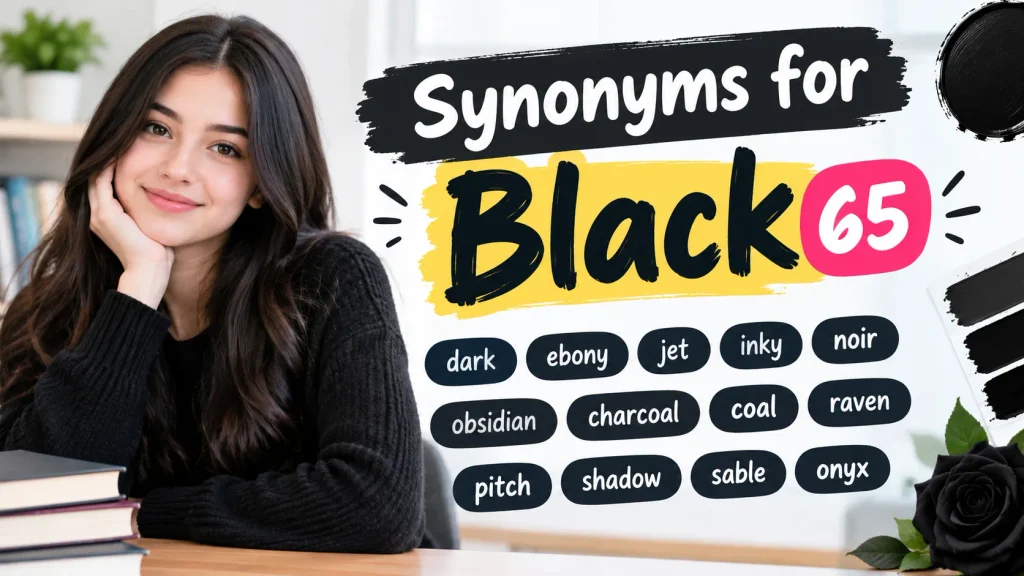
A synonym for black is a word with a similar meaning, such as ebony, jet, onyx, sable, or charcoal. These words describe the darkest color or a very dark mood. Writers use synonyms for black to make sentences more colorful, clear, and interesting.
Maya stared at her essay and sighed. Every line said black cat, black sky, black coat. It sounded flat and boring. Then she changed one word. The black cat became an ebony cat, and the sentence came alive. Try it yourself: “The inky night hid the road” sounds stronger than “The black night hid the road.”
“The difference between the almost right word and the right word is really a large matter.” Mark Twain
Good word choices help everyone. Students write sharper essays. Bloggers keep readers hooked. Content writers avoid repeating themselves. Daily English users sound more confident when they speak. Below are 65 simple, clear options to try today.
“The limits of my language mean the limits of my world.” Ludwig Wittgenstein
65 Other Words For Black
1. Ebony
- Meaning: A deep, rich black, like the dark wood.
- Examples: Her ebony hair shone in the sun. The piano had a smooth ebony finish.
2. Jet
- Meaning: A very dark and shiny black, much like polished stone.
- Examples: The cat had jet fur and green eyes. She wore jet earrings to the party.
3. Jet-Black
- Meaning: Completely black with a bright, glossy shine on top.
- Examples: He drove a jet-black car to work. Her jet-black dress looked great at night.
4. Coal-Black
- Meaning: Black in color, just like a dark lump of coal.
- Examples: The old stove left coal-black marks. Coal-black smoke rose from the chimney.
5. Pitch-Black
- Meaning: So dark that you cannot see anything at all.
- Examples: The cave was pitch-black inside. We walked home in pitch-black darkness.
6. Inky
- Meaning: Deep black in color, like the ink in a pen.
- Examples: The inky sky hid every star. He spilled inky liquid on his notes.
7. Ink-Black
- Meaning: As black as the dark ink you write with.
- Examples: Her ink-black eyes looked very calm. The ink-black river moved slowly past us.
8. Sable
- Meaning: A poetic word for a rich, dark black color.
- Examples: She chose a sable coat for winter. Sable curtains covered the tall window.
9. Raven
- Meaning: A shiny black color, like the feathers of a raven.
- Examples: Her raven hair fell past her shoulders. A raven cloak hung by the door.
10. Onyx
- Meaning: A glossy black color, like the smooth black gemstone.
- Examples: He bought an onyx ring for her. The onyx floor shone under bright lights.
11. Obsidian
- Meaning: A very dark, shiny black color, like volcanic glass rock.
- Examples: The obsidian knife was very old. Obsidian rocks sparkled near the quiet volcano.
12. Charcoal
- Meaning: A dark gray-black color, like burnt wood from fires.
- Examples: She wore a charcoal suit to work. Draw the sketch with charcoal first.
13. Midnight
- Meaning: A deep dark black that looks like the night sky.
- Examples: Her midnight dress matched her dark shoes. The room turned midnight after the lights died.
14. Dark
- Meaning: Having little or no light, or a deep shade.
- Examples: It gets dark early in winter. He prefers dark colors for his clothes.
15. Dusky
- Meaning: Dim and dark, like the sky just after sunset.
- Examples: A dusky light filled the quiet room. The dusky sky turned black soon after.
16. Sooty
- Meaning: Black or very dark, as if covered with dirty soot.
- Examples: The sooty walls needed a good wash. He wiped his sooty hands on cloth.
17. Smoky
- Meaning: Dark gray or black, like the color of thick smoke.
- Examples: She liked smoky makeup around her eyes. The smoky glass hid the room inside.
18. Charred
- Meaning: Burned until it turns black on the outside from fire.
- Examples: The charred toast tasted very bitter. Charred logs lay in the fire pit.
19. Blackened
- Meaning: Turned black by fire, smoke, dirt, or even heavy cooking.
- Examples: The blackened pan sat in the sink. He ordered blackened fish for dinner.
20. Tarry
- Meaning: Black and sticky in a way that looks like road tar.
- Examples: The tarry mud stuck to my shoes. A tarry smell came from the road.
21. Murky
- Meaning: Dark and hard to see through, often said of dirty water.
- Examples: The murky pond hid the fish. We could not see through murky water.
22. Shadowy
- Meaning: Full of dark shadows, so things are hard to see.
- Examples: A shadowy figure stood by the gate. The shadowy hall made her feel afraid.
23. Gloomy
- Meaning: Dark and sad, with very little light or cheer.
- Examples: The gloomy room needed fresh paint. It was a gloomy morning with heavy clouds.
24. Somber
- Meaning: Dark in color and serious or sad in mood.
- Examples: He wore somber clothes to the funeral. The somber music made everyone quiet.
25. Dim
- Meaning: Not bright, with only a small amount of light.
- Examples: The dim lamp barely lit the desk. We read in dim light last night.
26. Unlit
- Meaning: Not lit up, so the place looks black and dark.
- Examples: The unlit road felt quite scary. Her unlit candle sat on the shelf.
27. Moonless
- Meaning: Describes a night with no moon, so it looks very black.
- Examples: A moonless night covered the whole village. We camped under a moonless sky.
28. Starless
- Meaning: A night sky with no stars, so it looks black.
- Examples: The starless sky felt cold and empty. He stared up at the starless night.
29. Lightless
- Meaning: Having no light at all, so everything looks black.
- Examples: The lightless tunnel went on for miles. She felt her way through the lightless room.
30. Opaque
- Meaning: Not clear, so light cannot pass through the dark surface.
- Examples: The opaque black glass blocked the sun. She painted the window with opaque paint.
31. Stygian
- Meaning: Very dark and gloomy, like a deep and scary place.
- Examples: A stygian cave opened before the climbers. The stygian night swallowed the small boat.
32. Cimmerian
- Meaning: A rare word for deep, gloomy darkness with no light.
- Examples: The Cimmerian forest scared the travelers. A Cimmerian fog covered the old town.
33. Atramentous
- Meaning: A formal, rare word that means ink-black in color.
- Examples: The atramentous liquid stained the paper. Poets love such an atramentous night sky.
34. Ebon
- Meaning: An old, poetic word for a deep and dark black.
- Examples: The ebon sky had no stars. Her ebon cloak swept across the floor.
35. Velvet-Black
- Meaning: A soft, deep black that looks smooth like velvet cloth.
- Examples: Her velvet-black gown looked rich and elegant. A velvet-black sky stretched above the sea.
36. Dingy
- Meaning: Dark and dirty, with a dull and tired look.
- Examples: The dingy room smelled of old smoke. He rented a dingy room downtown.
37. Grimy
- Meaning: Covered in thick, dark dirt that makes things look black.
- Examples: The grimy window needed a quick wash. His grimy boots left black marks.
38. Slate
- Meaning: A dark gray-black color, like the stone used on roofs.
- Examples: Slate clouds gathered above the hills. She painted the wall a slate shade.
39. Graphite
- Meaning: A soft dark gray-black, like the lead in pencils.
- Examples: The graphite pencil left a dark line. Her graphite laptop matched the black desk.
40. Blackish
- Meaning: Slightly or nearly black in color, but not fully black.
- Examples: The blackish sauce tasted rich and sweet. He wore blackish pants with a gray shirt.
41. Nocturnal
- Meaning: Relating to the night, when the sky turns dark and black.
- Examples: Owls are nocturnal birds of the dark. The nocturnal city looked calm and quiet.
42. Night-Black
- Meaning: As black as the sky in the middle of night.
- Examples: Her night-black coat hid the dirt. The night-black lake looked still.
43. Pitchy
- Meaning: Very dark and black, like thick, sticky pitch from trees.
- Examples: The pitchy sky promised a heavy storm. Pitchy smoke filled the tiny kitchen.
44. Sinister
- Meaning: Looking dark and evil, as if something bad may happen.
- Examples: A sinister laugh echoed through the hall. The sinister plot shocked the whole town.
45. Bleak
- Meaning: Dark and hopeless, with nothing cheerful to look at.
- Examples: The bleak news ruined our evening. A bleak, black winter sat over the land.
46. Grim
- Meaning: Dark in mood, very serious, and without any hope or joy.
- Examples: The doctor wore a grim look. The grim forecast worried every farmer.
47. Ominous
- Meaning: Dark and threatening, like a sign that trouble is near.
- Examples: Ominous black clouds filled the sky. An ominous silence followed his words.
48. Funereal
- Meaning: Dark and sad, like clothing or music at funerals.
- Examples: She wore a funereal black dress. The funereal tune made me cry.
49. Mournful
- Meaning: Full of deep sadness, often shown by dark black clothes.
- Examples: A mournful crowd stood in black. Her mournful face showed her great loss.
50. Dire
- Meaning: Very bad and dark, with a feeling of danger.
- Examples: The dire sky warned of a storm. They faced a dire and black future.
“Words are, of course, the most powerful drug used by mankeind.” Rudyard Kipling
Another Word for Black Hair
Writers often need a fresh way to describe black hair. Try raven, ebony, jet-black, or sable for a shiny, dramatic look. Use charcoal or slate for a softer, grayer shade. Pair them with simple verbs like shone, fell, or framed. For example, “Her raven hair framed her smiling face” feels vivid and natural.
Synonyms for Black in Creative Writing
Stories need mood, and color words help build it. Use inky or midnight for calm, quiet scenes. Choose pitch-black or stygian for fear and danger. Pick sable or velvet-black for rich, elegant moments. Do not stack many color words in one line. One strong word works better than three weak ones.
Black Color Names in Fashion and Design
Fashion and design experts rarely say plain black. They use onyx, jet, charcoal, and graphite to show small differences in shade. Onyx feels glossy and bold. Charcoal feels soft and modern. Graphite has a cool, metal-like tone. Using these names in product pages and blog posts makes your writing sound more professional.
Synonyms for Black That Describe Darkness
Sometimes black means no light at all. For that, use pitch-black, moonless, starless, lightless, or unlit. For a softer darkness, try dim, dusky, or shadowy. These words help readers picture the exact level of darkness, from a quiet evening to a cave deep underground.
Frequently Asked Questions (People Also Ask)
What is a fancy word for black?
A fancy word for black is ebony, onyx, obsidian, or sable. These words sound elegant and often appear in poems, fashion writing, and stories. If you want something rare, try atramentous or Cimmerian. Use them carefully, though. Fancy words work best when the sentence stays clear and the reader can still follow your idea.
What is a word for very dark black?
The best words for very dark black are pitch-black, jet-black, coal-black, and ink-black. Each one adds strong power to a sentence. Use pitch-black when you mean total darkness, like a cave at night. Use jet-black for shiny objects, like hair or cars. These words are simple, popular, and easy to understand.
What is the difference between jet-black and pitch-black?
Jet-black describes a shiny, glossy black, like polished stone, so it suits hair, cars, and clothes. Pitch-black describes darkness so complete that you cannot see anything, so it suits caves, nights, and empty rooms. Simply put, jet-black is about how something looks, while pitch-black is about how dark a place feels.
What is another word for black when it means something bad?
When black means something sad or bad, try sinister, bleak, grim, ominous, or funereal. These words describe mood, not color. For instance, a grim mood or an ominous sky tells readers that trouble may be near. Choose them when you want to build fear, sadness, or tension in a story, speech, or report.
Conclusion:
Learning synonyms is one of the easiest ways to improve your English. When you swap a plain word like black for ebony, inky, or charcoal, your writing becomes sharper, clearer, and more fun to read. Bloggers hold readers longer. Students earn better marks. Speakers sound more confident and natural.
“One day I will find the right words, and they will be simple.” Jack Kerouac
You do not need to memorize all 65 words at once. Pick three or four favorites and use them this week. Add one to an email, one to an essay, and one to a chat with a friend. Practice makes new words feel natural, and soon you will reach for them without thinking.
“A different language is a different vision of life.” Federico Fellini
So keep this list close, return to it often, and keep exploring. Every new word you learn gives you one more way to say exactly what you mean. Happy writing!

I am James Carter, a passionate writer at SynonymNexts.com, sharing clear, useful, and engaging synonym guides to improve everyday writing.