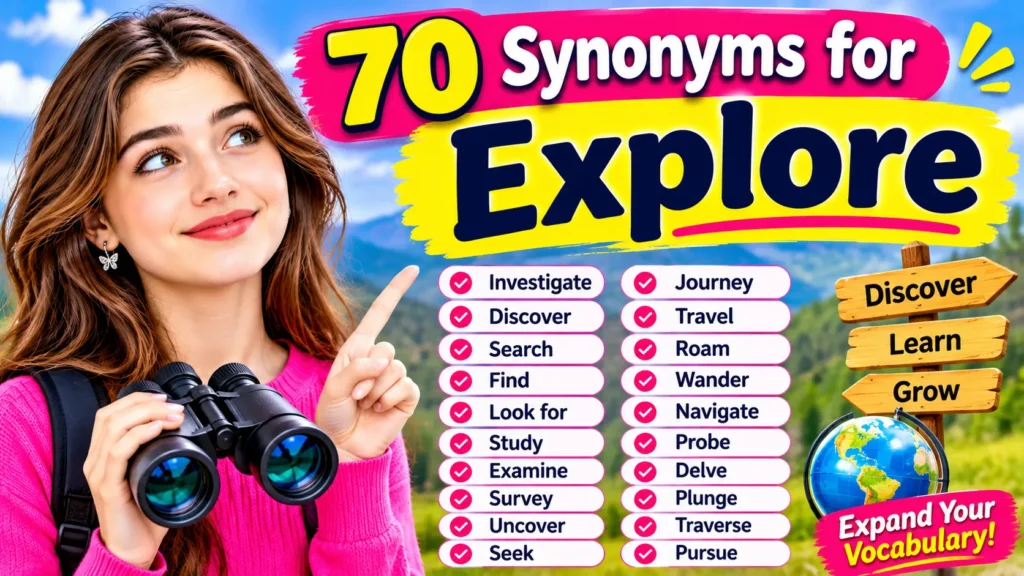
Synonyms for explore include investigate, discover, examine, search, study, inspect, research, investigate, and uncover. These words help describe finding new places, learning about ideas, and looking for hidden details. Choosing the right word makes your writing clearer, more interesting, and easier to understand.
Imagine walking through a new city for the first time. Every street has something different to offer. You visit small shops, find beautiful parks, and learn about places you have never seen before. You might use the word explore to describe this exciting experience.
For example, a student may explore a science project to learn how plants grow. A traveler may explore a new country to enjoy its culture and beauty.
Learning different words can make your English stronger. Students can use them in schoolwork and essays. Bloggers can make their articles more interesting. Content writers can avoid using the same words again and again. Daily English users can speak with more confidence.
The right word also helps readers understand your message. Some words describe careful study, while others show adventure or discovery.
“The more you learn, the more places your mind can go.”
Try using new words in your daily conversations. Small changes can make your English sound fresh and natural.
“Every new discovery begins with a curious mind.”
70 Synonyms for Explore
1. Discover
- Meaning: To find something new that you did not know before.
- Examples: We discovered a lovely little beach. She discovered a new way to learn.
2. Investigate
- Meaning: To look closely at something to learn the truth.
- Examples: Police investigated the strange noise. We investigated the cause of the problem.
3. Examine
- Meaning: To look carefully at something to understand its details.
- Examples: Please examine the map before leaving. The doctor examined my injured hand.
4. Search
- Meaning: To look for something that you want to find.
- Examples: We searched for the missing keys. She searched online for travel tips.
5. Research
- Meaning: To study a subject and collect useful facts about it.
- Examples: I researched the history of Rome. They researched ways to save energy.
6. Inspect
- Meaning: To check something carefully to see if it is right.
- Examples: The teacher inspected our classroom today. We inspected the house before buying.
7. Study
- Meaning: To spend time learning about a subject or topic.
- Examples: She studied the stars last night. We studied different types of birds.
8. Examine Closely
- Meaning: To look at something with great care and attention.
- Examples: Examine closely before making your choice. He examined the painting very carefully.
9. Survey
- Meaning: To look over an area or subject to understand it.
- Examples: We surveyed the land before building. The team surveyed the local market.
10. Travel
- Meaning: To visit different places and learn about the world.
- Examples: They travel across Europe every summer. I want to travel around Japan.
11. Roam
- Meaning: To move around freely without following a fixed path.
- Examples: We roamed around the old town. The children roamed through the garden.
12. Wander
- Meaning: To walk around without knowing exactly where you will go.
- Examples: I wandered through the busy market. She wandered around the beautiful village.
13. Tour
- Meaning: To visit different places for fun or learning.
- Examples: We toured the famous city museum. They toured several historic buildings yesterday.
14. Visit
- Meaning: To go somewhere to see it or spend time there.
- Examples: We visited a small mountain town. She visited the new art gallery.
15. Uncover
- Meaning: To find something hidden or not known before.
- Examples: Reporters uncovered the hidden truth. Scientists uncovered an interesting new fact.
16. Reveal
- Meaning: To show something that was hidden or unknown before.
- Examples: The report revealed some surprising facts. Her research revealed a simple answer.
17. Seek
- Meaning: To look for something that you need or want.
- Examples: We seek new ways to improve. They seek answers to difficult questions.
18. Probe
- Meaning: To ask questions or study something deeply to find answers.
- Examples: Journalists probed the latest news story. Scientists probed the ocean floor carefully.
19. Delve
- Meaning: To study something deeply to understand more about it.
- Examples: We delved into ancient history today. She delved into the subject further.
20. Look Into
- Meaning: To try to learn more about a problem or subject.
- Examples: I will look into your request. They looked into the strange event.
21. Check Out
- Meaning: To visit or examine something because it seems interesting.
- Examples: Let’s check out that new restaurant. We checked out the local shops.
22. Find Out
- Meaning: To learn information that you did not know before.
- Examples: I found out the meeting time. She found out who won the game.
23. Learn About
- Meaning: To gain knowledge about a subject or place.
- Examples: We learned about ocean animals today. He learned about different world cultures.
24. Experience
- Meaning: To take part in something and learn from it.
- Examples: We experienced life in the countryside. She experienced a wonderful cultural festival.
25. Navigate
- Meaning: To find your way through an area or place.
- Examples: We navigated the busy city streets. He navigated the forest using a map.
26. Scout
- Meaning: To visit an area and look for useful things.
- Examples: They scouted locations for the movie. We scouted the park before camping.
27. Reconnoiter
- Meaning: To visit an area to learn about its features.
- Examples: The team reconnoitered the area first. Soldiers reconnoitered the nearby mountain path.
28. Observe
- Meaning: To watch something carefully and notice what happens.
- Examples: We observed birds near the lake. She observed how the machine worked.
29. Scrutinize
- Meaning: To examine something very carefully to notice small details.
- Examples: The editor scrutinized every page closely. We scrutinized the plan before starting.
30. Review
- Meaning: To look at something again to understand or check it.
- Examples: We reviewed the travel guide together. She reviewed the research before writing.
31. Analyze
- Meaning: To study something carefully and understand its different parts.
- Examples: Students analyzed the results of the test. We analyzed the data this morning.
32. Assess
- Meaning: To examine something and decide how good or useful it is.
- Examples: They assessed the damage after storms. We assessed every option before choosing.
33. Evaluate
- Meaning: To study something and judge its value or quality.
- Examples: Teachers evaluated our science projects today. We evaluated the plan before approval.
34. Consider
- Meaning: To think carefully about an idea or possible choice.
- Examples: Consider visiting the nearby national park. She considered several options before deciding.
35. Trace
- Meaning: To follow something back to discover where it started.
- Examples: We traced the river to its source. Researchers traced the story’s early history.
36. Track
- Meaning: To follow the movement or progress of something.
- Examples: We tracked the animal through the forest. She tracked her package online yesterday.
37. Follow
- Meaning: To go after something or watch where it leads.
- Examples: We followed the path toward town. He followed the clues to the answer.
38. Map Out
- Meaning: To plan or show the details of an area.
- Examples: We mapped out our hiking route. She mapped out the research project.
39. Chart
- Meaning: To record or show information about a place or subject.
- Examples: Scientists charted the ocean currents carefully. We charted our progress throughout the trip.
40. Journey
- Meaning: To travel from one place to another and see new things.
- Examples: They journeyed across the wide desert. We journeyed through several mountain villages.
41. Venture
- Meaning: To go somewhere new even when it feels uncertain.
- Examples: We ventured into the dark forest. She ventured beyond the village alone.
42. Embark On
- Meaning: To begin a new trip, activity, or experience.
- Examples: They embarked on a world tour. We embarked on an exciting project.
43. Roam Around
- Meaning: To move freely around a place and enjoy it.
- Examples: We roamed around the shopping center. Kids roamed around the open playground.
44. Trek
- Meaning: To travel a long distance on foot through nature.
- Examples: We trekked across the rocky hills. They trekked through the green forest.
45. Hike
- Meaning: To walk a long way outdoors for fun or adventure.
- Examples: We hiked along the mountain trail. She hiked through the woods yesterday.
46. Prowl
- Meaning: To move around quietly while looking for something.
- Examples: The cat prowled around the garden. We prowled through the old market.
47. Peruse
- Meaning: To read or look through something with care.
- Examples: She perused the travel magazine quietly. I perused the menu before ordering.
48. Browse
- Meaning: To look through different things without choosing one right away.
- Examples: We browsed the books at the library. He browsed online for new ideas.
49. Read Up On
- Meaning: To read about a subject to learn more information.
- Examples: I read up on ancient Egypt. She read up on healthy eating.
50. Consult
- Meaning: To look at a book or person for useful information.
- Examples: We consulted a map before leaving. She consulted an expert about the project.
51. Question
- Meaning: To ask someone about something to gain more information.
- Examples: Students questioned the guide about history. We questioned the idea before accepting it.
52. Inquire
- Meaning: To ask for facts or details about something.
- Examples: I inquired about the travel costs. She inquired about the museum hours.
53. Seek Out
- Meaning: To make an effort to find something interesting or useful.
- Examples: We seek out quiet places to read. He sought out expert advice yesterday.
54. Look Around
- Meaning: To look at different things in the area around you.
- Examples: We looked around the beautiful garden. She looked around before entering the room.
55. Go Through
- Meaning: To check or examine something step by step.
- Examples: We went through the old documents. She went through every research note.
56. Dig Into
- Meaning: To study a subject deeply and find useful details.
- Examples: Let’s dig into this topic together. They dug into the history of music.
57. Unravel
- Meaning: To solve something confusing by finding its hidden details.
- Examples: We unraveled the mystery together. She unraveled the story’s hidden message.
58. Decipher
- Meaning: To understand something difficult that is not easy to read.
- Examples: He deciphered the old handwritten note. We deciphered the strange symbols together.
59. Test
- Meaning: To try something and learn how well it works.
- Examples: We tested a new learning method. She tested the software before launch.
60. Experiment
- Meaning: To try new ideas and see what happens.
- Examples: Students experimented with different materials today. We experimented with new cooking methods.
61. Venture Into
- Meaning: To enter a new place or subject with interest.
- Examples: We ventured into the unknown cave. She ventured into digital art recently.
62. Penetrate
- Meaning: To enter deeply into a place or difficult subject.
- Examples: The team penetrated the dense jungle. Researchers penetrated the topic’s complex details.
63. Roam Freely
- Meaning: To move around without limits and enjoy your surroundings.
- Examples: Visitors roamed freely through the gardens. The horses roamed freely across fields.
64. Range
- Meaning: To move over a wide area while looking around.
- Examples: The hikers ranged across the valley. Birds ranged across the open countryside.
65. Reconnoitre
- Meaning: To examine a place before deciding what to do there.
- Examples: The explorers reconnoitred the nearby coast. We reconnoitred the site before camping.
66. Look Over
- Meaning: To check something quickly or carefully for useful details.
- Examples: Please look over this travel plan. We looked over the available choices.
67. Inspect Closely
- Meaning: To check every small part of something with great care.
- Examples: Inspect closely before signing the paper. The team inspected closely every room.
68. Wander Through
- Meaning: To walk slowly through a place and enjoy seeing it.
- Examples: We wandered through the flower garden. They wandered through the historic streets.
69. Uncover More
- Meaning: To find extra facts that help explain something better.
- Examples: We uncovered more details about the case. Her research uncovered more useful information.
70. Delve Into
- Meaning: To explore a subject deeply and learn its hidden details.
- Examples: We delved into the world of science. He delved into the book’s main ideas.
How to Choose the Right Synonym for Explore
Not every synonym works in every sentence. The best choice depends on what you want to say.
- For travel: Use wander, roam, trek, hike, or journey when visiting new places.
- For learning: Use study, research, investigate, or examine when gaining knowledge.
- For discovery: Use uncover, reveal, discover, or find out when learning something new.
- For careful checking: Use inspect, scrutinize, assess, or analyze when looking at details.
Choosing the right word helps your writing sound clear and natural.
Best Synonyms for Explore in Different Situations
Some synonyms work better in formal writing, while others sound more natural in daily conversations.
- Formal writing: Investigate, examine, research, analyze, and scrutinize.
- Casual conversations: Check out, look around, browse, and find out.
- Adventure writing: Venture, wander, trek, journey, and roam.
- Educational content: Study, discover, learn about, and delve into.
Think about your audience before choosing a replacement.
Professional Words Instead of Explore
When writing reports, business emails, or academic content, professional words can make your message sound more precise.
- Investigate: Use it when checking a problem or situation.
- Evaluate: Use it when judging an idea or plan.
- Assess: Use it when measuring quality or value.
- Research: Use it when collecting facts and information.
“The right word can turn a simple sentence into a powerful message.”
Creative Words to Replace Explore
Creative writing becomes more interesting when you use words that create a clear picture in the reader’s mind.
- Wander: Creates a feeling of freedom and adventure.
- Venture: Shows courage when entering something new.
- Uncover: Suggests finding something hidden.
- Delve: Gives the feeling of deep learning.
These words can make travel stories, blog posts, and personal essays more engaging.
Explore Synonyms for Students and English Learners
Students can improve their vocabulary by learning different ways to express the same idea. Instead of repeating one word, try using simple alternatives that match your sentence.
- Discover: Finding something new.
- Study: Learning about a subject.
- Examine: Looking carefully at details.
- Search: Looking for something.
- Find out: Getting new information.
Practice these words in short sentences to remember them easily.
(FAQs)
1. What is the closest synonym for explore?
Discover is one of the closest synonyms for explore because both words involve finding something new. However, the best choice depends on your sentence. If you are visiting a new place, words like wander or travel may fit better. If you are learning about a subject, investigate or research may sound more natural. Always choose a word that matches your intended meaning.
2. What is a formal word for explore?
Investigate, examine, research, and analyze are useful formal alternatives to explore. These words work well in academic papers, business reports, and professional writing. For example, you might investigate a problem, examine a report, or research a topic. Each word has a slightly different meaning, so choose the one that clearly describes the action you want to express.
3. What is the difference between explore and investigate?
Explore usually means looking around, learning about something, or discovering new things. Investigate means examining something carefully to find facts or answers. For example, you can explore a beautiful island during a holiday. However, you investigate a problem when you want to understand its cause. Both words involve learning, but investigate often has a more focused purpose.
4. What is a good synonym for explore in an essay?
Examine, investigate, analyze, and research are strong choices for essays. These words can make academic writing sound more precise and professional. For example, instead of writing, “This essay will explore climate change,” you could write, “This essay will examine climate change.” Pick a replacement that matches the topic and the depth of your discussion.
Conclusion:
Learning synonyms for explore can make your English writing clearer, stronger, and more interesting. Instead of using the same word in every sentence, you can choose from many alternatives that express your exact meaning.
Words like discover, investigate, examine, research, and uncover are useful when discussing ideas and learning new facts. Words like wander, travel, trek, and venture are better for describing adventures and new places.
These vocabulary choices can help students write better essays, bloggers create interesting articles, and content writers produce fresh content. They can also help you speak more naturally in everyday conversations.
Start by choosing five new words from this list. Write one sentence for each word and try using them in your emails, school assignments, and daily conversations. Over time, these words will become a natural part of your vocabulary.
Remember that not every synonym has exactly the same meaning. Always consider the sentence, audience, and situation before replacing a word.
“A strong vocabulary gives your ideas more ways to shine.”
Keep learning, reading, and practicing. Every new word you learn opens another door to better communication.
“Great communication starts with the courage to learn something new.”

I am Ryan Wilson, a passionate writer at SynonymNexts.com, sharing clear, useful, and engaging content about words, synonyms, and language.