
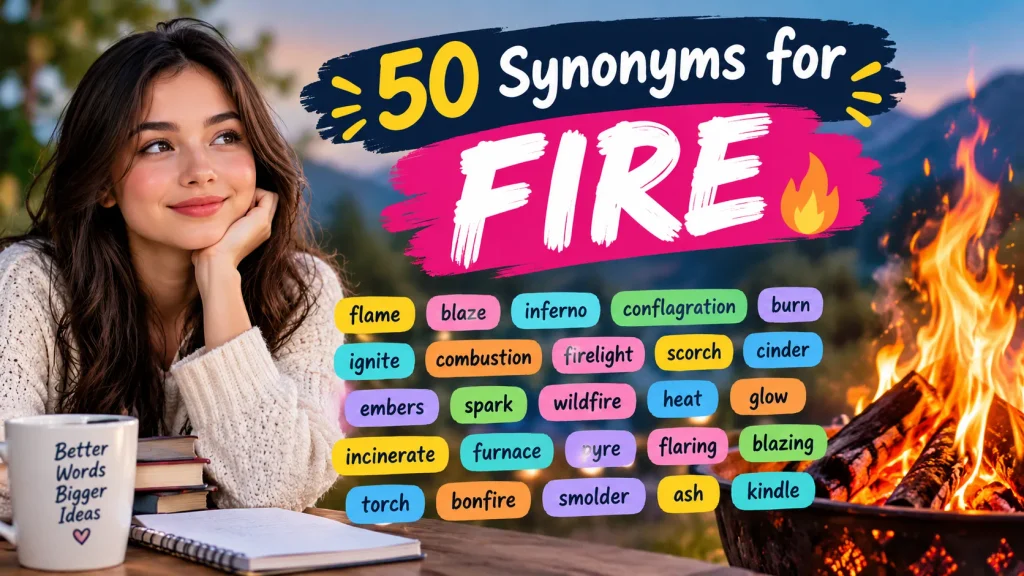
A synonym for fire is a word that means the same or almost the same thing, such as blaze, flame, inferno, or bonfire. These words describe burning heat and light, and each one fits a slightly different size, strength, or situation.
Last winter, our power went out, and Dad lit the hearth. The room filled with a soft glow. My little brother called it a “fire.” My sister called it a “blaze.” Grandma called it a “flame.” Same heat, different feeling. That night, I learned how one small word can change a whole picture.
“The difference between the almost right word and the right word is really a large matter.” Mark Twain
Here is a simple example. “The fire burned the forest” sounds flat. “The wildfire swallowed the forest” feels alive. That is the power of synonyms for fire. Students can write stronger essays. Bloggers can keep readers interested. Content writers can avoid repeating the same word. Daily English users can sound clear and confident.
“Where there is smoke, there is fire.” Proverb
50 Fire Synonym
1. Blaze
- Meaning: A large, bright fire that burns strongly and spreads fast.
- Examples: The blaze lit up the whole night sky. Firefighters fought the blaze for three hours.
2. Flame
- Meaning: The bright, glowing part of a fire that you can see.
- Examples: She lit the candle and watched the flame. The flame danced in the cold wind.
3. Inferno
- Meaning: A huge, wild fire that is very hot and hard to stop.
- Examples: The old barn became an inferno within minutes. Smoke from the inferno reached the town.
4. Conflagration
- Meaning: A very large fire that destroys buildings, forests, or whole areas.
- Examples: The conflagration burned through the old market district. Rain finally slowed the conflagration last night.
5. Bonfire
- Meaning: A big outdoor fire that people make for fun or celebration.
- Examples: We roasted sweet corn over the bonfire. The bonfire crackled as friends sang together.
6. Campfire
- Meaning: A small outdoor fire made for cooking or warmth while camping.
- Examples: He told scary stories around the campfire. Please put out the campfire before sleeping.
7. Wildfire
- Meaning: A fire that spreads quickly across forests, grass, or dry land.
- Examples: Strong winds pushed the wildfire toward the village. Dry summers often increase the risk of wildfire.
8. Firestorm
- Meaning: A fierce fire that makes its own strong, hot winds.
- Examples: The firestorm swept across the hills quickly. Experts warned about a possible firestorm that week.
9. Fireball
- Meaning: A round ball of fire, often seen in sudden explosions.
- Examples: A fireball rose after the loud explosion. The movie ended with a giant fireball.
10. Brushfire
- Meaning: A fire that burns dry bushes and small plants.
- Examples: The brushfire stopped near the dry riverbank. Farmers cleared grass to prevent a brushfire.
11. Flare
- Meaning: A sudden bright fire or light used as a signal.
- Examples: The sailors shot a flare into the sky. A bright flare lit the dark road.
12. Flare-up
- Meaning: A sudden burst of fire that grows for a short time.
- Examples: A small flare-up surprised the cooking team. Another flare-up appeared near the old chimney.
13. Ember
- Meaning: A small glowing piece of wood or coal after burning.
- Examples: Red embers glowed in the quiet fireplace. He blew gently on the last ember.
14. Spark
- Meaning: A tiny bright piece of fire that jumps into the air.
- Examples: One small spark started the dry grass burning. Sparks flew from the spinning metal wheel.
15. Cinder
- Meaning: A tiny burned piece of wood or coal, no longer flaming.
- Examples: A hot cinder landed on his sleeve. She swept cinders from the front step.
16. Glow
- Meaning: A soft, steady light that comes from something burning.
- Examples: The glow of the fire warmed the room. We sat quietly in the orange glow.
17. Flicker
- Meaning: A weak, unsteady light that moves up and down.
- Examples: The candle flicker made shadows on the wall. A tiny flicker was all that remained.
18. Torch
- Meaning: A stick with fire on one end used for light.
- Examples: He carried a torch into the dark cave. Runners passed the burning torch to each other.
19. Pyre
- Meaning: A pile of wood made for burning, often in ceremonies.
- Examples: The pyre was built on the quiet riverbank. Villagers gathered around the pyre in silence.
20. Hearth
- Meaning: The place in a home where a fire is lit.
- Examples: Grandma sat near the hearth every winter evening. The hearth kept the little cottage warm.
21. Furnace
- Meaning: A closed space where fire is made for heating or melting.
- Examples: The furnace warms our house during cold nights. Workers melted iron inside the huge furnace.
22. Ignition
- Meaning: The act of starting a fire or making something burn.
- Examples: Ignition happens when heat meets fuel and air. A gas leak can cause sudden ignition.
23. Combustion
- Meaning: The science word for burning something with oxygen and heat.
- Examples: Cars use combustion to make their engines run. Fire needs oxygen for complete combustion to happen.
24. Burning
- Meaning: The process of being on fire or giving off heat.
- Examples: I smelled burning coming from the kitchen. The burning logs cracked loudly in the fireplace.
25. Heat
- Meaning: The strong warm energy that comes from a fire or flame.
- Examples: We felt the heat from across the room. Heat from the fire dried our wet shoes.
26. Flash
- Meaning: A very quick, bright burst of fire or sudden light.
- Examples: A flash of fire came from the stove. The match gave one flash before going out.
27. Blast
- Meaning: A powerful burst of fire or air from an explosion.
- Examples: The blast shook windows across the entire street. He felt a hot blast from the oven.
28. Ignite
- Meaning: To make something start burning with flame or heat.
- Examples: Dry leaves ignite very quickly in summer. Please do not ignite anything near the fuel.
29. Kindle
- Meaning: To start a fire using small, dry pieces of wood.
- Examples: He used paper to kindle the campfire. Scouts learn how to kindle a safe fire.
30. Light
- Meaning: To set something on fire so it begins to burn.
- Examples: Dad will light the stove before dinner. She used a match to light the candle.
31. Scorch
- Meaning: To burn the surface of something slightly with heat.
- Examples: Hot irons can scorch your favorite cotton shirt. The sun began to scorch the dry grass.
32. Singe
- Meaning: To burn the edge or tip of something lightly.
- Examples: The flame might singe your hair, so stay back. He tried not to singe the paper edges.
33. Char
- Meaning: To burn something until it turns black on the outside.
- Examples: Do not char the toast this morning. Smoke rose as the wood began to char.
34. Sear
- Meaning: To burn the surface of something quickly with strong heat.
- Examples: Chefs sear the meat to lock in flavor. Hot metal can sear skin in seconds.
35. Smolder
- Meaning: To burn slowly with smoke but without bright flames.
- Examples: The logs continued to smolder after the rain. A forgotten cigarette can smolder inside the couch.
36. Incinerate
- Meaning: To burn something completely until only ash is left.
- Examples: The factory will incinerate all the old waste. Extreme heat can incinerate paper in seconds.
37. Fiery
- Meaning: Full of fire, or looking like it is burning.
- Examples: A fiery sunset painted the western sky. She wore a bright, fiery red dress.
38. Flaming
- Meaning: Burning with bright flames that you can easily see.
- Examples: The flaming log rolled out of the fireplace. Flaming torches lined the path to the castle.
39. Blazing
- Meaning: Burning very brightly and strongly, giving off great heat and light.
- Examples: The blazing sun made everyone seek shade. We sat near the blazing fireplace all evening.
40. Ardor
- Meaning: A strong, fiery feeling of love, passion, or great interest.
- Examples: He spoke with ardor about his dream. Her ardor for music never faded away.
41. Passion
- Meaning: A very strong feeling that burns inside you like fire.
- Examples: Cooking is her biggest passion in life. He plays football with real passion and energy.
42. Fervor
- Meaning: Warm, burning excitement or deep feeling about something you care about.
- Examples: The crowd cheered with great fervor and joy. She worked with fervor to finish the project.
43. Gunfire
- Meaning: The firing of guns, or the sound it makes.
- Examples: Loud gunfire echoed across the quiet valley. Reporters ran for cover when gunfire began.
44. Barrage
- Meaning: A heavy and fast attack of shots, fire, or questions.
- Examples: The army faced a barrage of enemy fire. Reporters sent a barrage of questions at him.
45. Shoot
- Meaning: To fire a weapon or send something out fast.
- Examples: Soldiers must never shoot without a clear order. Hunters need a license to shoot in forests.
46. Discharge
- Meaning: To fire a weapon or release something with force.
- Examples: Police must report when they discharge a weapon. The pistol did not discharge by accident.
47. Launch
- Meaning: To fire a rocket or missile high into the air.
- Examples: Engineers will launch the rocket at noon. Scientists plan to launch the satellite tomorrow.
48. Dismiss
- Meaning: To remove someone from a job, as in “fire” someone.
- Examples: The company had to dismiss two careless workers. Managers rarely dismiss people without a good reason.
49. Sack
- Meaning: A casual word meaning to fire someone from work.
- Examples: The boss threatened to sack late workers. He feared they would sack him soon.
50. Axe
- Meaning: To end someone’s job or cancel a plan suddenly.
- Examples: The company decided to axe the weak project. They will axe fifty jobs next month.
Remember that every word above carries its own mood. As the old saying goes:
“Fire is a good servant but a bad master.” Proverb
Synonyms for Fire in Creative Writing
Writers love strong images. Instead of saying “the fire was big,” try inferno, blaze, or firestorm. For softer scenes, choose glow, ember, or flicker. Each word paints a different mood. A flicker feels calm, while a firestorm feels scary. Pick the word that matches the feeling you want your reader to have. Small changes make stories feel real.
Another Word for Fire in Formal Writing
Formal writing needs clear, serious words. Use conflagration for a large disaster, combustion for science topics, and ignition when talking about how a fire starts. Avoid slang like “sack” in reports. In school essays, these words show a strong vocabulary. Always check the sentence meaning first, so your word fits the topic and tone.
Words That Mean Fire in Daily Conversation
In everyday talk, simple words work best. Say campfire for outdoor fun, bonfire for parties, and blaze for news about big fires. At work, people say sack or axe when someone loses a job. Keep your tone friendly and short. Casual speech does not need fancy words, only clear and natural ones that people understand quickly.
Fire Synonyms for Describing Heat and Passion
Fire is not only about burning wood. We also use it for feelings. Ardor, passion, and fervor describe strong emotions. Fiery can describe a hot temper or a bright sunset. Using these words helps you describe people, speeches, and moods in a deeper way. Just remember to keep the meaning clear for your reader.
People Also Ask: Fire Synonyms
What is a fancy word for fire?
Conflagration is a popular fancy word for a very large fire. Inferno also sounds dramatic and powerful. For the science side, use combustion. These words work well in essays, speeches, and formal reports. Use them carefully, though, because fancy words can feel strange in casual talk. Match the word to your reader and the situation.
What is the difference between blaze and inferno?
A blaze is a strong, bright fire, and it can be big or medium in size. An inferno is much worse. It is huge, extremely hot, and very hard to control. Think of a blaze as a serious fire and an inferno as a disaster. Choose inferno only when the fire feels truly overwhelming.
What word means a small fire?
Ember, spark, flicker, and campfire all describe small fires. An ember is a glowing piece left after burning. A spark is a tiny jumping bit of fire. A flicker is a weak, moving flame. A campfire is a small, safe fire made outdoors. Each one gives your sentence a gentle, quiet feeling.
What is a poetic word for fire?
Poets often choose ember, glow, flame, or fervor because these words carry feeling. “The last ember whispered goodnight” sounds softer than “the last fire went out.” Words like ardor and fiery also bring emotion into poems. Try reading your line aloud. If it sounds warm and musical, you picked the right word.
Conclusion:
Learning synonyms for fire does more than grow your vocabulary. It helps you write with color, speak with confidence, and explain ideas more clearly. A blaze feels different from a flicker, and a bonfire feels different from an inferno. When you know these differences, your blogging, essays, and daily communication all become stronger and more interesting.
“Words are, of course, the most powerful drug used by mankeind.” Rudyard Kipling
Now it is time to practice. Pick five words from this list and use them this week. Try one in an email, one in an essay, one in a chat with a friend, and two in your own writing. Do not worry about mistakes. Every small try builds your skill. Soon, the right word will come to you naturally, just like a spark turning into a warm glow.
“Language is the dress of thought.” Samuel Johnson

I am Emily Carter, a passionate writer at SynonymNexts.com, creating simple, helpful, and engaging content about synonyms and words.