
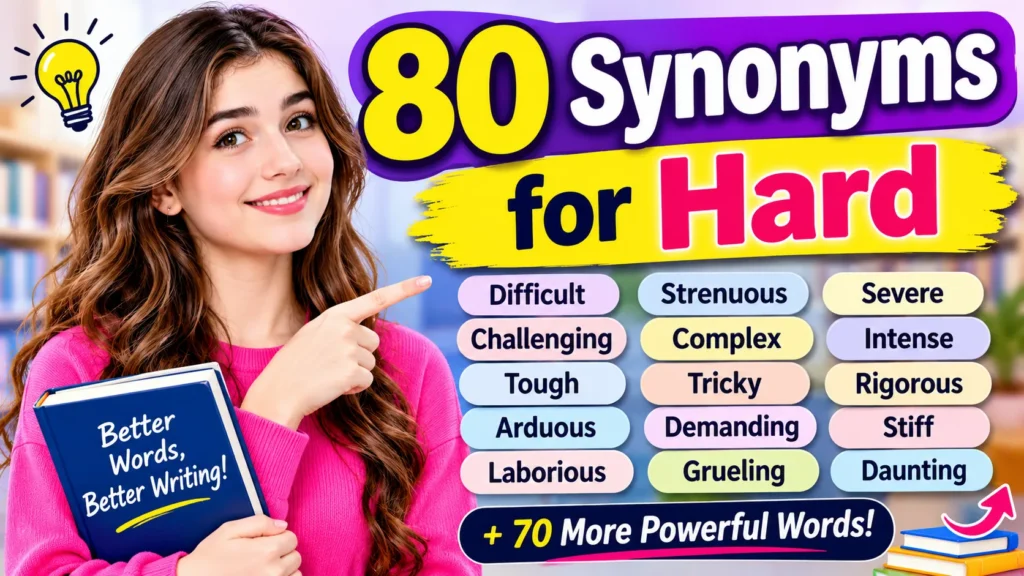
Some useful synonyms for hard include difficult, tough, challenging, demanding, complicated, and strenuous. These words help describe tasks, problems, work, and situations that take effort. You can also use words like firm, solid, and rigid when talking about something that is not soft.
Jake sat at his desk and looked at his math homework. He had solved five questions, but the sixth one seemed impossible. He wanted to tell his teacher that the question was hard, but he also wanted to use a better word.
This happens to many people. We often use the same word again and again. Learning new words can make our speech and writing more interesting.
For example, instead of saying, “This exam was hard,” you could say, “This exam was challenging.” Both sentences share the same idea, but the second one sounds more descriptive.
Students can use new words to improve essays and schoolwork. Bloggers can make their articles more engaging. Content writers can create clear and varied content. Daily English users can express their thoughts with greater confidence.
“Great words help simple ideas shine brighter.”
You do not need to learn every word at once. Start with a few useful choices and practice them in everyday sentences.
“Every new word opens a door to better communication.”
Let’s explore 80 useful alternatives and learn when to use them.
80 Synonyms for Hard With Meanings and Examples
The best synonym depends on what you want to describe. Some words explain difficult work, while others describe strong materials, serious conditions, or challenging experiences.
1. Difficult
- Meaning: Something difficult takes effort, skill, or time to complete.
- Examples: This question is difficult for me. She found the lesson difficult today.
2. Tough
- Meaning: Something tough needs strength, patience, or extra effort.
- Examples: The final test was really tough. He faced a tough choice yesterday.
3. Challenging
- Meaning: Something challenging tests your skills and makes you work harder.
- Examples: This project is challenging but fun. She enjoys challenging tasks at work.
4. Complicated
- Meaning: Something complicated has many parts and is not easy to understand.
- Examples: This math problem looks complicated today. The rules seem complicated to beginners.
5. Demanding
- Meaning: Something demanding needs much time, energy, or attention.
- Examples: Teaching young children can be demanding. My new job is quite demanding.
6. Tricky
- Meaning: Something tricky is not easy and needs careful thought.
- Examples: This puzzle is quite tricky. He asked a tricky question yesterday.
7. Arduous
- Meaning: Something arduous takes a lot of effort over time.
- Examples: The hikers faced an arduous journey. Building this road was arduous work.
8. Strenuous
- Meaning: Something strenuous needs strong physical effort and energy.
- Examples: Running uphill is strenuous exercise. We completed a strenuous workout together.
9. Complicated
- Meaning: A complicated task can be confusing because it has many details.
- Examples: The process became complicated quickly. This machine has complicated controls.
10. Grueling
- Meaning: Something grueling is extremely tiring and takes great effort.
- Examples: The team finished a grueling race. She survived a grueling workday.
11. Challenging
- Meaning: A challenging experience pushes you to improve your abilities.
- Examples: Learning English can be challenging. He accepted a challenging new role.
12. Laborious
- Meaning: Laborious work takes a long time and requires much effort.
- Examples: Cleaning the old house was laborious. She finished the laborious task patiently.
13. Formidable
- Meaning: Something formidable seems very difficult because it is powerful or impressive.
- Examples: They faced a formidable opponent today. Climbing that mountain looks formidable.
14. Exhausting
- Meaning: Something exhausting makes you feel very tired after doing it.
- Examples: Moving furniture was exhausting work. The long trip felt exhausting.
15. Demanding
- Meaning: A demanding activity requires great care, effort, and concentration.
- Examples: Her training schedule is demanding. This course has demanding assignments.
16. Complex
- Meaning: Something complex has many connected parts that need careful understanding.
- Examples: This topic is more complex. Scientists studied a complex problem.
17. Severe
- Meaning: Something severe is very serious, strong, or difficult to handle.
- Examples: The town faced severe weather. He suffered severe financial problems.
18. Intense
- Meaning: Something intense involves strong effort, feelings, or activity.
- Examples: We had an intense discussion. The competition became intense quickly.
19. Rigorous
- Meaning: Something rigorous follows strict rules and requires careful work.
- Examples: The course includes rigorous training. Students completed a rigorous test.
20. Stressful
- Meaning: Something stressful makes you feel worried or under pressure.
- Examples: Exams can be stressful for students. Moving abroad was a stressful experience.
21. Daunting
- Meaning: Something daunting seems frightening because it looks difficult to complete.
- Examples: Starting college felt daunting initially. The huge task looked daunting.
22. Uphill
- Meaning: An uphill struggle needs constant effort to reach success.
- Examples: Building the business was an uphill battle. Their journey became an uphill struggle.
23. Taxing
- Meaning: Something taxing uses a lot of your mental or physical energy.
- Examples: The long meeting was mentally taxing. Caring for everyone can be taxing.
24. Backbreaking
- Meaning: Backbreaking work is extremely tiring and requires heavy physical effort.
- Examples: Farming can involve backbreaking work. They finished the backbreaking job together.
25. Herculean
- Meaning: A Herculean task needs an unusually large amount of effort.
- Examples: Cleaning the stadium was a Herculean task. She made a Herculean effort.
26. Perplexing
- Meaning: Something perplexing is confusing and difficult to understand.
- Examples: His answer was quite perplexing. The strange result seemed perplexing.
27. Puzzling
- Meaning: Something puzzling makes you think because the answer is unclear.
- Examples: The mystery became more puzzling. Her strange message seemed puzzling.
28. Knotty
- Meaning: A knotty problem has many details and needs careful thought.
- Examples: The lawyer handled a knotty case. We discussed a knotty issue.
29. Thorny
- Meaning: A thorny issue is difficult because it creates many problems.
- Examples: They discussed a thorny subject. Money can create thorny family issues.
30. Intricate
- Meaning: Something intricate has many small details that need attention.
- Examples: The artist created an intricate design. This puzzle has intricate patterns.
31. Uncompromising
- Meaning: Something uncompromising does not allow easy changes or weaker standards.
- Examples: The coach had uncompromising standards. She took an uncompromising position.
32. Inflexible
- Meaning: Something inflexible cannot change easily when situations become different.
- Examples: The schedule is too inflexible. His rules seemed inflexible to everyone.
33. Firm
- Meaning: Something firm is strong and does not change shape easily.
- Examples: The mattress feels firm today. Press the soil until firm.
34. Solid
- Meaning: Something solid is strong, hard, and not easily broken.
- Examples: They built a solid wooden table. The ground felt solid beneath us.
35. Rigid
- Meaning: Something rigid is stiff and cannot bend or change easily.
- Examples: The plastic frame is rigid. The old rules were rigid.
36. Stiff
- Meaning: Something stiff does not bend easily or move freely.
- Examples: This cardboard feels stiff. My legs feel stiff after running.
37. Toughened
- Meaning: Something toughened has become stronger and more resistant to damage.
- Examples: The glass is toughened for safety. Workers used toughened steel panels.
38. Dense
- Meaning: Something dense has tightly packed parts and feels heavy or solid.
- Examples: The forest has dense trees. This material is dense and strong.
39. Durable
- Meaning: Something durable stays strong and lasts for a long time.
- Examples: These shoes are durable and comfortable. We need durable outdoor furniture.
40. Resilient
- Meaning: Someone resilient can recover after facing difficult times or problems.
- Examples: She remained resilient after failure. Resilient people keep trying again.
41. Unyielding
- Meaning: Something unyielding does not bend, weaken, or give way easily.
- Examples: The unyielding metal resisted pressure. He showed unyielding determination throughout.
42. Solidified
- Meaning: Something solidified has changed into a firm or solid form.
- Examples: The melted wax solidified overnight. The mixture solidified inside the container.
43. Harsh
- Meaning: Something harsh is unpleasant, severe, or difficult to experience.
- Examples: The workers faced harsh conditions. Winter brought harsh winds yesterday.
44. Brutal
- Meaning: Something brutal is extremely harsh, painful, or difficult to endure.
- Examples: The team suffered a brutal defeat. They faced a brutal winter.
45. Relentless
- Meaning: Something relentless continues strongly without stopping or becoming weaker.
- Examples: She worked with relentless focus. The relentless rain continued all night.
46. Unforgiving
- Meaning: Something unforgiving gives little room for mistakes or failure.
- Examples: The desert is an unforgiving place. This sport has unforgiving rules.
47. Gruff
- Meaning: A gruff manner sounds rough and is not warm or friendly.
- Examples: The guard gave a gruff reply. His gruff voice surprised everyone.
48. Stern
- Meaning: Someone stern is strict and does not show much kindness.
- Examples: The teacher gave a stern warning. Her father looked stern today.
49. Austere
- Meaning: Something austere is plain, strict, and without comfort or luxury.
- Examples: They lived in austere conditions. The room had an austere design.
50. Formidable
- Meaning: A formidable challenge seems powerful and difficult to overcome.
- Examples: The team faced a formidable challenge. Winning seemed like a formidable task.
51. Testing
- Meaning: A testing situation checks your strength, patience, and ability.
- Examples: It was a testing year. The journey proved testing for everyone.
52. Trying
- Meaning: A trying experience makes you feel tired, worried, or upset.
- Examples: Raising children can be trying. We had a trying week.
53. Unpleasant
- Meaning: Something unpleasant causes discomfort and is not enjoyable.
- Examples: The weather became unpleasant quickly. Nobody enjoyed the unpleasant experience.
54. Problematic
- Meaning: Something problematic creates trouble and is difficult to manage.
- Examples: The new system has problematic features. His plan became problematic later.
55. Troublesome
- Meaning: Something troublesome causes repeated problems and needs extra attention.
- Examples: The broken printer is troublesome. We solved a troublesome issue.
56. Obscure
- Meaning: Something obscure is unclear and difficult for people to understand.
- Examples: The book contains obscure words. His explanation was obscure to beginners.
57. Abstract
- Meaning: Something abstract deals with ideas that are hard to picture.
- Examples: The lesson covered abstract ideas. This painting shows abstract shapes.
58. Sophisticated
- Meaning: Something sophisticated has many advanced parts or needs special knowledge.
- Examples: The software uses sophisticated technology. She designed a sophisticated system.
59. Demoralizing
- Meaning: Something demoralizing makes people lose hope or confidence.
- Examples: Repeated failures can be demoralizing. The result was demoralizing for everyone.
60. Discouraging
- Meaning: Something discouraging makes you feel less hopeful about success.
- Examples: The slow progress felt discouraging. His comments were discouraging yesterday.
61. Unmanageable
- Meaning: Something unmanageable is too difficult to control or handle.
- Examples: The workload became unmanageable quickly. The crowd seemed unmanageable outside.
62. Overwhelming
- Meaning: Something overwhelming feels too big or difficult to handle.
- Examples: The amount of work was overwhelming. She faced overwhelming pressure today.
63. Gruelling
- Meaning: Something gruelling requires great effort and leaves you very tired.
- Examples: The players completed a gruelling match. He finished a gruelling training session.
64. Tireless
- Meaning: Someone tireless keeps working without showing signs of getting tired.
- Examples: She made tireless efforts to succeed. His tireless work inspired everyone.
65. Unpleasantly demanding
- Meaning: Something unpleasantly demanding requires effort while causing discomfort or stress.
- Examples: The assignment was unpleasantly demanding. That shift felt unpleasantly demanding.
66. Daunting
- Meaning: A daunting challenge makes you nervous because success seems difficult.
- Examples: The first day felt daunting. She faced a daunting decision.
67. Stubborn
- Meaning: Someone stubborn refuses to change their mind or accept advice easily.
- Examples: My brother can be stubborn. The stubborn lock would not open.
68. Steep
- Meaning: A steep learning curve means learning something requires great effort.
- Examples: The course has a steep learning curve. Starting this business was a steep challenge.
69. Exacting
- Meaning: Something exacting demands great care, skill, and attention to detail.
- Examples: The editor has exacting standards. This job requires exacting work.
70. Herculean
- Meaning: Something Herculean requires extraordinary strength, patience, and determination to finish.
- Examples: They made a Herculean effort together. Completing the project was a Herculean task.
A useful reminder: Some alternatives describe difficult tasks, while others describe firm objects or strict conditions. Choosing the right word helps your sentence communicate the exact meaning.
“The right word can make a difficult idea easier to understand.”
Conclusion:
Learning synonyms for hard can make your English stronger and your writing more enjoyable. Instead of using the same word in every sentence, you can choose words that explain your thoughts more clearly.
For example, difficult, challenging, and demanding work well when describing tasks or experiences. Words like solid, firm, and rigid are better when talking about materials and objects. Understanding these small differences helps you choose the right word.
Students can use these alternatives in essays, homework, and exams. Bloggers can make their articles more interesting. Content writers can improve their word choices and create better sentences. English learners can also become more confident when speaking with others.
Start by learning five new words each day. Write their meanings, create your own examples, and use them in emails, essays, and daily conversations. You can also read English books and articles to see how different words work in real situations.
Remember, building a strong vocabulary takes time. You do not need to learn everything in one day. Keep practicing, stay curious, and enjoy discovering new expressions.
“Small steps in learning lead to big improvements in language.”
“A strong vocabulary gives your thoughts a clearer voice.”

I am Lily Peterson, a passionate writer at SynonymNexts.com, creating clear, helpful, and engaging content about synonyms, words, and language.