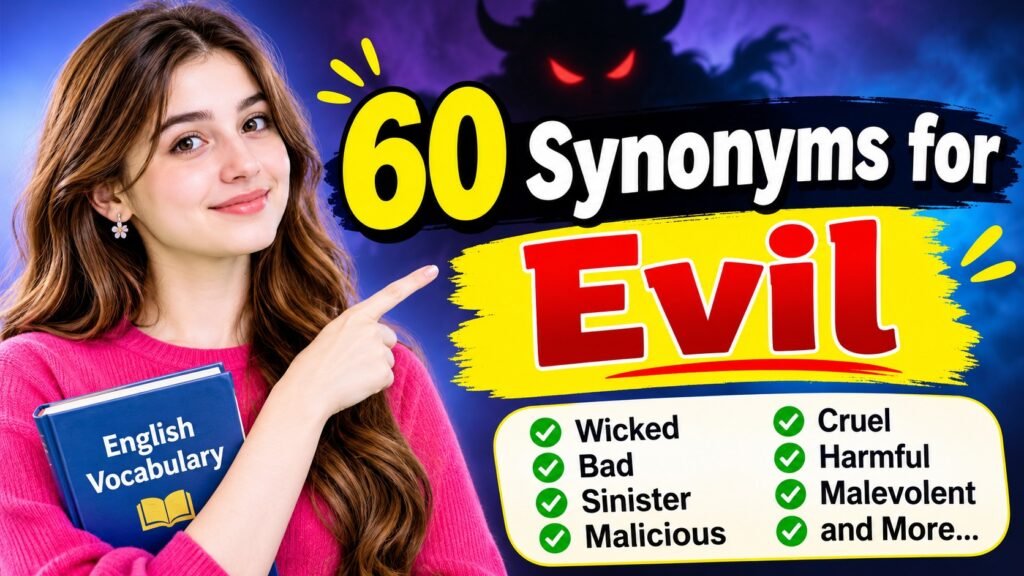
A synonym for evil is a word that means the same thing or almost the same thing, such as wicked, sinful, or immoral. Synonyms for evil describe people, actions, or ideas that cause harm or go against what is good. Pick the one that fits your sentence.
Maya stared at her essay. Her villain was “evil.” Then “evil” again. And once more. Her teacher had circled the word three times and written a short note: “Be more exact.” You may have felt this too. One tired word can make a strong idea feel flat.
“The limits of my language mean the limits of my world.” Ludwig Wittgenstein
Picture a news story about a crime. A reporter might call it heinous, not just evil. That one choice tells you how deep the harm goes. The right word does real work. Here is who gains from this list:
- Students: Sharper essays and better marks.
- Bloggers: Fresh words keep readers on your page.
- Content writers: Exact words make stories vivid.
- Daily English users: Speak clearly and sound confident.
“The difference between the almost right word and the right word is really a large matter.” Mark Twain
Below, you will find 60 words, each with a simple meaning and two short examples. Some words are strong. Some are soft. All of them are ready to use. Read slowly, pick a few favorites, and use them today.
60 Evil Synonym
1. Wicked
- Meaning: Deeply bad and meant to hurt others, often in stories or tales.
- Examples: The wicked queen locked the kind girl away. Nobody in town trusted the wicked old landlord.
2. Sinful
- Meaning: Breaking a moral or religious rule in a way seen as wrong.
- Examples: He felt sinful after telling such a cruel lie. The old preacher warned against sinful greed.
3. Immoral
- Meaning: Not following what most people see as right and fair.
- Examples: Cheating on the exam felt immoral to her. Many people call selling fake medicine immoral.
4. Vile
- Meaning: Very bad and disgusting, so it makes people feel sick.
- Examples: The vile thief robbed the pooor old man. She wrote a vile letter full of lies.
5. Malevolent
- Meaning: Wishing harm on other people and enjoying it when they suffer.
- Examples: A malevolent smile crossed the villain’s face. The cat gave the dog a malevolent stare.
6. Villainous
- Meaning: Acting like the bad person in a story or a crime.
- Examples: The villainous plan was to steal the town’s gold. His villainous laugh echoed through the dark hall.
7. Corrupt
- Meaning: Dishonest and willing to do wrong things to gain money or power.
- Examples: The corrupt mayor took money from every shop. Voters were angry about the corrupt police chief.
8. Depraved
- Meaning: Morally bad in a shocking way, with no care for others.
- Examples: The movie showed a depraved killer without mercy. Judges described the crime as cold and depraved.
9. Malicious
- Meaning: Done on purpose to hurt, upset, or cause trouble for another person.
- Examples: Someone spread a malicious rumor about our teacher. The malicious prank ruined her whole birthday party.
10. Heinous
- Meaning: Shockingly evil, used for terrible crimes that harm many people.
- Examples: The court punished the heinous crime very strongly. Nobody could forget such a heinous act.
11. Nefarious
- Meaning: Sneaky and wicked, often linked to secret plans and crimes.
- Examples: The spy had a nefarious plan for the city. Police stopped the nefarious gang before midnight.
12. Diabolical
- Meaning: Extremely cruel or clever in an evil way, like a devil.
- Examples: The villain laughed at his diabolical trap. She planned a diabolical trick on her brother.
13. Fiendish
- Meaning: Very cruel and wicked, like an evil spirit or monster.
- Examples: The fiendish dragon guarded the cave for years. A fiendish puzzle kept us up all night.
14. Sinister
- Meaning: Giving a feeling that something bad or dangerous may happen soon.
- Examples: A sinister shadow moved across the old wall. The stranger gave us a sinister smile.
15. Foul
- Meaning: Very bad or dirty, often used for evil words or deeds.
- Examples: He was punished for his foul and hateful words. A foul plot was hidden behind the smile.
16. Base
- Meaning: Low in morals, showing selfish and mean behavior toward others.
- Examples: Stealing from a friend was a base act. She refused to act from base motives.
17. Malign
- Meaning: Evil in effect, causing harm or showing a wish to hurt.
- Examples: The malign rumor spread quickly through the school. Some people fear the malign power of greed.
18. Baleful
- Meaning: Threatening evil or harm, often shown through a cold, angry look.
- Examples: The wolf gave the hunter a baleful glare. A baleful wind howled around the empty house.
19. Demonic
- Meaning: Like a demon, very evil, or seeming to come from darkness.
- Examples: The film showed a demonic voice in the dark. His demonic rage frightened the entire room.
20. Satanic
- Meaning: Linked to Satan, or showing extreme evil that is done on purpose.
- Examples: The old book spoke of a satanic cult. Writers use satanic images to build fear.
21. Monstrous
- Meaning: Shockingly cruel or wrong, like something a terrible monster would do.
- Examples: What he did to the animals was monstrous. The king made a monstrous and unfair law.
22. Atrocious
- Meaning: Extremely bad or cruel, causing shock, anger, and deep sadness in people.
- Examples: The war brought atrocious suffering to the village. Leaders must speak out against atrocious crimes.
23. Iniquitous
- Meaning: Very unfair and sinful, often used in formal or old writing.
- Examples: The iniquitous ruler taxed the pooor heavily. Poets once wrote about iniquitous cities and kings.
24. Unholy
- Meaning: Wicked and against what is sacred, good, or right in many beliefs.
- Examples: The knights faced an unholy army at dawn. She made an unholy deal with the villain.
25. Ungodly
- Meaning: Showing no respect for God or what is moral and good.
- Examples: The preacher called their greed an ungodly habit. Ungodly acts harmed the whole peaceful village.
26. Cruel
- Meaning: Willing to cause pain or suffering and feeling no pity.
- Examples: It is cruel to hurt a helpless animal. The cruel boss shouted at every worker.
27. Ruthless
- Meaning: Having no pity and doing anything to get what you want.
- Examples: The ruthless owner closed the shop without warning. Ruthless rivals tried to destroy his small business.
28. Vicious
- Meaning: Fierce and cruel, ready to attack or hurt with strong force.
- Examples: A vicious dog chased the boy down the street. She faced vicious comments after sharing her story.
29. Spiteful
- Meaning: Wanting to hurt or annoy someone because of anger or hate.
- Examples: His spiteful words stayed with her for days. A spiteful neighbor broke the little garden gate.
30. Perverse
- Meaning: Stubbornly doing wrong or harmful things, even when told not to.
- Examples: He took perverse joy in ruining the game. Her perverse choice surprised every honest person there.
Halfway there! Knowing the many shades of evil helps us name the darkness clearly.
“One does not become enlightened by imagining figures of light, but by making the darkness conscious.” Carl Jung
31. Rotten
- Meaning: Bad in a deep way, especially about a person’s character.
- Examples: That was a rotten trick to play on her. The rotten leader stole from his own people.
32. Dastardly
- Meaning: Sneaky, cowardly, and cruel, like a villain in an old cartoon.
- Examples: The dastardly pirate cut the rope at night. What a dastardly plan to cheat the children!
33. Devilish
- Meaning: Like a devil, very bad or tricky in a playful or evil way.
- Examples: A devilish grin spread across the thief’s face. The magician told a devilish riddle to the crowd.
34. Infernal
- Meaning: Connected to hell, or so terrible that it feels hellish.
- Examples: That infernal noise kept me awake all night. The old story described an infernal fire pit.
35. Hateful
- Meaning: Full of hate or causing others to feel strong dislike.
- Examples: He left a hateful note on her desk. Hateful speech can break a friendship very fast.
36. Harmful
- Meaning: Likely to cause damage, pain, or trouble to a person or thing.
- Examples: Harmful lies spread fast on the internet. Smoking is harmful to your body and lungs.
37. Sin
- Meaning: An act that breaks a moral or religious law and is seen as evil.
- Examples: He confessed his sin and asked for forgiveness. Many cultures teach that greed is a sin.
38. Wickedness
- Meaning: The state of being very bad, cruel, and without goodness.
- Examples: The story shows the wickedness of the greedy king. Nobody expected such wickedness from a kind teacher.
39. Villainy
- Meaning: Evil behavior, especially crimes done by a bad person or villain.
- Examples: The hero stopped the villainy of the masked thief. Old movies often celebrate the end of villainy.
40. Depravity
- Meaning: A very low moral state where a person does shocking, wrong things.
- Examples: The book exposed the depravity of the city’s rulers. Writers often explore depravity in dark crime stories.
41. Malice
- Meaning: A strong wish to hurt others, often hidden behind a smile.
- Examples: She spoke without malice, only honest worry. His eyes were full of malice and envy.
42. Vice
- Meaning: A bad habit or an immoral practice that harms a person.
- Examples: Gambling became his biggest vice in later years. The mayor promised to fight crime and vice.
43. Wrongdoing
- Meaning: Bad or illegal behavior that breaks rules or harms other people.
- Examples: The manager denied any wrongdoing in the company. Reporters uncovered years of hidden wrongdoing at the bank.
44. Badness
- Meaning: The quality of being bad, harmful, or not good at all.
- Examples: The tale teaches children about badness and kindness. She could not hide the badness in him.
45. Evildoing
- Meaning: The act of doing wicked things that hurt other people.
- Examples: The detective ended years of evildoing in town. Fairy tales often punish evildoing at the end.
46. Iniquity
- Meaning: Great unfairness or sin, often used in formal or religious writing.
- Examples: The speech condemned the iniquity of the old law. Preachers spoke about iniquity and the need for change.
47. Immorality
- Meaning: Behavior that goes against what society sees as right and good.
- Examples: Critics attacked the immorality of the greedy company. Honest leaders fight immorality in public life.
48. Corruption
- Meaning: Dishonest behavior by powerful people, often involving bribes and stolen money.
- Examples: Citizens marched against corruption in the city hall. Corruption slowly destroyed trust in the government.
49. Darkness
- Meaning: A word for evil, fear, or the lack of goodness.
- Examples: The hero walked bravely into the darkness. Darkness filled the heart of the cruel king.
50. Maleficent
- Meaning: Causing harm or evil, often in a magical or mysterious way.
- Examples: The maleficent witch cursed the whole sleeping kingdom. A maleficent force seemed to haunt the house.
51. Degenerate
- Meaning: Having fallen to a very low moral level, with no goodness left.
- Examples: The play shows a degenerate noble full of greed. Critics called the gang a degenerate crowd.
52. Reprehensible
- Meaning: Deserving blame because it is very wrong or morally bad.
- Examples: Lying to hurt a friend is reprehensible. The board called his behavior reprehensible and unfair.
53. Shameful
- Meaning: Bad enough to make a person feel deep shame or guilt.
- Examples: Hurting weaker kids is a shameful thing to do. The team’s shameful cheating was shown on television.
54. Treacherous
- Meaning: Betraying someone’s trust in a sneaky way that causes harm or pain.
- Examples: The treacherous friend sold her secret to the enemy. A treacherous plot nearly destroyed the royal family.
55. Abominable
- Meaning: Very bad and hateful, deserving strong dislike from almost everyone who sees it.
- Examples: The prisoners lived in abominable conditions for months. What an abominable way to treat guests!
56. Barbaric
- Meaning: Extremely cruel and wild, with no care for human feelings.
- Examples: The barbaric punishment shocked the whole world. Many countries have banned such barbaric practices.
57. Callous
- Meaning: Cold and unkind, showing no care for the pain of others.
- Examples: His callous reply made the whole room go quiet. A callous boss ignored the tired workers.
58. Unscrupulous
- Meaning: Willing to be dishonest or unfair to get what you want.
- Examples: An unscrupulous seller tricked old people into buying. The unscrupulous lawyer hid the truth from everyone.
59. Wrongful
- Meaning: Unfair or unjust, causing harm to someone who did nothing wrong.
- Examples: He spent years in prison for a wrongful charge. She won her wrongful dismissal case in court.
60. Despicable
- Meaning: Deserving hate and contempt because of cruel or shameful behavior.
- Examples: Stealing from the poosr is a despicable act. He felt despicable after breaking his promise.
Conclusion:
Learning synonyms is like adding new colors to a paint box. Instead of using one dull word again and again, you can pick the shade that fits. Wicked, vile, ruthless, and sinister all point to evil, but each one paints a different picture.
Strong word choice improves your writing, because readers stay interested. It helps your blogging, since fresh language keeps people on the page. It sharpens your speaking, so you sound clear and sure. It also improves daily communication, because the right word avoids confusion.
“Words are, of course, the most powerful drug used by mankeind.” Rudyard Kipling
Now put these words to work. Try one in an email today. Use another in your next essay. Say a new word at dinner and see how it feels. Practice is what makes a word truly yours.
“Whatever you want to say, there is only one word that will express it.” Gustave Flaubert
You do not need to learn all 60 at once. Pick five favorites and start there. Small steps build a rich vocabulary over time. Keep this list nearby, return to it often, and enjoy the growth. Your readers and listeners will notice. Your words have power, so choose them well.

I am Lily Peterson, a passionate writer at SynonymNexts.com, creating clear, helpful, and engaging content about synonyms, words, and language.