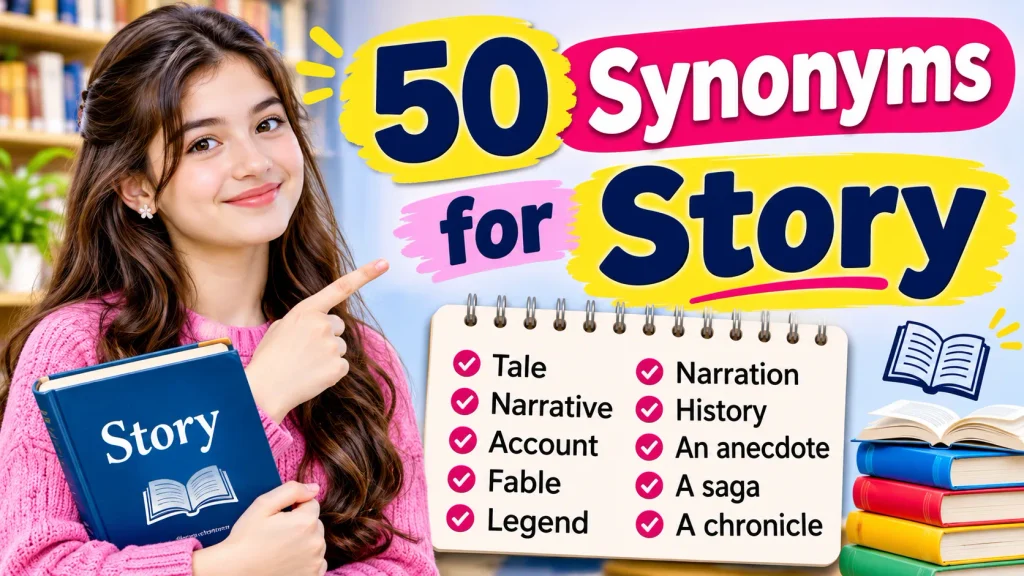
A good synonym for story is tale, narrative, account, or anecdote. Each word means a telling of real or imagined events, but the best choice depends on tone: tale feels classic, narrative feels formal, account feels factual, and anecdote feels short and personal.
Maya stared at her essay. The word story appeared six times in one paragraph, and it sounded flat. She wanted her teacher to feel the shipwreck, the fear, and the rescue. So she paused, searched for synonyms for story, and swapped in tale, account, and saga. Suddenly, her writing came alive.
“After nourishment, shelter and companionship, stories are the thing we need most in the world.” Philip Pullman
Here is a quick example. Instead of “It was a sad story,” try “It was a heartbreaking tale.” The idea is the same, but the feeling is much stronger.
Why does this help? Students get richer essays and better marks. Bloggers keep readers from getting bored. Content writers avoid repeating one word again and again. Daily English users sound clear, confident, and natural.
“The difference between the almost right word and the right word is really a large matter.” Mark Twain
Below are 50 synonyms, each with a simple meaning and two real-life examples. Pick the word that fits your tone and context.
“There is no greater agony than bearing an untold story inside you.” Maya Angelou
50 Synonyms for Story
1. Tale
- Meaning: A story, often old or imagined, told for fun or lessons.
- Examples: Grandma told us a tale about a brave fox. The tale made every child laugh out loud.
2. Narrative
- Meaning: A spoken or written telling of connected events in order.
- Examples: The narrative starts on a rainy morning. Her narrative kept the whole class listening.
3. Account
- Meaning: A report that tells what happened, usually from one person’s view.
- Examples: He gave a clear account of the accident. Her account matched what the police heard.
4. Anecdote
- Meaning: A short, funny or interesting story about a real moment.
- Examples: He opened his speech with a funny anecdote. I shared an anecdote about my first job.
5. Legend
- Meaning: An old story passed down, often mixing truth and imagination.
- Examples: The legend says a dragon lives in the lake. Every village in the area knows this legend.
6. Fable
- Meaning: A short story, often with animals, that teaches a lesson.
- Examples: The fable about the tortoise taught me patience. We read a fable in class today.
7. Myth
- Meaning: An ancient story that explains nature, gods, or how things began.
- Examples: The Greek myth explains why seasons change. She wrote a report on a Roman myth.
8. Saga
- Meaning: A long story about brave people or a family across years.
- Examples: The saga follows three generations of one family. He is reading a Viking saga this week.
9. Yarn
- Meaning: An informal word for a long, exciting, often exaggerated story.
- Examples: The old sailor spun a yarn about sea monsters. Dad loves telling a good yarn at dinner.
10. Chronicle
- Meaning: A detailed record of events told in the order they happened.
- Examples: The book is a chronicle of the war years. She kept a chronicle of her travels.
11. Plot
- Meaning: The main chain of events that makes up a story.
- Examples: The plot twist surprised every person in the room. I could not follow the movie’s plot.
12. Storyline
- Meaning: The main path of events that a book or show follows.
- Examples: The storyline of this series keeps getting better. Her storyline is simple but very touching.
13. Narration
- Meaning: The act of telling a story, or the voice that tells it.
- Examples: His calm narration made the film feel real. The narration in this audiobook is beautiful.
14. Recital
- Meaning: A detailed telling of facts or events, one after another.
- Examples: His recital of the day’s events took an hour. The witness gave a careful recital of facts.
15. Epic
- Meaning: A very long story about heroes and great deeds.
- Examples: The Odyssey is a famous epic poem. He wrote an epic about a lost kingdom.
16. Parable
- Meaning: A simple story that teaches a moral or spiritual lesson.
- Examples: The teacher shared a parable about kindness. That parable about honesty still guides me today.
17. Folktale
- Meaning: A traditional story shared by people of one culture or region.
- Examples: This folktale comes from a small mountain village. Children love the folktale about the clever rabbit.
18. Fairy Tale
- Meaning: A magical story with characters like fairies, princesses, and giants.
- Examples: She read a fairy tale before going to bed. The fairy tale ended with a happy wedding.
19. Novella
- Meaning: A story longer than a short story but shorter than a novel.
- Examples: He finished the novella in just two nights. This novella won a big prize last year.
20. Fiction
- Meaning: Made-up stories told in books, films, or other forms.
- Examples: I enjoy reading fiction on rainy weekends. That book is pure fiction, not real history.
21. Memoir
- Meaning: A story written by a person about their own life.
- Examples: Her memoir describes growing up in a small town. He is writing a memoir about his army days.
22. Biography
- Meaning: A written story of one person’s life by someone else.
- Examples: I borrowed a biography of Marie Curie. The biography shows how she never gave up.
23. Autobiography
- Meaning: The story of a person’s life, written by that same person.
- Examples: His autobiography became a bestseller last summer. She signed copies of her autobiography today.
24. History
- Meaning: The story of past events, people, and places over time.
- Examples: Our town has a rich and colorful history. She loves learning the history of old buildings.
25. Version
- Meaning: One person’s way of telling or explaining what happened.
- Examples: His version of the story was different. Tell me your version of the event.
26. Description
- Meaning: Words that paint a clear picture of something that happened.
- Examples: Her description of the storm gave me chills. Please give a short description of your trip.
27. Report
- Meaning: A spoken or written telling of facts about something.
- Examples: The news report covered the flood in detail. She read a report about the missing dog.
28. Article
- Meaning: A piece of writing in a paper or on a website.
- Examples: I read an article about the new library. His article tells the story of a hero.
29. Scoop
- Meaning: An exciting news story that a reporter finds before others do.
- Examples: The reporter got the scoop on the big merger. Everyone wanted the scoop on her wedding plans.
30. Feature
- Meaning: A long, special story in a magazine or news show.
- Examples: The magazine ran a feature on local farmers. Her feature about street artists won an award.
31. Rumor
- Meaning: A story passed around that may not be true.
- Examples: A rumor about the school closing spread fast. I never believe a rumor without proof.
32. Gossip
- Meaning: Casual talk or stories about other people’s private lives.
- Examples: The office gossip was all about the new boss. She does not enjoy hearing gossip at lunch.
33. Tall Tale
- Meaning: A story full of big exaggerations that is hard to believe.
- Examples: Uncle Joe told a tall tale about fishing. Nobody believed his tall tale about the bear.
34. Fib
- Meaning: A small lie, often told as a made-up story.
- Examples: He told a fib to avoid chores. It was just a harmless little fib.
35. Allegory
- Meaning: A story where characters and events stand for deeper ideas.
- Examples: The book is an allegory about power and greed. Our teacher explained the allegory in simple words.
36. Fantasy
- Meaning: A story set in a magical world full of imagination.
- Examples: She loves reading fantasy with dragons and wizards. The fantasy took us to a land of floating islands.
37. Adventure
- Meaning: An exciting story full of danger, travel, and bold action.
- Examples: The book is an adventure set in the jungle. We watched an adventure about a lost treasure.
38. Experience
- Meaning: A story about something that happened to you in real life.
- Examples: She shared her experience of moving abroad. His experience on the mountain was unforgettable.
39. Episode
- Meaning: One part of a longer story or TV series.
- Examples: Last night’s episode ended with a big surprise. I never miss an episode of this show.
40. Incident
- Meaning: A short story about one event, usually unusual or unpleasant.
- Examples: He wrote about the incident at the market. The incident became a funny family story.
41. Drama
- Meaning: A story meant to be acted out on stage or screen.
- Examples: The school drama made the audience cry. She stars in a new TV drama.
42. Lore
- Meaning: Traditional stories and knowledge passed down among a group.
- Examples: Local lore says the old well is cursed. He collects sailors’ lore from around the world.
43. Folklore
- Meaning: The stories, sayings, and customs of a community, passed down.
- Examples: Folklore from this region is full of ghosts. She studies folklore at the city university.
44. Recounting
- Meaning: The act of retelling what happened in a clear order.
- Examples: His recounting of the trip made us laugh. The judge listened to her calm recounting.
45. Chapter
- Meaning: One section of a book that tells part of the story.
- Examples: I read the first chapter before bedtime today. The last chapter had a shocking ending.
46. Ballad
- Meaning: A story told in the form of a song or poem.
- Examples: The singer performed a ballad about lost love. We learned an old ballad in music class.
47. Mystery
- Meaning: A story about a puzzle, crime, or secret to solve.
- Examples: She loves a good mystery with clever clues. The mystery kept me awake all night.
48. Thriller
- Meaning: A fast, exciting story that keeps readers feeling tense.
- Examples: This thriller had me on the edge. He wrote a thriller about a stolen painting.
49. Romance
- Meaning: A story about love between two or more characters.
- Examples: Their romance began on a train to Paris. She reads a romance every Sunday afternoon.
50. Testimony
- Meaning: A person’s spoken story about what they saw or lived.
- Examples: Her testimony helped the police solve the case. The survivor’s testimony moved everyone in the room.
Another Word for Story in Writing
When you write essays, blogs, or reports, repeating story makes your text feel dull. Swap it with narrative for formal work, account for factual pieces, or tale for creative writing. Use plot or storyline when you talk about the events inside a book or film. Always read the sentence aloud. If the new word sounds natural and keeps your meaning clear, keep it.
Formal Synonyms for Story
Formal writing needs precise words. Narrative, account, chronicle, and recital work well in essays, reports, and professional emails. A historian might call a war record a chronicle, while a lawyer might ask for a witness account. These words sound serious and neutral, so they fit school papers, business writing, and news articles better than casual words like yarn or fib.
Casual Words for Story in Daily Talk
With friends and family, simple words feel best. Say tale for a fun story, yarn for a long exaggerated one, and anecdote for a quick personal moment. You can also say gossip or rumor when people share talk about others. Casual words make you sound warm and relaxed, so use them in chats, social media captions, and relaxed blog posts.
Words for a True Story vs a Made-Up Story
Some words show that events are real, while others show imagination. Use memoir, biography, account, and history for true stories. Use fable, fairy tale, fantasy, and fiction for made-up ones. Choosing correctly builds trust with readers. If you call an imaginary adventure an account, people may think it really happened, so match the word to the facts.
FAQs:
What is a better word for story?
There is no single best word, because the right choice depends on your meaning. Use tale for a classic or magical story, narrative for a formal piece, account for a factual report, and anecdote for a short personal moment. Ask yourself three things: Is it real or imagined? Is it long or short? Is the tone formal or casual? Your answers will point to the best word.
What is the difference between a story and a narrative?
A story is the tale itself: characters, events, and an ending. A narrative is the way that story is told, including the order, voice, and style. For example, two writers can share the same story but build different narratives. In everyday English, people often use the words as equals, but narrative sounds more formal and is common in essays and business writing.
What is another word for a short story?
Good options include tale, anecdote, fable, and parable. Use anecdote for a brief personal moment, fable for a short animal story, and parable when the story teaches a moral lesson. In literature classes, you may also see vignette, which describes one small, vivid scene instead of a full plot with a clear beginning, middle, and end.
What do you call a person who tells stories?
A person who tells stories is called a storyteller. Other words include narrator, raconteur, author, and fabulist. A narrator tells the story inside a book or film, while an author writes it. A raconteur is someone who tells funny or interesting stories skillfully in conversation. Pick the word that matches whether the story is spoken, written, or performed on stage.
Conclusion:
Learning synonyms for story is a small habit with a big reward. When you know words like tale, narrative, account, and saga, your writing stops sounding repetitive and starts sounding alive. Blog readers stay longer. Teachers notice your strong word choice. Listeners enjoy your speaking because your language feels fresh and clear.
“The limits of my language mean the limits of my world.” Ludwig Wittgenstein
Every new word you learn widens your world a little more. It also helps you express feelings and facts more exactly, which improves communication at school, at work, and at home.
The best way to remember these words is to use them. Try swapping one into your next email. Add two or three to your next essay. Tell a friend an anecdote at dinner, or describe a movie plot using the right term. Start small, and choose only one or two new words each week. Soon they will feel natural.
“If history were taught in the form of stories, it would never be forgotten.” Rudyard Kipling
Keep this list nearby, return to it whenever the word story feels tired, and let your own stories shine. Your voice deserves strong words. Now go write something memorable.

I am James Carter, a passionate writer at SynonymNexts.com, sharing clear, useful, and engaging synonym guides to improve everyday writing.