
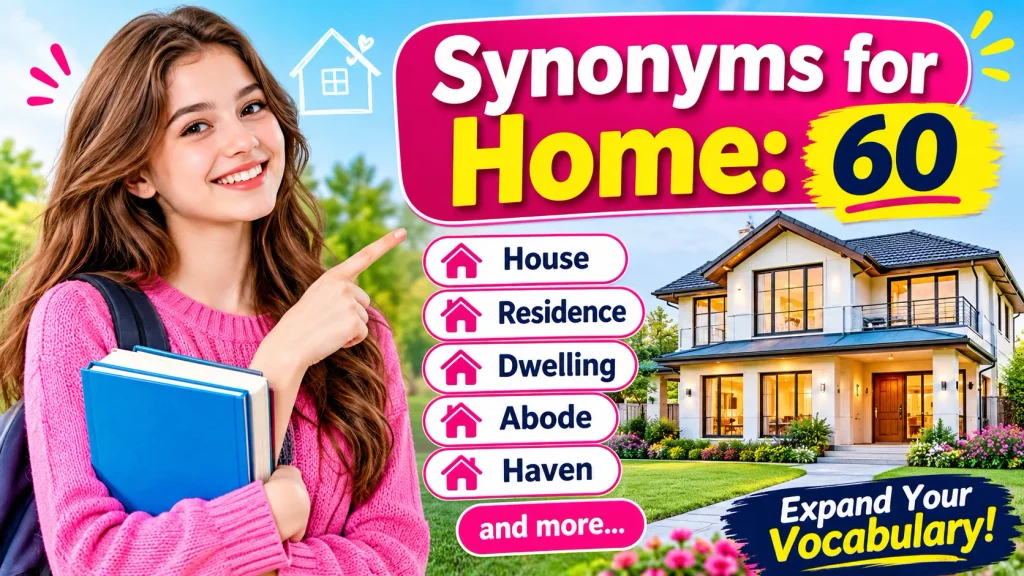
A synonym for home is a word that means the place where you live or feel you belong. Good choices include house, residence, dwelling, abode, and shelter. Each word has a slightly different tone, from casual to formal, so pick the one that fits your sentence.
Maya stared at her essay and frowned. She had typed the word “home” six times in one paragraph. It felt flat, like a song stuck on repeat. So she searched for fresher words, and suddenly her sentences felt warm and alive.
“Home is where the heart is.”
Here is a simple example. Instead of writing, “I went back home after school,” you could write, “I returned to my cozy apartment after school.” The idea stays the same, but the sentence sounds fresh and clear. Small changes like this make a big difference.
Knowing synonyms for home helps almost everyone. Students can write stronger essays. Bloggers can keep readers interested for longer. Content writers can avoid repeated words and improve their SEO. Daily English users can sound more natural in everyday talk. Best of all, these words are easy to learn. Ready? Let us dive in.
“East or west, home is best.”
60 Synonyms for Home
1. House
- Meaning: A building where a person or family lives and sleeps.
- Examples: We painted our house bright yellow last summer. Their house sits at the end of the street.
2. Residence
- Meaning: A formal word for the place where someone lives full time.
- Examples: The president’s residence is guarded day and night. Please send the form to my permanent residence.
3. Dwelling
- Meaning: A formal or old-fashioned word for a place to live.
- Examples: The old stone dwelling stood near the river. Each dwelling in the village had a small garden.
4. Abode
- Meaning: A poetic word for the place where a person lives.
- Examples: Welcome to my humble abode, please come in. The wizard’s abode was hidden deep in the forest.
5. Shelter
- Meaning: A safe place that protects people from weather or danger.
- Examples: The family found shelter from the storm. Every child deserves a warm and safe shelter.
6. Apartment
- Meaning: A home that is one part of a larger building.
- Examples: Her apartment is on the third floor. We rent a small apartment near the market.
7. Flat
- Meaning: A British word for an apartment inside a bigger building.
- Examples: He shares a flat with two friends. Their new flat has a lovely balcony.
8. Cottage
- Meaning: A small and cozy house, often found in the countryside.
- Examples: Grandma lives in a cottage by the lake. We spent the weekend at a quiet cottage.
9. Cabin
- Meaning: A small wooden house, usually built in the woods.
- Examples: They rented a cabin in the snowy mountains. Smoke curled from the cabin’s tiny chimney.
10. Villa
- Meaning: A large, nice house, often with a garden or pool.
- Examples: Their holiday villa overlooks the sparkling blue sea. We stayed in a villa with a pool.
11. Mansion
- Meaning: A very large and grand house owned by a rich person.
- Examples: The mansion had twenty rooms and a ballroom. Tourists took photos outside the famous mansion.
12. Bungalow
- Meaning: A low and simple house that has only one floor.
- Examples: My uncle bought a bungalow near the beach. A bungalow is easy for older people to use.
13. Condo
- Meaning: An apartment that you own inside a shared building complex.
- Examples: She bought a condo downtown last year. The condo has a gym and a pool.
14. Lodging
- Meaning: A place where you stay for a short time.
- Examples: The camp offers free lodging for all volunteers. We booked lodging close to the train station.
15. Quarters
- Meaning: Rooms where people live or stay, often given by a job.
- Examples: The soldiers returned to their quarters at night. Staff quarters are behind the main hotel building.
16. Habitat
- Meaning: The natural place where an animal or plant usually lives.
- Examples: The forest is a perfect habitat for owls. Pollution is destroying the habitat of many fish.
17. Household
- Meaning: A family or group of people living together in one home.
- Examples: Our household wakes up early every morning. Every household received a free water filter.
18. Homestead
- Meaning: A house with its land, often on a family farm.
- Examples: Their homestead has chickens, cows, and apple trees. He grew up on a quiet homestead.
19. Hearth
- Meaning: The fireplace area, often used to mean a warm home.
- Examples: We gathered around the hearth to tell stories. She missed the warmth of hearth and family.
20. Nest
- Meaning: A cozy home, like the one birds build for babies.
- Examples: The couple made a lovely nest together. Their grown children have left the nest.
21. Den
- Meaning: A small and comfy room in a house for relaxing.
- Examples: Dad watches football in the den every Sunday. Our den has soft sofas and old books.
22. Roost
- Meaning: A place where a person rests or settles, like a bird.
- Examples: After the long trip, he returned to his roost. She found a quiet roost by the window.
23. Domicile
- Meaning: A legal or formal word for a person’s permanent home.
- Examples: Please write your domicile address on the form. His domicile is in Lahore, not Karachi.
24. Pad
- Meaning: A casual slang word for someone’s apartment or small room.
- Examples: Come over to my pad after class. His new pad is small but super cool.
25. Digs
- Meaning: A casual slang word for the place where someone lives.
- Examples: Nice digs! How much rent do you pay? She decorated her new digs with bright posters.
26. Place
- Meaning: A simple, everyday word for the home where you live.
- Examples: Let’s meet at my place around six. Their place is just five minutes from here.
27. Haven
- Meaning: A safe and peaceful place where you feel fully protected.
- Examples: Her garden is a quiet haven from stress. Home should be a haven after a long day.
28. Sanctuary
- Meaning: A very peaceful place where you feel safe and calm.
- Examples: His small room became a sanctuary during exams. She treats her bedroom as a quiet sanctuary.
29. Retreat
- Meaning: A calm place you go to rest away from busy life.
- Examples: They built a mountain retreat for family holidays. The lake house is our weekend retreat.
30. Refuge
- Meaning: A place that keeps you safe from danger or trouble.
- Examples: The old church offered refuge to travelers. Home was her refuge from a noisy world.
31. Hometown
- Meaning: The small town or city where a person grew up.
- Examples: I always visit my hometown during the winter holidays. Her hometown is famous for sweet mangoes.
32. Homeland
- Meaning: The country where a person was born or feels they belong.
- Examples: He dreamed of returning to his homeland. Many people sing songs about their homeland.
33. Motherland
- Meaning: A loving word for the country where you were born.
- Examples: The brave soldiers promised to protect their motherland. She felt proud to serve her motherland.
34. Native Land
- Meaning: The country or area where a person was originally born.
- Examples: He missed the food of his native land. Poets often write about their native land.
35. Birthplace
- Meaning: The exact town, city, or house where a person was born.
- Examples: Her birthplace is a tiny village in Punjab. This little museum was the poet’s birthplace.
36. Fireside
- Meaning: The area near a fireplace, often meaning a cozy home life.
- Examples: We spent winter evenings sitting by the fireside. Fireside chats with Grandpa are my favorite memories.
37. Roof
- Meaning: A casual word that means having a place to live.
- Examples: Everyone should have a roof over their head. He works hard to keep a roof above them.
38. Address
- Meaning: The details that tell people exactly where your home is.
- Examples: Please write your home address on this card. I forgot to save her new address.
39. Accommodation
- Meaning: A place to live or stay, often arranged for you.
- Examples: The company will pay for my accommodation. Student accommodation here is clean and affordable.
40. Premises
- Meaning: A building and the land around it, often used formally.
- Examples: Visitors must leave the premises before sunset. The owner lives on the premises with his family.
41. Property
- Meaning: A house or piece of land that someone owns.
- Examples: They sold the property and moved abroad. This property has three bedrooms and a garden.
42. Estate
- Meaning: A large property with a big house and lots of land.
- Examples: The family estate stretches across hills and valleys. They hosted the wedding at a country estate.
43. Manor
- Meaning: A large country house that is often very old and grand.
- Examples: The old manor was covered with green ivy. Guests arrived at the manor in horse carriages.
44. Townhouse
- Meaning: A tall, narrow home that shares walls with its neighbors.
- Examples: Their townhouse has three floors and a tiny yard. She bought a townhouse close to her office.
45. Duplex
- Meaning: A building with two homes, one beside or above the other.
- Examples: We live in one half of a duplex. The duplex has a separate door for each family.
46. Penthouse
- Meaning: A fancy apartment on the very top floor of a tall building.
- Examples: The penthouse has a wonderful view of the city. He dreams of owning a penthouse someday.
47. Studio
- Meaning: A small apartment where living and sleeping happen in one room.
- Examples: I rent a studio near the university. Her studio is small but very tidy.
48. Hut
- Meaning: A very small and simple house made from basic materials.
- Examples: The shepherd slept in a hut on the hill. They built a hut from sticks and leaves.
49. Lair
- Meaning: A hidden home, often used for wild animals or villains.
- Examples: The bear returned to its lair before winter. The villain’s lair was hidden beneath the old castle.
50. Base
- Meaning: A place from which a person lives, works, or travels.
- Examples: This town will be our base for the trip. She uses her sister’s flat as a base.
Another Word for Home
If you only need another word for home, start with house, residence, or place. These three fit almost any sentence and sound natural. Use house for the building, residence for formal writing, and place for casual talk. If you want to show feeling, try haven or hearth. Always check your sentence first, because the best word is the one that matches your mood and your reader.
“A house is made of walls and beams; a home is built with love and dreams.”
Formal Synonyms for Home
Formal synonyms for home work best in reports, legal papers, and polished essays. Good choices include residence, domicile, dwelling, and premises. These words sound serious and precise, so they suit official forms or news writing. Avoid them in chatty messages, because they can feel stiff. For example, saying “my domicile” to a friend may make them smile.
Slang Words for Home
Slang words for home make speech sound relaxed and friendly. Try pad, digs, or place when talking to friends. You might say, “Come to my pad tonight.” These words fit texts, social media, and casual blog posts. However, skip them in job applications or school essays. Slang is fun, but it works best when your audience already knows you.
Words That Mean Home Sweet Home
People often say home sweet home to show joy after returning to a loved place. Words like haven, sanctuary, nest, and hearth carry that same warm feeling. They help you describe comfort, safety, and belonging. Use them in stories, captions, or greeting cards. For example, you might write, “Our little nest is my favorite sanctuary in the world.”
FAQs:
What is a fancy word for home?
A fancy word for home is residence, abode, or domicile. Abode sounds poetic, while domicile sounds legal. Mansion and estate also sound fancy, but they mean large, expensive properties. Use fancy words carefully, because they can sound strange in simple writing. A good rule is to match the word to your audience. Choose them for formal letters, speeches, or stories where a graceful tone helps.
What is the difference between house and home?
A house is a building, while a home is a place filled with feelings. You can buy a house, but you build a home with memories, people, and comfort. A tent, apartment, or cottage can be a home if you feel safe there. In writing, use house for the structure and home for belonging, warmth, and daily family life.
What is a word for a place where you feel at home?
To describe a place where you feel at ease, use haven, sanctuary, refuge, or retreat. Each word shows safety and calm. For example, you could say, “My grandmother’s kitchen is my haven.” These words are great for blog posts, captions, and personal stories because they add emotion without making your sentence hard to read. They work well in short and long sentences.
What is the opposite of home?
The opposite of home depends on the meaning. If you mean a place to live, the opposite may be away, abroad, or elsewhere. If you mean belonging, try exile or foreign land. For the idea of having no home, writers use homeless or displaced. Pick the word that fits your sentence, and always think about the feeling you want to show.
Conclusion:
Learning synonyms is one of the easiest ways to level up your English. Instead of repeating one word again and again, you can pick the exact word that fits your idea. Words like house, haven, residence, and hearth each paint a different picture. That makes your writing clearer, richer, and more enjoyable to read.
“The more words you know, the more colors you can paint with.”
Synonyms also help in blogging and speaking. Bloggers keep readers interested with fresh language, while speakers sound confident and natural. In everyday communication, the right word can show warmth, respect, or humor in a single moment.
Now it is your turn to practice. Pick five words from this list and use them this week. Add one to an email, one to a short essay, and one to a chat with a friend. You do not need to memorize everything at once. Learn two or three words a day and review them often.
“Small words, used well, can build big meaning.”
Keep this guide handy, and return whenever you need another word for home.

I am Ryan Wilson, a passionate writer at SynonymNexts.com, sharing clear, useful, and engaging content about words, synonyms, and language.