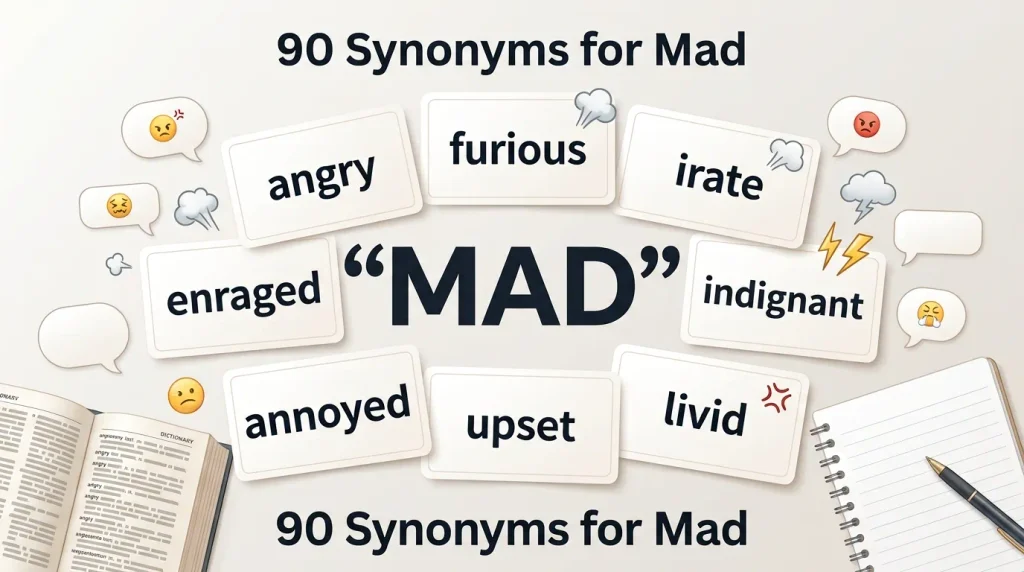
Synonyms for mad include angry, furious, annoyed, upset, irritated, enraged, frustrated, and offended. The best word depends on how strong the feeling is and why someone feels it. Some words sound mild, while others show very strong anger. Choosing the right synonym can make your speaking and writing clearer.
The room suddenly went quiet. Someone had changed an important plan without telling anyone. At first, Sara felt annoyed. A few minutes later, she was very angry. Her feelings were the same type of emotion, but the strength had changed.
That small difference matters when choosing words. Saying someone is irritated sounds softer than saying they are furious. A good synonym helps readers understand the exact feeling.
For students, these words can make essays and school answers more varied. For bloggers, they can make articles sound more natural. For content writers, they help create stronger descriptions. For daily English users, they make conversations clearer and more expressive.
“The right word can make a simple feeling easier to understand.”
A person may also use different words depending on the situation. You might feel frustrated when a task is difficult, offended after a rude comment, or enraged after something deeply unfair happens.
“Small changes in words can show big changes in emotion.”
90 Synonyms for Mad
1. Angry
- Meaning: Feeling strong displeasure because something wrong or unwanted happened.
- Examples: Mark felt angry about the delay.
She looked angry after hearing that.
2. Furious
- Meaning: Feeling extremely angry and unable to hide your strong emotion.
- Examples: Dad was furious about the damage.
She became furious when they lied.
3. Annoyed
- Meaning: Feeling slightly angry because something bothers or troubles you.
- Examples: I felt annoyed by the noise.
She looked annoyed during the meeting.
4. Irritated
- Meaning: Feeling bothered or angry because something keeps causing trouble.
- Examples: He became irritated by questions.
The delay left everyone irritated.
5. Enraged
- Meaning: Feeling extremely angry because something seems very wrong.
- Examples: The unfair rule enraged workers.
She was enraged by their actions.
6. Frustrated
- Meaning: Feeling upset because something is difficult or not working.
- Examples: I felt frustrated with homework.
He became frustrated during practice.
7. Upset
- Meaning: Feeling unhappy, troubled, or angry about something that happened.
- Examples: She was upset about missing lunch.
He seemed upset after the argument.
8. Infuriated
- Meaning: Made extremely angry by something unfair, rude, or frustrating.
- Examples: The comment infuriated Tom quickly.
She felt infuriated by his behavior.
9. Outraged
- Meaning: Extremely angry because something seems unfair, wrong, or offensive.
- Examples: Citizens were outraged by the decision.
She felt outraged after reading it.
10. Mad
- Meaning: Feeling angry because someone or something caused a problem.
- Examples: Mom was mad about the mess.
I am mad at him.
11. Cross
- Meaning: Slightly angry or annoyed, especially in everyday British English.
- Examples: Dad was cross about dinner.
She sounded cross on the phone.
12. Furious
- Meaning: Very angry, often showing a much stronger feeling than anger.
- Examples: He was furious about losing.
She became furious after the mistake.
13. Wrathful
- Meaning: Showing powerful anger, often in a serious or dramatic way.
- Examples: The king looked wrathful today.
His wrathful voice filled the room.
14. Irate
- Meaning: Very angry, especially because something unfair or unpleasant happened.
- Examples: An irate customer called support.
The manager faced an irate guest.
15. Fuming
- Meaning: Feeling extremely angry while struggling to stay calm.
- Examples: She was fuming after work.
He stood there, fuming silently.
16. Seething
- Meaning: Feeling very angry while keeping the emotion mostly inside.
- Examples: He was seething with anger.
She left the room, seething.
17. Incensed
- Meaning: Extremely angry because something feels deeply unfair or offensive.
- Examples: The coach was incensed by cheating.
She felt incensed after the insult.
18. Exasperated
- Meaning: Very annoyed because problems keep happening again and again.
- Examples: I felt exasperated by delays.
She sounded exasperated with them.
19. Agitated
- Meaning: Feeling upset, nervous, or angry and unable to stay calm.
- Examples: He became agitated during questioning.
She looked agitated after the call.
20. Hostile
- Meaning: Showing anger or unfriendly feelings toward another person.
- Examples: His hostile reply surprised everyone.
She became hostile during the discussion.
21. Resentful
- Meaning: Feeling angry because you believe someone treated you unfairly.
- Examples: He felt resentful about the decision.
She became resentful after repeated criticism.
22. Bitter
- Meaning: Feeling angry and unhappy because of past unfair treatment.
- Examples: He sounded bitter about losing.
She felt bitter after their argument.
23. Offended
- Meaning: Feeling hurt or angry because someone behaved rudely.
- Examples: Mia felt offended by his joke.
He looked offended after the comment.
24. Provoked
- Meaning: Made angry because someone did something that caused a reaction.
- Examples: His words provoked her quickly.
The rude act provoked an argument.
25. Worked Up
- Meaning: Very upset, worried, or angry about something that happened.
- Examples: Don’t get worked up yet.
He became worked up over nothing.
26. Raging
- Meaning: Showing or feeling extremely strong and uncontrolled anger.
- Examples: He was raging after losing.
She left while he was raging.
27. Seething
- Meaning: Feeling intense anger that remains hidden beneath a calm surface.
- Examples: She was seething inside quietly.
He sat there, seething with anger.
28. Livid
- Meaning: Extremely angry because something serious or unfair happened.
- Examples: Dad was livid about the bill.
She looked livid after hearing this.
29. Chafed
- Meaning: Feeling annoyed because something feels unfair, limiting, or uncomfortable.
- Examples: He chafed under strict rules.
She chafed at the unfair treatment.
30. Displeased
- Meaning: Feeling unhappy because something did not meet your expectations.
- Examples: The teacher looked displeased today.
Dad seemed displeased with our work.
31. Disgruntled
- Meaning: Feeling unhappy or annoyed about a situation or treatment.
- Examples: Several workers felt disgruntled afterward.
The disgruntled customer requested help.
32. Aggravated
- Meaning: Feeling increasingly annoyed because something causes repeated problems.
- Examples: The delay aggravated everyone there.
I felt aggravated by traffic.
33. Vexed
- Meaning: Feeling annoyed, worried, or troubled by a difficult problem.
- Examples: She was vexed by the puzzle.
He looked vexed after reading it.
34. Peeved
- Meaning: Slightly angry because something annoying happened.
- Examples: She was peeved about lunch.
He seemed peeved by the change.
35. Miffed
- Meaning: Slightly angry because someone did something disappointing or rude.
- Examples: Tom was miffed about being forgotten.
She felt miffed by their choice.
36. Sullen
- Meaning: Quietly angry and unwilling to speak or seem friendly.
- Examples: He became sullen after losing.
She gave a sullen reply.
37. Grumpy
- Meaning: Easily annoyed and unpleasant because you feel unhappy.
- Examples: Dad gets grumpy when tired.
The child seemed grumpy this morning.
38. Cranky
- Meaning: Easily annoyed or angry, often because you feel tired.
- Examples: I feel cranky without sleep.
She was cranky before breakfast.
39. Testy
- Meaning: Becoming annoyed or angry very quickly during conversations.
- Examples: He sounded testy on Monday.
She became testy during the debate.
40. Short-Tempered
- Meaning: Becoming angry quickly when something goes wrong.
- Examples: My uncle is short-tempered sometimes.
She became short-tempered after work.
41. Touchy
- Meaning: Easily upset or angry when someone mentions certain subjects.
- Examples: He is touchy about money.
She became touchy after that question.
42. Hot-Tempered
- Meaning: Likely to become angry quickly and show strong emotions.
- Examples: His hot-tempered nature caused problems.
She can be hot-tempered sometimes.
43. Choleric
- Meaning: Easily angered and likely to react with strong emotion.
- Examples: The choleric man shouted loudly.
His choleric mood worried everyone.
44. Resentful
- Meaning: Still angry because you believe someone treated you unfairly.
- Examples: She remained resentful for years.
He felt resentful after losing.
45. Aggrieved
- Meaning: Feeling upset because you believe you were treated unfairly.
- Examples: The aggrieved worker filed complaints.
She sounded aggrieved during the meeting.
46. Indignant
- Meaning: Feeling angry because something seems unfair or disrespectful.
- Examples: She gave an indignant reply.
He felt indignant after the accusation.
47. Discontented
- Meaning: Feeling unhappy because a situation does not satisfy you.
- Examples: Workers felt discontented with changes.
She became discontented with her role.
48. Dissatisfied
- Meaning: Feeling unhappy because something did not meet your needs.
- Examples: The customer was dissatisfied with service.
He felt dissatisfied after the meal.
49. Unhappy
- Meaning: Feeling sad, troubled, or displeased about something.
- Examples: She was unhappy with the result.
He looked unhappy after school.
50. Incensed
- Meaning: Feeling extremely angry because someone caused serious offense.
- Examples: The owner was incensed by theft.
She became incensed after hearing that.
How to Choose the Right Synonym for Mad
Not every synonym for mad has the same strength. Annoyed, peeved, and miffed usually describe lighter anger. Angry, irritated, and frustrated are common choices for everyday situations. Stronger words such as furious, enraged, livid, and incensed describe much more intense feelings.
The situation also matters. Use frustrated when something blocks your progress. Use offended when someone hurts your feelings through rude behavior. Use resentful when anger continues because of unfair treatment. Choosing the right word makes your sentence more exact.
“Strong writing does not always use stronger words; it uses the most fitting words.”
Mild Synonyms for Mad
When the emotion is not very strong, choose words such as annoyed, irritated, peeved, miffed, displeased, or grumpy. These words work well in friendly conversations and everyday writing.
For example, “I am annoyed by the noise” sounds calmer than “I am furious about the noise.” This difference can help you avoid making a small problem sound much bigger than it is.
Strong Synonyms for Mad
For very powerful anger, words such as furious, enraged, livid, infuriated, outraged, raging, and incensed can be useful. These words should be used when the situation truly involves strong emotion.
In formal writing, choose strong words carefully. A powerful word can change the tone of a sentence. Outraged may suggest that someone believes an event is deeply wrong, while furious mainly focuses on the intensity of anger.
Synonyms for Mad in Formal Writing
Formal writing often needs clear and specific vocabulary. Instead of repeating mad, writers can use irate, displeased, dissatisfied, aggrieved, indignant, or resentful, depending on the situation.
For example, a report might say that a customer was dissatisfied with the service rather than saying the customer was mad. The formal choice sounds more precise and explains the reason for the reaction.
Synonyms for Mad in Daily Conversation
In casual English, common words are usually easiest. Angry, annoyed, upset, mad, frustrated, irritated, grumpy, and peeved can fit many everyday situations.
The best choice depends on the speaker and context. “I am annoyed” sounds mild. “I am really angry” sounds stronger. “I am furious” shows a much higher level of emotion. Learning these differences helps you speak naturally.
Why Learning Synonyms for Mad Matters
Learning different words for one feeling gives you more control over your English. If you only use mad, your writing may sound repetitive. Using related words lets you explain the strength, cause, and type of emotion more clearly.
For students, synonyms can improve essays and vocabulary exercises. Bloggers can use them to make articles more interesting. Content writers can create better stories and descriptions. English learners can understand conversations more easily when people use less common words.
It is also useful to remember that some synonyms are not perfect replacements. Hostile describes unfriendly behavior, while frustrated often comes from difficulty or failure. Offended points to hurt caused by another person’s behavior. Resentful usually describes anger that lasts over time.
Quick Guide to 90 Synonyms for Mad
Here is a simple way to remember the words:
- Mild: annoyed, peeved, miffed, displeased, grumpy, cranky
- Common: angry, mad, upset, irritated, frustrated
- Strong: furious, enraged, livid, infuriated, incensed
- Long-lasting: resentful, bitter, aggrieved, dissatisfied
- Behavior-related: hostile, sullen, short-tempered, hot-tempered
- Formal: irate, indignant, vexed, choleric, disgruntled
The key is not to memorize all 90 at once. Start with five or ten words and practice them in short sentences.
Conclusion:
Knowing different synonyms for mad can make your English clearer, stronger, and more natural. Instead of using the same word every time, you can choose a word that shows exactly what you mean. A person can be annoyed by a small problem, frustrated by a difficult task, offended by rude behavior, or furious about a serious event.
These small differences are useful in many areas of communication. Students can use them in essays and vocabulary work. Bloggers can avoid repeated wording. Content writers can describe characters and situations with more detail. In daily conversations, the right synonym can help others understand your feelings faster.
Try practicing a few words each day. Write short sentences, use them in emails, add them to your schoolwork, or practice them in normal conversations. You do not need to use difficult words all the time. The goal is to choose the word that fits the situation.
“Better vocabulary gives your ideas more room to speak.”
Keep a small list of useful synonyms and review it often. With regular practice, these words will become easier to remember and use naturally.
“Good communication starts with choosing words that match your meaning.”

I am Lily Peterson, a passionate writer at SynonymNexts.com, creating clear, helpful, and engaging content about synonyms, words, and language.