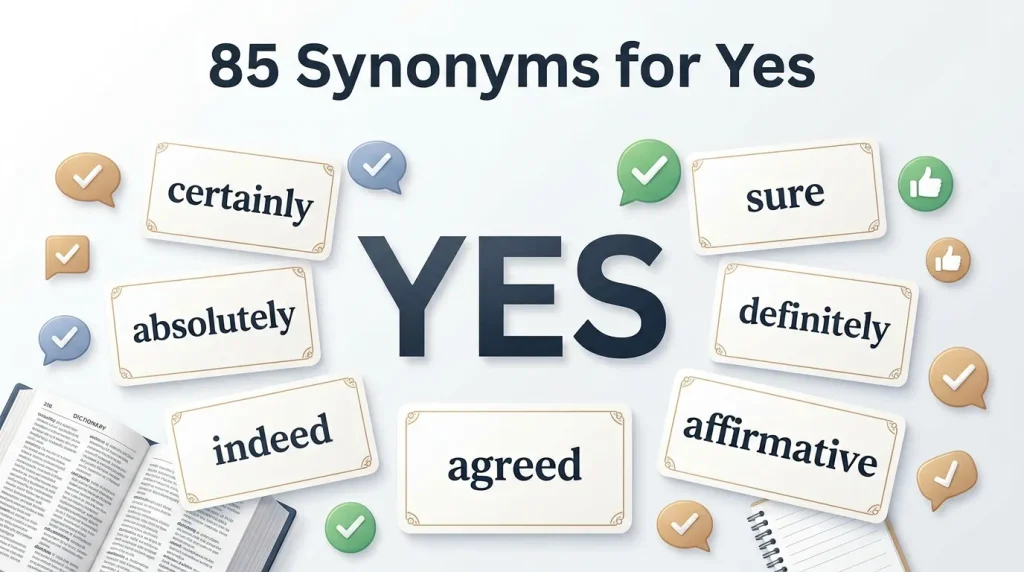
Synonyms for yes include words and phrases such as “certainly,” “absolutely,” “sure,” “indeed,” and “agreed.” These alternatives help you show agreement, acceptance, approval, or willingness in different situations. Some sound casual, while others work better in formal writing, schoolwork, emails, or professional conversations.
The meeting is almost over when your manager asks, “Can you finish this today?” You smile and say, “Absolutely.” One small word can show confidence, respect, and a clear answer.
In another situation, a friend may ask, “Want to watch a movie tonight?” A simple “Sure!” sounds friendly and natural. The right alternative depends on who you are talking to and what you want to express.
Learning synonyms for yes gives you more ways to communicate. Students can use them to make essays and answers more varied. Bloggers can avoid repeating the same simple word. Content writers can make sentences sound smoother. Daily English users can choose words that match each situation.
“Good words make simple ideas easier to share.”
A wider vocabulary also helps you sound more confident. You do not need difficult words. You only need the right word for the right moment.
“Clear language helps people understand you faster.”
85 Yes Synonym
1. Certainly
- Meaning: Certainly shows strong agreement or a clear positive answer.
- Examples: Certainly, I can help you.
- Certainly, we should try again.
2. Absolutely
- Meaning: Absolutely shows very strong agreement, confidence, or support.
- Examples: Absolutely, that sounds like fun.
- Absolutely, I agree with you.
3. Surely
- Meaning: Surely shows agreement when something seems clear or certain.
- Examples: Surely, we can solve this.
- Surely, she will understand.
4. Indeed
- Meaning: Indeed shows agreement and confirms that something is true.
- Examples: Indeed, that was a smart choice.
- Indeed, your answer is correct.
5. Sure
- Meaning: Sure is a friendly and common way to agree.
- Examples: Sure, I can come.
- Sure, send me the details.
6. Okay
- Meaning: Okay shows acceptance, agreement, or willingness to do something.
- Examples: Okay, I will wait.
- Okay, let’s start now.
7. Alright
- Meaning: Alright shows acceptance or agreement in casual conversations.
- Examples: Alright, I understand your point.
- Alright, we can leave.
8. Agreed
- Meaning: Agreed clearly shows that you share someone’s opinion.
- Examples: Agreed, that plan sounds good.
- Agreed, we need more time.
9. Affirmative
- Meaning: Affirmative gives a clear positive answer to a question.
- Examples: The answer is affirmative.
- We received an affirmative reply.
10. Exactly
- Meaning: Exactly shows strong agreement with another person’s statement.
- Examples: Exactly, that is my point.
- Exactly, you understood it.
11. Right
- Meaning: Right can show that you agree with someone’s statement.
- Examples: Right, I remember that.
- Right, we discussed this yesterday.
12. Correct
- Meaning: Correct confirms that information or an answer is true.
- Examples: Correct, that is the answer.
- Correct, your calculation looks good.
13. True
- Meaning: True agrees that a statement is accurate or valid.
- Examples: True, we need more practice.
- True, that sounds difficult.
14. Definitely
- Meaning: Definitely shows strong agreement or complete certainty.
- Examples: Definitely, I will join you.
- Definitely, we should visit.
15. For sure
- Meaning: For sure is a casual phrase showing strong agreement or certainty.
- Examples: For sure, I’ll call later.
- For sure, that sounds great.
16. Of course
- Meaning: Of course shows willing agreement with confidence and friendliness.
- Examples: Of course, you can stay.
- Of course, I remember.
17. Naturally
- Meaning: Naturally shows agreement when something seems expected or obvious.
- Examples: Naturally, she accepted the offer.
- Naturally, everyone wanted to help.
18. Without doubt
- Meaning: Without doubt strongly confirms that something is certain or true.
- Examples: Without doubt, he earned it.
- Without doubt, this matters.
19. Undoubtedly
- Meaning: Undoubtedly shows that you believe something is certainly true.
- Examples: Undoubtedly, practice brings improvement.
- Undoubtedly, she worked hard.
20. Precisely
- Meaning: Precisely strongly agrees with an exact point someone has made.
- Examples: Precisely, that is what happened.
- Precisely, you found the problem.
21. Fair enough
- Meaning: Fair enough shows acceptance of another person’s point or decision.
- Examples: Fair enough, I see your point.
- Fair enough, let’s change it.
22. Sounds good
- Meaning: Sounds good shows friendly agreement with a suggestion or plan.
- Examples: Sounds good, see you there.
- Sounds good, let’s do it.
23. Why not
- Meaning: Why not shows willingness to accept an idea or suggestion.
- Examples: Why not, let’s try it.
- Why not, we have time.
24. I agree
- Meaning: I agree directly shows that you share someone’s opinion.
- Examples: I agree, this looks better.
- I agree, we need change.
25. I accept
- Meaning: I accept clearly shows that you agree to an offer.
- Examples: I accept your kind offer.
- I accept the new terms.
26. I approve
- Meaning: I approve shows that you support or accept something.
- Examples: I approve this final design.
- I approve your suggested changes.
27. I consent
- Meaning: I consent shows formal permission or agreement with something.
- Examples: I consent to the request.
- I consent to these terms.
28. I concur
- Meaning: I concur is formal language meaning that you agree.
- Examples: I concur with your view.
- I concur with that decision.
29. I support that
- Meaning: I support that shows approval of an idea, plan, or choice.
- Examples: I support that new plan.
- I support that suggestion fully.
30. You bet
- Meaning: You bet is an informal phrase showing confident agreement.
- Examples: You bet, I’ll be there.
- You bet, I can help.
31. Yep
- Meaning: Yep is a casual and friendly way to say yes.
- Examples: Yep, I finished the work.
- Yep, that sounds right.
32. Yup
- Meaning: Yup is an informal spelling used for a quick positive answer.
- Examples: Yup, I got your message.
- Yup, everything is ready.
33. Yeah
- Meaning: Yeah is a very common casual way to show agreement.
- Examples: Yeah, that makes sense.
- Yeah, I know him.
34. Yes indeed
- Meaning: Yes indeed strongly confirms agreement or truth in a statement.
- Examples: Yes indeed, you are right.
- Yes indeed, that was helpful.
35. By all means
- Meaning: By all means gives strong permission or enthusiastic agreement.
- Examples: By all means, come inside.
- By all means, ask questions.
36. Go ahead
- Meaning: Go ahead gives permission and shows agreement with an action.
- Examples: Go ahead, use my pen.
- Go ahead, start without me.
37. Granted
- Meaning: Granted accepts that something is true or reasonable.
- Examples: Granted, the task is hard.
- Granted, your idea has value.
38. Accepted
- Meaning: Accepted confirms that an offer, idea, or proposal has approval.
- Examples: Your request has been accepted.
- The proposal was accepted today.
39. Approved
- Meaning: Approved shows that something has received official permission or support.
- Examples: Your request was approved yesterday.
- The plan is now approved.
40. Confirmed
- Meaning: Confirmed shows that information, plans, or arrangements are officially settled.
- Examples: Your booking is confirmed now.
- The meeting is confirmed for Monday.
41. Valid
- Meaning: Valid can confirm that an idea, answer, or point is acceptable.
- Examples: Your reason is valid here.
- That is a valid point.
42. True enough
- Meaning: True enough accepts that someone’s statement has some clear truth.
- Examples: True enough, we made mistakes.
- True enough, she tried hard.
43. That’s right
- Meaning: That’s right confirms that another person has understood something correctly.
- Examples: That’s right, you remembered correctly.
- That’s right, we met there.
44. You are right
- Meaning: You are right directly accepts that another person’s statement is correct.
- Examples: You are right about this.
- You are right, I forgot.
45. I’m in
- Meaning: I’m in shows willingness to join an activity or plan.
- Examples: I’m in for dinner.
- I’m in, let’s make plans.
46. Count me in
- Meaning: Count me in shows that you want to participate.
- Examples: Count me in for Saturday.
- Count me in, that sounds fun.
47. I’m willing
- Meaning: I’m willing shows that you are ready to agree or participate.
- Examples: I’m willing to help.
- I’m willing to try.
48. I’d be happy to
- Meaning: I’d be happy to shows willing and friendly agreement.
- Examples: I’d be happy to help.
- I’d be happy to join.
49. Certainly so
- Meaning: Certainly so is a formal phrase showing clear agreement or confirmation.
- Examples: Certainly so, your point is clear.
- Certainly so, the record agrees.
85. Without hesitation
- Meaning: Without hesitation shows that you agree quickly and with confidence.
- Examples: I would agree without hesitation.
- She accepted without hesitation.
“A strong vocabulary gives you more than words; it gives you choices.”
Conclusion:
Learning synonyms for yes can make your English more natural, clear, and interesting. Saying “yes” is easy, but different situations often need different words. A friendly chat may call for sure, yep, or sounds good. A work email may sound better with certainly, agreed, or confirmed. A formal document may use affirmative, I concur, or I consent.
These words can also improve your writing. Students can use them to avoid repeating the same word in essays and assignments. Bloggers and content writers can create smoother sentences and keep readers interested. In everyday conversations, a wider vocabulary helps you express your feelings and level of agreement more clearly.
The key is not to memorize every word at once. Start with five or ten useful alternatives. Practice them in short sentences. Use sure with friends, certainly in polite replies, and absolutely when you strongly agree.
You can also practice these words in emails, schoolwork, social posts, and daily conversations. Over time, choosing the right alternative will become natural.
“Every new word is another way to express your thoughts.”
A strong vocabulary does not mean using the hardest words. It means knowing simple choices and using each one at the right time. Keep practicing, stay curious, and let your English grow one useful word at a time.
“Better word choices can make everyday communication feel easier.”

I am James Carter, a passionate writer at SynonymNexts.com, sharing clear, useful, and engaging synonym guides to improve everyday writing.