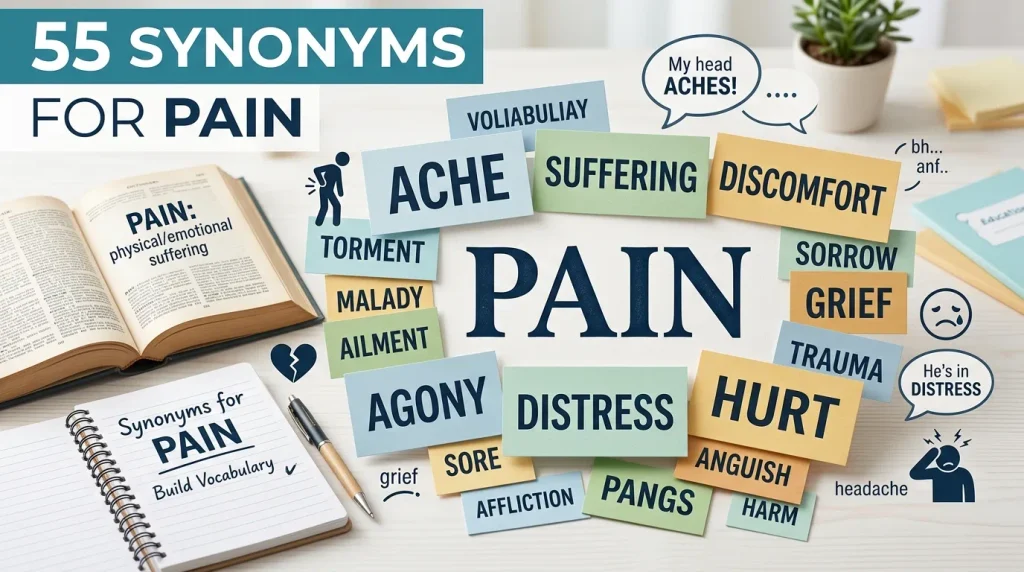
Common synonyms for pain include ache, hurt, agony, suffering, discomfort, soreness, anguish, distress, torment, misery, and pang. These words can describe physical or emotional pain, but each has a slightly different feeling or level of strength. Choosing the right word helps you express your meaning clearly in speaking, writing, essays, and daily conversations.
The runner slowed down near the finish line. His knee hurt badly, but he kept moving. In another room, a friend felt deep sadness after losing someone close. Both situations involve pain, yet the best word can change with the situation.
For example, you might say, “I have a sharp ache in my shoulder,” but you may describe deep emotional pain as anguish. Knowing different words gives you more ways to explain what you feel or what someone else experiences.
For students, these words make essays clearer and less repetitive. For bloggers, they help create natural and engaging content. For content writers, they add detail and emotion. For daily English users, they make conversations easier and more precise.
Learning alternatives is not about using difficult words. It is about choosing the word that fits your exact meaning.
“Words become powerful when they match the feeling behind them.”
A simple vocabulary change can make a sentence sound softer, stronger, more formal, or more emotional.
“The right word can turn a simple sentence into a clear message.”
55 Synonyms for Pain
1. Ache
- Meaning: An ache is a dull, lasting feeling of physical discomfort.
- Examples: My back has a dull ache.
The ache became worse after work.
2. Hurt
- Meaning: Hurt describes physical or emotional discomfort caused by something painful.
- Examples: My ankle still hurts today.
Her words hurt me deeply.
3. Agony
- Meaning: Agony means extremely strong physical or emotional suffering.
- Examples: He cried out in agony.
Waiting brought her great agony.
4. Suffering
- Meaning: Suffering means experiencing physical or emotional pain for some time.
- Examples: His suffering lasted many weeks.
She spoke openly about her suffering.
5. Discomfort
- Meaning: Discomfort means a mild feeling of physical or emotional unease.
- Examples: The chair caused some discomfort.
He felt discomfort during the meeting.
6. Soreness
- Meaning: Soreness means tenderness or pain, often after exercise or physical activity.
- Examples: My legs have some soreness.
The soreness faded after two days.
7. Anguish
- Meaning: Anguish means very deep emotional pain, worry, or sadness.
- Examples: She felt anguish after goodbye.
His face showed deep anguish.
8. Distress
- Meaning: Distress means strong emotional pain, worry, or trouble.
- Examples: The news caused great distress.
Her distress was easy to see.
9. Torment
- Meaning: Torment means severe physical or emotional pain that continues over time.
- Examples: The injury caused constant torment.
Memories became a source of torment.
10. Misery
- Meaning: Misery means a very unhappy state caused by pain or sadness.
- Examples: The cold weather brought misery.
He lived through months of misery.
11. Pang
- Meaning: A pang is a sudden, sharp feeling of physical or emotional pain.
- Examples: She felt a pang inside.
A pang of sadness returned.
12. Twinge
- Meaning: A twinge is a small, sudden feeling of pain or discomfort.
- Examples: I felt a twinge today.
A twinge hit my shoulder.
13. Sting
- Meaning: A sting is a sharp, burning pain from injury or emotion.
- Examples: The cut gave a sharp sting.
His comment still had a sting.
14. Cramp
- Meaning: A cramp is a sudden, painful tightening of a muscle.
- Examples: I got a leg cramp.
The cramp stopped me walking.
15. Burn
- Meaning: A burn describes a hot, sharp, or painful feeling.
- Examples: My eyes have a burning feeling.
The cream reduced the burn.
16. Smart
- Meaning: To smart means to feel a sharp physical or emotional pain.
- Examples: My finger still smarts today.
Her harsh words made him smart.
17. Throb
- Meaning: Throb describes pain that beats or pulses repeatedly in one area.
- Examples: My head began to throb.
The wound continued to throb.
18. Tenderness
- Meaning: Tenderness means an area feels painful or sensitive when touched.
- Examples: There is tenderness around my knee.
The doctor noticed some tenderness.
19. Irritation
- Meaning: Irritation means mild pain or discomfort caused by something unwanted.
- Examples: The dust caused eye irritation.
The skin showed mild irritation.
20. Affliction
- Meaning: An affliction is a condition that causes lasting pain or suffering.
- Examples: The illness became a serious affliction.
He faced a painful affliction.
21. Woe
- Meaning: Woe means deep sadness, trouble, or emotional suffering.
- Examples: The story was filled with woe.
He shared his personal woes.
22. Disturbance
- Meaning: A disturbance can describe physical or emotional discomfort that interrupts normal life.
- Examples: The pain caused sleep disturbance.
The problem created emotional disturbance.
23. Hardship
- Meaning: Hardship means difficult conditions that cause suffering, stress, or emotional pain.
- Examples: The family faced financial hardship.
Hardship made life much harder.
24. Trial
- Meaning: A trial is a difficult experience that brings stress, struggle, or suffering.
- Examples: Recovery was a long trial.
The accident became a painful trial.
25. Trouble
- Meaning: Trouble can describe a problem that causes physical or emotional discomfort.
- Examples: My knee is giving trouble.
The injury caused more trouble.
26. Wound
- Meaning: A wound is an injury that can cause physical or emotional pain.
- Examples: The wound hurt badly.
Time helped heal the emotional wound.
27. Injury
- Meaning: An injury is physical damage that may cause pain and discomfort.
- Examples: His injury needs careful treatment.
The injury stopped her running.
28. Hurtfulness
- Meaning: Hurtfulness describes something that causes emotional pain or sadness.
- Examples: His words showed hurtfulness.
The message carried deep hurtfulness.
29. Grief
- Meaning: Grief is deep sadness and emotional pain after a major loss.
- Examples: Grief can take much time.
She slowly worked through her grief.
30. Heartache
- Meaning: Heartache means deep emotional sadness caused by loss or disappointment.
- Examples: The breakup caused serious heartache.
He felt heartache after leaving.
31. Heartbreak
- Meaning: Heartbreak means intense emotional pain caused by loss, rejection, or separation.
- Examples: The breakup left deep heartbreak.
She slowly recovered from heartbreak.
32. Sorrow
- Meaning: Sorrow means deep sadness caused by loss, disappointment, or difficult events.
- Examples: His face showed great sorrow.
She carried sorrow for years.
33. Sadness
- Meaning: Sadness is an unhappy feeling that may come with emotional pain.
- Examples: The news brought sudden sadness.
He could not hide his sadness.
34. Despair
- Meaning: Despair means deep sadness when someone feels little hope remains.
- Examples: He felt despair after failure.
Her despair slowly turned into hope.
35. Stress
- Meaning: Stress is mental or emotional pressure that can cause discomfort and distress.
- Examples: Too much stress causes headaches.
Work stress affected his sleep.
36. Strain
- Meaning: Strain means physical or emotional pressure that can cause pain or difficulty.
- Examples: The exercise caused muscle strain.
Long hours created emotional strain.
37. Pressure
- Meaning: Pressure can cause emotional stress, discomfort, or physical tension.
- Examples: Too much pressure caused stress.
She felt pressure before exams.
38. Distressfulness
- Meaning: Distressfulness describes the quality of causing strong emotional discomfort or suffering.
- Examples: The event had great distressfulness.
Its distressfulness affected everyone present.
39. Aggravation
- Meaning: Aggravation means increased pain, irritation, trouble, or emotional annoyance.
- Examples: The delay caused more aggravation.
Walking increased the injury’s aggravation.
40. Irritation
- Meaning: Irritation can mean physical soreness or emotional annoyance caused by something unpleasant.
- Examples: The soap caused skin irritation.
His repeated calls caused irritation.
41. Discomfort
- Meaning: Discomfort describes a feeling that is unpleasant but usually less severe than pain.
- Examples: The shoes caused foot discomfort.
She felt discomfort while sitting.
42. Soreness
- Meaning: Soreness describes tender muscles or body parts that hurt when moved.
- Examples: My shoulders have some soreness.
The soreness improved after rest.
43. Pang
- Meaning: Pang describes a brief, sudden feeling of physical or emotional pain.
- Examples: A pang hit his chest.
She felt a pang of regret.
44. Torment
- Meaning: Torment describes severe suffering that causes repeated physical or emotional distress.
- Examples: The injury brought endless torment.
His thoughts became emotional torment.
45. Misery
- Meaning: Misery describes extreme unhappiness caused by difficult physical or emotional conditions.
- Examples: The illness brought great misery.
Nobody wanted to live in misery.
46. Agony
- Meaning: Agony describes an extremely painful experience that feels hard to endure.
- Examples: The broken bone caused agony.
Waiting for news was agony.
47. Anguish
- Meaning: Anguish describes powerful emotional suffering caused by fear, loss, or worry.
- Examples: The decision caused deep anguish.
She watched him with anguish.
48. Hardship
- Meaning: Hardship describes difficult life conditions that bring struggle, stress, or suffering.
- Examples: They survived years of hardship.
The hardship made them stronger.
49. Suffering
- Meaning: Suffering describes the experience of physical or emotional pain over time.
- Examples: His suffering finally came to an end.
She understood his suffering well.
50. Woe
- Meaning: Woe describes serious trouble, sadness, or emotional suffering in difficult situations.
- Examples: The poem describes personal woe.
He shared his woes honestly.
How to Choose the Right Word for Pain
Not every alternative to pain has the same strength. Discomfort usually sounds mild, while agony suggests something extremely painful. Ache often describes a dull physical feeling, while sting suggests a sharper sensation.
For emotional situations, words such as grief, sorrow, anguish, heartache, and heartbreak can be more natural. In formal writing, suffering, distress, affliction, and hardship may fit better.
Think about three things before choosing a synonym: the type of pain, its strength, and the situation. This simple check can help your writing sound more natural.
“Good vocabulary does not make feelings bigger; it makes them clearer.”
Physical and Emotional Pain Words
Some synonyms for pain are mainly used for the body. Ache, soreness, cramp, sting, burn, twinge, and throb are common examples. These words help readers picture what a person feels physically.
Other words work better for emotions. Grief, anguish, sorrow, heartache, heartbreak, and despair can describe emotional suffering. Some words, such as hurt, distress, suffering, and misery, can describe both physical and emotional experiences.
Knowing this difference helps you avoid awkward sentences. Instead of saying someone has “physical anguish,” for example, you may need severe pain, agony, or another physical term depending on the situation.
Pain Synonyms for Better Writing
Using the same word again and again can make writing feel flat. Synonyms give you more choices and help you show different levels of feeling.
For example, “He felt pain” is clear, but “He felt a sharp twinge in his knee” gives the reader more information. Likewise, “She felt pain after the breakup” can become “She felt deep heartache after the breakup.”
Students can use these words in essays and stories. Bloggers can create stronger headings and descriptions. Writers can make characters and situations feel more real. Even casual speakers can sound more natural by choosing precise vocabulary.
Conclusion:
Learning synonyms for pain gives you more than a list of replacement words. It helps you describe feelings with greater accuracy. A mild ache is not the same as agony. A short sting is different from long-term suffering. Emotional heartache also has a different feeling from physical soreness.
These small differences matter in writing and conversation. Students can use them to avoid repetition in essays. Bloggers can make articles more interesting. Content writers can create clearer and more emotional sentences. Daily English users can explain what they feel without always repeating the word “pain.”
The best way to learn these words is to practice them. Try using one new synonym in an email, another in an essay, and another during a normal conversation. Write short sentences and connect each word with a real situation.
Do not worry about learning all 55 at once. Start with five common words, understand their differences, and slowly add more.
“Strong communication begins with knowing what you really want to say.”
When your vocabulary grows, your writing becomes more flexible. You can sound simple when you need to, formal when the situation calls for it, and emotional when the message requires feeling.
“The best vocabulary is the vocabulary you can use with confidence.”

I am Emily Carter, a passionate writer at SynonymNexts.com, creating simple, helpful, and engaging content about synonyms and words.