Imagine writing a school essay about how you used your time during the holidays. You write the word “used” again and again. Your sentences start to sound boring. You want to make your writing fresh, but you do not know which words to choose.
For example, instead of saying, “I used my free time to learn English,” you could say, “I spent my free time learning English.” The new sentence sounds clear and natural.
Learning different words can make a big change in your English. Students can use them to write better essays and complete homework. Bloggers can make their posts more interesting. Content writers can avoid using the same words too often. Daily English users can speak with more confidence.
“A new word can open a new door.”
The word “used” also has different meanings. It can describe something you did, something you wore, or an item that is no longer new. This guide will help you choose the right word for each situation.
“Small changes can make your words shine.”
Understanding the Different Meanings of Used
Before choosing a synonym, think about how the word is being used in your sentence. The same word can have several meanings, and each meaning needs a suitable replacement.
- Used something: You made use of an object, tool, or resource.
- Used time or money: You spent time or money on something.
- Used clothing or goods: An item was owned or handled before.
- Used to something: You are familiar with a situation or have grown comfortable with it.
- Used a person: Someone may have taken advantage of another person.
The best synonym depends on the meaning you want to express. A word that works in one sentence may sound strange in another.
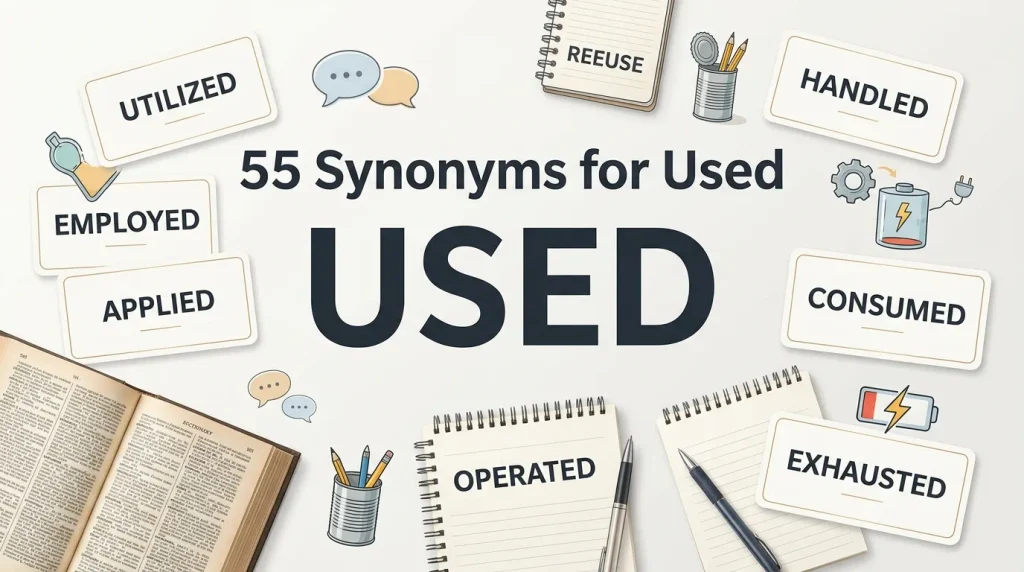
55 Used to Synonym
Here are 55 alternatives, with simple meanings and examples to help you understand how to use each word.
1. Utilized
- Meaning: Utilized means you made good use of something for a purpose.
- Examples: We utilized the room for meetings.
- She utilized her skills to help others.
2. Employed
- Meaning: Employed means you used something to do a task.
- Examples: He employed a simple trick to win.
- We employed new tools for the project.
3. Applied
- Meaning: Applied means you put something to work in a real situation.
- Examples: She applied her knowledge during the test.
- I applied the cream to my hands.
4. Used Up
- Meaning: Used up means nothing is left because it was all used.
- Examples: We used up all the milk.
- He used up his phone battery.
5. Consumed
- Meaning: Consumed means you ate, drank, or used something completely.
- Examples: The car consumed too much fuel.
- We consumed all the food at lunch.
6. Spent
- Meaning: Spent means you used time, money, or energy.
- Examples: I spent two hours reading today.
- She spent her money on new shoes.
7. Expended
- Meaning: Expended means you used effort, energy, or money.
- Examples: He expended great effort on the task.
- We expended our energy during the race.
8. Exercised
- Meaning: Exercised means you used a right, skill, or choice.
- Examples: She exercised her right to vote.
- He exercised care while driving home.
9. Operated
- Meaning: Operated means you controlled or worked a machine or device.
- Examples: She operated the machine with care.
- He operated the camera during the show.
10. Handled
- Meaning: Handled means you held, managed, or dealt with something.
- Examples: I handled the glass with care.
- She handled the problem very well.
11. Wielded
- Meaning: Wielded means you held and used a tool or power.
- Examples: The worker wielded a heavy hammer.
- She wielded great influence over the team.
12. Adopted
- Meaning: Adopted means you chose and began using an idea or method.
- Examples: Our school adopted a new rule.
- They adopted a better way to work.
13. Implemented
- Meaning: Implemented means you put a plan or idea into action.
- Examples: The team implemented the new plan.
- We implemented changes to improve our service.
14. Deployed
- Meaning: Deployed means you put a tool, person, or resource to work.
- Examples: They deployed extra staff for the event.
- The team deployed new software last week.
15. Applied Yourself
- Meaning: Applied yourself means you worked hard to reach a goal.
- Examples: He applied himself to his studies.
- She applied herself and passed the exam.
16. Put to Use
- Meaning: Put to use means you made something helpful or useful.
- Examples: We put the old desk to use.
- He put his free time to use.
17. Made Use Of
- Meaning: Made use of means you used something for a purpose.
- Examples: She made use of the library.
- We made use of every spare minute.
18. Took Advantage Of
- Meaning: Took advantage of means you used an opportunity to gain something.
- Examples: He took advantage of the sale.
- We took advantage of the sunny weather.
19. Leveraged
- Meaning: Leveraged means you used something you had to gain an advantage.
- Examples: She leveraged her skills to find work.
- They leveraged technology to save time.
20. Harnessed
- Meaning: Harnessed means you controlled and used something to help you.
- Examples: We harnessed the wind to make power.
- He harnessed his anger into useful action.
21. Exploited
- Meaning: Exploited means you used something or someone for gain.
- Examples: The company exploited cheap labor.
- He exploited the chance to earn more.
Note: When used about people, “exploited” often suggests unfair treatment.
22. Manipulated
- Meaning: Manipulated means you controlled or changed something to get a result.
- Examples: She manipulated the figures in the report.
- He manipulated the controls with great care.
23. Worked With
- Meaning: Worked with means you used or handled something while doing a task.
- Examples: I worked with simple tools today.
- She worked with the latest software.
24. Put Into Practice
- Meaning: Put into practice means you used an idea in real life.
- Examples: He put his lessons into practice.
- We put the new rules into practice.
25. Worn
- Meaning: Worn describes clothing or items that someone has used before.
- Examples: She bought a worn leather jacket.
- His shoes looked old and worn.
26. Secondhand
- Meaning: Secondhand describes something owned or used by another person before.
- Examples: I bought a secondhand bicycle yesterday.
- She wears secondhand clothes to save money.
27. Preowned
- Meaning: Preowned describes an item that had an owner before you.
- Examples: He purchased a preowned car last month.
- This shop sells preowned mobile phones.
28. Old
- Meaning: Old describes something that has existed or been used for a long time.
- Examples: I still use my old laptop.
- She gave away her old books.
29. Well-Worn
- Meaning: Well-worn describes something used so much that it shows wear.
- Examples: He carried a well-worn leather bag.
- Her well-worn shoes felt very comfortable.
30. Used Before
- Meaning: Used before means someone has already used the item.
- Examples: Have you used this app before?
- This tool was used before the repair.
31. Accustomed
- Meaning: Accustomed means you are familiar with something through experience.
- Examples: I am accustomed to cold weather.
- She became accustomed to her new school.
32. Familiar
- Meaning: Familiar means something feels known because you have seen it before.
- Examples: This computer feels familiar to me.
- He is familiar with the new system.
33. Habituated
- Meaning: Habituated means you have become used to doing or experiencing something.
- Examples: She is habituated to waking up early.
- He became habituated to the daily noise.
34. Adapted
- Meaning: Adapted means you changed to fit a new situation.
- Examples: We adapted to the new schedule.
- She adapted quickly to city life.
35. Conditioned
- Meaning: Conditioned means you learned to react in a certain way.
- Examples: He was conditioned to follow orders.
- Years of practice conditioned her to stay calm.
36. Experienced
- Meaning: Experienced means you have learned about something through doing it.
- Examples: She is an experienced office worker.
- He is experienced in using this software.
37. Practiced
- Meaning: Practiced means you did something often to improve your skill.
- Examples: I practiced speaking English every morning.
- She practiced the piano after school.
38. Tried
- Meaning: Tried means you made an effort to do something.
- Examples: I tried a new study method.
- He tried the tool on the broken door.
39. Tested
- Meaning: Tested means you checked something to see how well it worked.
- Examples: We tested the new phone yesterday.
- She tested the method before using it.
40. Explored
- Meaning: Explored means you tried or examined something to learn more.
- Examples: We explored different ways to solve it.
- She explored the features of her new phone.
41. Consigned
- Meaning: Consigned means you gave something to another person for sale or care.
- Examples: He consigned his old watch to the shop.
- She consigned the painting to an art dealer.
42. Exhausted
- Meaning: Exhausted means you used all of something until none remained.
- Examples: We exhausted our food supplies during the trip.
- The team exhausted its budget in June.
43. Depleted
- Meaning: Depleted means you made the amount of something much smaller.
- Examples: The long trip depleted our water supply.
- The project depleted our savings.
44. Drained
- Meaning: Drained means you used up energy or removed liquid from something.
- Examples: The long meeting drained my energy.
- He drained the water from the tank.
45. Drawn On
- Meaning: Drawn on means you used a supply, skill, or source.
- Examples: She drew on her past experience.
- He drew on his savings to pay.
46. Called Upon
- Meaning: Called upon means you used a skill or resource when needed.
- Examples: She called upon her courage to speak.
- We called upon our knowledge to help.
47. Made the Most Of
- Meaning: Made the most of means you used an opportunity well.
- Examples: We made the most of our holiday.
- He made the most of his free time.
48. Put Into Action
- Meaning: Put into action means you began doing what a plan suggested.
- Examples: They put the plan into action.
- She put her ideas into action today.
49. Benefited From
- Meaning: Benefited from means you gained help or value from something.
- Examples: I benefited from her helpful advice.
- The team benefited from extra training.
50. Taken Up
- Meaning: Taken up means you started doing an activity or hobby.
- Examples: She has taken up learning French.
- He took up running last year.
How to Choose the Right Synonym for Used
The best replacement depends on what your sentence means. For objects and tools, utilized, employed, and operated may fit. For time and money, try spent, consumed, or expended.
When talking about old items, choose secondhand, preowned, or worn. When describing a familiar situation, accustomed to or familiar with may work better.
Remember that synonyms are not always exact matches. “Spent” works well with time and money, but it cannot replace “worn” when describing old shoes.
“The right word makes the meaning clear.”
Read your full sentence before changing the word. This small habit helps you avoid mistakes and makes your writing sound more natural.
Common Mistakes When Using Synonyms for Used
Some words have meanings that are close to “used” but do not fit every sentence.
- Utilized vs. spent: You utilize a tool, but you spend time.
- Used vs. used to: “I used a pen” describes an action. “I am used to the noise” describes being familiar with something.
- Secondhand vs. old: Secondhand means someone owned it before. Old means it has existed for a long time.
- Employed vs. employed by: “She employed a method” means she used it. “She is employed by a company” means she has a job.
- Exploited vs. utilized: Exploited can suggest unfair treatment, especially when talking about people.
Learning these differences will help you choose words with care.
Conclusion:
Learning synonyms for used can make your English more clear, natural, and interesting. Instead of repeating the same word in every sentence, you can choose from words like utilized, applied, spent, consumed, worn, and secondhand.
Each word has its own meaning. Some describe using a tool or resource. Others explain how you spent time or money. Some describe old items, while others show that you are familiar with a situation.
Students can use these words in essays and schoolwork. Bloggers can make their articles easier to read. Content writers can create fresh sentences that hold the reader’s attention. English learners can also use these words in daily talks, emails, and messages.
Start with just five synonyms. Write one sentence for each word. Then try using them in a short paragraph or conversation. Pay attention to how each word changes the meaning.
“Practice turns new words into strong skills.”
Keep learning a few words every day. Read them, write them, and say them aloud. With regular practice, you will build a stronger vocabulary and speak with more confidence.
“Every word you learn brings you one step forward.”

I am Emily Carter, a passionate writer at SynonymNexts.com, creating simple, helpful, and engaging content about synonyms and words.