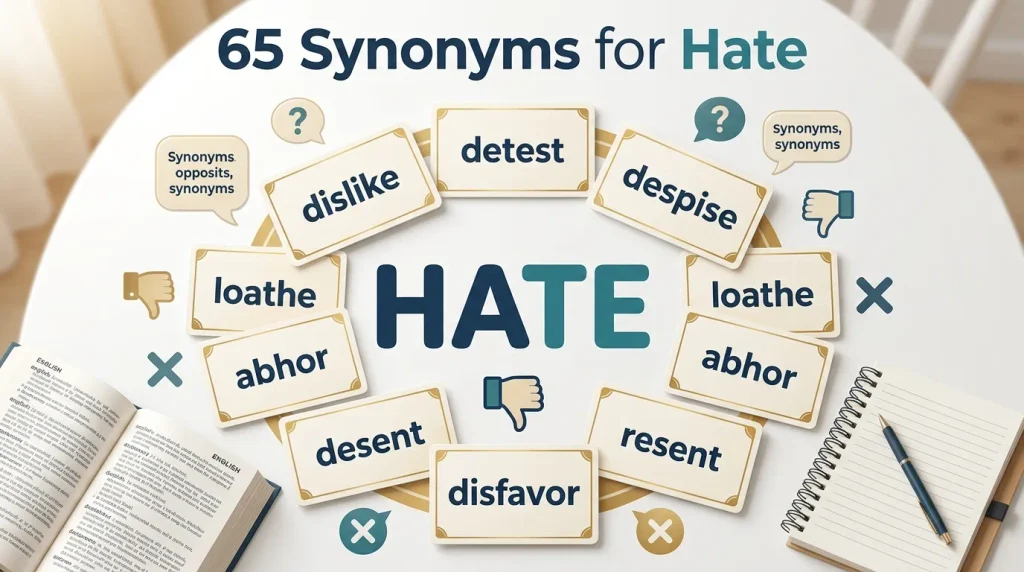
Some common synonyms for hate are dislike, detest, loathe, despise, abhor, resent, and detest. Each word shows strong negative feelings, but the exact strength and tone can change. Choosing the right synonym helps you express anger, dislike, rejection, or deep opposition more clearly in everyday English and writing.
Maya read the message twice, then slowly closed her laptop. The words were harsh, and she felt a strong dislike for the way her friend had spoken to her. Instead of writing, “I hate this,” she wanted a better word that matched her exact feeling.
That is where synonyms can help. Different words can show mild dislike, strong anger, deep disgust, or lasting resentment. The right word makes your sentence clearer and more natural.
For students, learning synonyms for hate can make essays more interesting. For bloggers, they help avoid repeating the same word. Content writers can use them to create stronger descriptions. Daily English users can choose words that better match their feelings.
“Words become more powerful when we choose them with care.”
A simple example is the difference between “I dislike noisy places” and “I despise unfair treatment.” Both show negative feelings, but their strength is different.
“The right word can change the feeling of an entire sentence.”
Below is a useful list of 65 alternatives, with simple meanings and everyday examples.
65 Synonyms for Hate
1. Dislike
- Meaning: To dislike something means you do not enjoy or like it.
- Examples: I dislike very loud music. She dislikes waiting in long lines.
2. Detest
- Meaning: To detest something means you strongly dislike or hate it.
- Examples: I detest rude behavior. He detests being treated unfairly.
3. Loathe
- Meaning: To loathe means to strongly hate something or someone.
- Examples: I loathe dishonest people. She loathes cleaning dirty dishes.
4. Despise
- Meaning: To despise means you strongly dislike someone or something.
- Examples: They despise cruel behavior. He despises people who lie.
5. Abhor
- Meaning: To abhor means to hate something because you find it wrong.
- Examples: She abhors needless violence. We abhor unfair treatment.
6. Disdain
- Meaning: Disdain means feeling that someone or something is unworthy.
- Examples: He showed disdain for gossip. She treats cheating with disdain.
7. Resent
- Meaning: To resent means to feel angry about unfair treatment.
- Examples: I resent that unfair rule. She resents being ignored.
8. Disapprove
- Meaning: To disapprove means you believe something is wrong or unacceptable.
- Examples: My parents disapprove of lying. She disapproves of his decision.
9. Detest
- Meaning: To detest means to feel very strong dislike toward something.
- Examples: I detest bitter coffee. He detests wasting valuable time.
10. Abominate
- Meaning: To abominate means to strongly hate something considered deeply wrong.
- Examples: They abominate cruel acts. She abominates dishonest business practices.
11. Despise
- Meaning: To despise means to strongly dislike someone or something with contempt.
- Examples: I despise empty promises. He despises unfair leaders.
12. Disfavor
- Meaning: Disfavor means a feeling of dislike or lack of approval.
- Examples: The plan faced public disfavor. She viewed the idea with disfavor.
13. Reject
- Meaning: To reject means to refuse something because you do not accept it.
- Examples: I reject that unfair offer. She rejected his rude comment.
14. Oppose
- Meaning: To oppose means to strongly disagree with something or someone.
- Examples: We oppose the new rule. He opposes unfair workplace policies.
15. Resist
- Meaning: To resist means to fight against something you strongly dislike.
- Examples: She resisted the unfair demand. They resisted his pressure.
16. Condemn
- Meaning: To condemn means to strongly criticize something as wrong.
- Examples: Leaders condemned the attack. She condemned his cruel behavior.
17. Scorn
- Meaning: Scorn means strong dislike mixed with a feeling of disrespect.
- Examples: He spoke with scorn. She showed scorn toward dishonest claims.
18. Spurn
- Meaning: To spurn means to reject someone or something completely.
- Examples: She spurned his apology. He spurned the unfair proposal.
19. Avoid
- Meaning: To avoid means staying away from someone or something you dislike.
- Examples: I avoid crowded places. She avoids talking about politics.
20. Shun
- Meaning: To shun means deliberately staying away from someone or something.
- Examples: He shuns negative people. She shuns unnecessary arguments.
21. Detest
- Meaning: This strong word shows deep dislike for a person, thing, or action.
- Examples: I detest fake promises. She detests careless driving.
22. Disgust
- Meaning: Disgust means a very strong feeling of dislike or sickness.
- Examples: The smell caused disgust. His actions filled everyone with disgust.
23. Loathing
- Meaning: Loathing is an intense feeling of hatred or deep dislike.
- Examples: She felt loathing toward cruelty. His face showed deep loathing.
24. Hatred
- Meaning: Hatred is a very strong and lasting feeling of hate.
- Examples: Hatred can destroy friendships. He spoke openly about his hatred.
25. Antipathy
- Meaning: Antipathy means a strong natural feeling of dislike toward someone.
- Examples: She felt antipathy toward him. His antipathy was easy to notice.
26. Aversion
- Meaning: Aversion means a strong feeling that makes you avoid something.
- Examples: I have an aversion to insects. She has an aversion to crowds.
27. Hostility
- Meaning: Hostility means unfriendly or angry feelings toward someone.
- Examples: His words showed hostility. The meeting began with clear hostility.
28. Animosity
- Meaning: Animosity means strong anger or dislike between people.
- Examples: Old animosity caused problems. Their argument created lasting animosity.
29. Resentment
- Meaning: Resentment is anger caused by unfair treatment or past problems.
- Examples: Resentment grew after the argument. She carried resentment for years.
30. Contempt
- Meaning: Contempt means strong disrespect for someone or something.
- Examples: He spoke with contempt. She showed contempt for dishonest behavior.
31. Enmity
- Meaning: Enmity means deep hatred between people, groups, or organizations.
- Examples: Their enmity lasted years. The conflict created serious enmity.
32. Acrimony
- Meaning: Acrimony means angry and bitter feelings during conflict.
- Examples: The debate ended in acrimony. Their divorce involved much acrimony.
33. Bitterness
- Meaning: Bitterness means angry feelings caused by hurt or disappointment.
- Examples: He spoke with bitterness. Her bitterness slowly affected their friendship.
34. Ill will
- Meaning: Ill will means unfriendly feelings toward another person.
- Examples: I hold no ill will. They developed ill will after fighting.
35. Hostility
- Meaning: Hostility describes strong unfriendly feelings shown through words or actions.
- Examples: Her hostility surprised everyone. The players showed hostility afterward.
36. Disgust
- Meaning: Disgust can describe a powerful reaction against something unpleasant or offensive.
- Examples: The news caused disgust. He looked at the mess with disgust.
37. Repugnance
- Meaning: Repugnance means a very strong feeling that something is unacceptable.
- Examples: She felt repugnance toward cruelty. His actions caused widespread repugnance.
38. Antagonism
- Meaning: Antagonism means active opposition or strong dislike between people.
- Examples: Their antagonism was obvious. The dispute created lasting antagonism.
39. Malice
- Meaning: Malice means a desire to hurt or cause trouble.
- Examples: He acted without malice. Her comment seemed filled with malice.
40. Detestation
- Meaning: Detestation means an extremely strong feeling of hatred or dislike.
- Examples: He expressed detestation for corruption. Her detestation was clear.
41. Revulsion
- Meaning: Revulsion means a powerful feeling of disgust toward something.
- Examples: The scene caused revulsion. She felt revulsion toward the spoiled food.
42. Hostility
- Meaning: Hostility can describe open anger or unfriendly behavior toward others.
- Examples: His hostility was obvious. The crowd responded with hostility.
43. Displeasure
- Meaning: Displeasure means an unhappy feeling about something you dislike.
- Examples: She showed displeasure clearly. His displeasure changed the mood.
44. Opposition
- Meaning: Opposition means strong disagreement with an idea, action, or person.
- Examples: The plan met opposition. They voiced opposition to the proposal.
45. Protest
- Meaning: Protest means expressing strong disagreement with something you reject.
- Examples: Workers began a protest. She protested against the unfair decision.
46. Grudge
- Meaning: A grudge is lasting anger toward someone after being hurt.
- Examples: He still holds a grudge. She refused to carry a grudge.
47. Fury
- Meaning: Fury means extremely strong anger that can feel hard to control.
- Examples: His mistake caused fury. She spoke in fury.
48. Anger
- Meaning: Anger is a strong unhappy feeling caused by problems or unfairness.
- Examples: His words caused anger. She expressed her anger calmly.
49. Rage
- Meaning: Rage means very powerful anger that can be difficult to control.
- Examples: The news triggered his rage. She struggled to control her rage.
50. Dislike
- Meaning: Dislike is a feeling of not enjoying or approving of something.
- Examples: I have a dislike for gossip. She expressed her dislike politely.
How to Choose the Right Synonym for Hate
Not every synonym for hate has the same strength. Dislike is often mild and works well in everyday conversations. Detest, loathe, and despise are much stronger. Words such as resentment, grudge, and bitterness usually describe feelings that continue over time.
Think about the reason behind the feeling. If something simply does not appeal to you, “dislike” may be enough. If something feels deeply wrong, “abhor” or “condemn” may fit better. If someone hurt you and you remain angry, “resent” or “hold a grudge” can be more precise.
“Strong feelings need clear words, especially when meaning matters.”
Synonyms for Hate in Formal Writing
Formal writing often needs careful word choice. Instead of repeating “hate,” you can use oppose, condemn, disapprove, or reject, depending on the sentence. These words can sound more professional in essays, reports, articles, and workplace communication.
For example, “The group hates the proposal” sounds emotional. “The group opposes the proposal” sounds more specific and formal. Always choose a word that matches the exact meaning rather than choosing the strongest word.
Synonyms for Hate in Daily Conversation
In everyday speech, simple words usually sound most natural. Dislike, can’t stand, resent, and avoid are useful choices, depending on your meaning. “I dislike spicy food” sounds calm, while “I can’t stand spicy food” sounds much stronger.
You can also soften your message. Saying “I’m not a fan of it” is less direct than saying “I despise it.” This helps you communicate your feelings without sounding unnecessarily harsh.
Synonyms for Hate in Creative Writing
Writers often need stronger emotional vocabulary to make a scene feel real. Words such as loathing, contempt, bitterness, animosity, and revulsion can describe deeper emotions.
The best choice depends on the character and situation. A character may feel resentment after betrayal, contempt toward an enemy, or disgust after seeing something disturbing. Using precise words helps readers understand the emotion without repeating “hate.”
How Strong Are Different Synonyms for Hate?
The strength of these words can vary with context, but a simple scale can help.
Mild: dislike, displeasure, disfavor, disapprove.
Medium: resent, oppose, reject, avoid, shun.
Strong: detest, despise, loathe, abhor, scorn.
Emotional nouns: hatred, loathing, resentment, animosity, contempt, bitterness.
Remember that context matters. A speaker may use “I hate this song” casually, even when they only mean they strongly dislike it. The same word can therefore sound stronger or weaker depending on the situation.
Conclusion:
Learning synonyms for hate gives you more ways to express feelings clearly. Instead of using the same word again and again, you can choose a word that shows the exact level of emotion. Dislike can sound mild, while detest, loathe, and despise show much stronger feelings. Words such as resentment, grudge, and bitterness can explain feelings that continue over time.
These words are useful in many parts of life. Students can use them to make essays more interesting. Bloggers and content writers can avoid repetition and create clearer sentences. English learners can use them to speak with more confidence. Even in daily conversations, the right synonym can help you say what you really mean.
Try practicing a few new words each week. Write them in short sentences, use them in emails, and add them to your everyday conversations. You do not need to memorize all 65 at once. Start with five and learn how their meanings differ.
“A larger vocabulary gives you more ways to say exactly what you mean.”
The goal is not to use difficult words just to sound smart. The goal is to choose simple, accurate words that fit your message.
“Good communication starts with choosing words that match your meaning.”

I am James Carter, a passionate writer at SynonymNexts.com, sharing clear, useful, and engaging synonym guides to improve everyday writing.