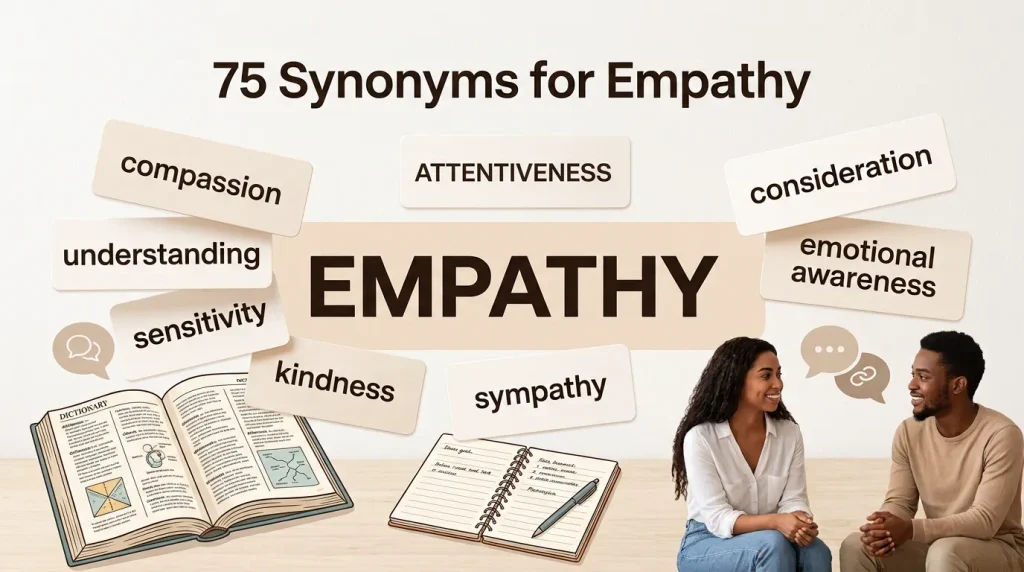
Synonyms for empathy include compassion, understanding, sympathy, kindness, concern, sensitivity, and care. These words describe ways of noticing another person’s feelings and responding with warmth. The best synonym depends on the situation, because some words sound more emotional, while others fit better in formal, professional, or everyday English.
Maya noticed that her friend was unusually quiet at lunch. Instead of asking many questions, she sat beside her and said, “I’m here if you want to talk.” That small act showed care and understanding.
In daily life, the right word can help us explain how someone responds to another person’s feelings. For example, a teacher may show compassion when a student struggles with a hard lesson.
For students, these words make essays and answers more varied. For bloggers, they make articles sound natural and warm. For content writers, they help express emotions with greater detail. For daily English users, they make conversations clearer and kinder.
“Kind words can make a difficult day feel a little easier.”
Learning different words also helps you choose the exact feeling you want to express. Sympathy may show concern, while understanding may show that you truly recognize another person’s situation.
“Understanding begins when we take time to listen.”
75 Another Word for Empathy
1. Compassion
- Meaning: Compassion means caring about someone’s pain and wanting to help them.
- Examples: She showed compassion after his loss.
Her compassion helped him feel less alone.
2. Understanding
- Meaning: Understanding means recognizing another person’s feelings, needs, or difficult situation.
- Examples: She showed understanding during my mistake.
His understanding made the problem easier.
3. Sympathy
- Meaning: Sympathy means feeling concern for someone who is facing trouble.
- Examples: We offered sympathy after the accident.
Her sympathy comforted the grieving family.
4. Kindness
- Meaning: Kindness means treating others with care, respect, and gentle behavior.
- Examples: His kindness made everyone smile.
She showed kindness to the new student.
5. Concern
- Meaning: Concern means showing care about another person’s feelings, safety, or problems.
- Examples: Her concern was easy to notice.
He called because of his concern.
6. Care
- Meaning: Care means showing love, attention, or interest in another person.
- Examples: She showed care during recovery.
His care meant a lot to me.
7. Sensitivity
- Meaning: Sensitivity means noticing and respecting another person’s feelings or needs.
- Examples: She handled the topic with sensitivity.
His sensitivity helped avoid hurt feelings.
8. Consideration
- Meaning: Consideration means thinking about another person’s feelings before you act.
- Examples: His consideration made the meeting easier.
She showed consideration for everyone.
9. Warmth
- Meaning: Warmth means showing friendly feelings, affection, and emotional kindness toward others.
- Examples: Her warmth welcomed every guest.
He spoke with warmth and respect.
10. Gentleness
- Meaning: Gentleness means acting in a soft, calm, and caring way.
- Examples: She answered with gentleness.
His gentleness helped calm the child.
11. Humanity
- Meaning: Humanity means showing kindness and care toward other people.
- Examples: Her humanity touched many people.
He treated strangers with humanity.
12. Mercy
- Meaning: Mercy means showing kindness instead of causing more pain or punishment.
- Examples: The judge showed mercy.
Her mercy gave him another chance.
13. Pity
- Meaning: Pity means feeling sadness or concern for someone facing hardship.
- Examples: He felt pity for the injured bird.
She showed pity after hearing the story.
14. Affection
- Meaning: Affection means showing warm feelings, love, or fondness toward someone.
- Examples: She showed affection through hugs.
His affection made his family happy.
15. Solidarity
- Meaning: Solidarity means standing with others during difficult or unfair times.
- Examples: Workers showed solidarity during the strike.
Her solidarity gave them courage.
16. Support
- Meaning: Support means helping someone emotionally or practically during a difficult time.
- Examples: Her support helped me continue.
He gave support after the setback.
17. Encouragement
- Meaning: Encouragement means giving someone hope, confidence, or strength to continue.
- Examples: His encouragement helped me try again.
She offered encouragement before the test.
18. Attentiveness
- Meaning: Attentiveness means carefully noticing what another person says, needs, or feels.
- Examples: Her attentiveness impressed the patient.
He listened with great attentiveness.
19. Thoughtfulness
- Meaning: Thoughtfulness means carefully considering another person’s feelings, needs, or comfort.
- Examples: Her thoughtfulness made dinner special.
He showed thoughtfulness by calling first.
20. Altruism
- Meaning: Altruism means caring about others and helping without expecting personal gain.
- Examples: His altruism inspired the team.
She volunteered because of her altruism.
21. Generosity
- Meaning: Generosity means willingly giving time, help, kindness, or resources to others.
- Examples: Her generosity helped the family.
He showed generosity toward his neighbors.
22. Patience
- Meaning: Patience means calmly giving someone time to learn, speak, or recover.
- Examples: Her patience helped me learn.
He showed patience during the long discussion.
23. Respect
- Meaning: Respect means valuing another person’s feelings, choices, ideas, and personal boundaries.
- Examples: She listened with respect.
His respect made everyone feel valued.
24. Tolerance
- Meaning: Tolerance means accepting differences in people, beliefs, feelings, or ways.
- Examples: Our team values tolerance.
Her tolerance helped settle disagreements.
25. Acceptance
- Meaning: Acceptance means recognizing someone without judging or rejecting their feelings.
- Examples: His acceptance brought great relief.
She offered acceptance when I needed it.
26. Validation
- Meaning: Validation means showing that another person’s feelings are real and worth noticing.
- Examples: Her validation made me feel heard.
He offered validation during our talk.
27. Reassurance
- Meaning: Reassurance means giving someone comfort and confidence when they feel worried.
- Examples: His reassurance calmed my fears.
She offered reassurance before the interview.
28. Consolation
- Meaning: Consolation means comfort given to someone who feels sad, hurt, or disappointed.
- Examples: Her words offered consolation.
He found consolation in his friends.
29. Comfort
- Meaning: Comfort means helping someone feel safer, calmer, or less unhappy.
- Examples: She offered comfort after the loss.
His presence brought comfort.
30. Nurturing
- Meaning: Nurturing means giving care, support, and encouragement that helps someone grow.
- Examples: Her nurturing nature helped children.
He created a nurturing environment.
31. Fellowship
- Meaning: Fellowship means friendly connection and shared support between people.
- Examples: The group enjoyed strong fellowship.
Their fellowship grew through shared work.
32. Companionship
- Meaning: Companionship means having a friendly person nearby for support and connection.
- Examples: Her companionship helped during recovery.
He valued their quiet companionship.
33. Solidarity
- Meaning: Solidarity means showing that you share another person’s struggle or cause.
- Examples: Friends showed solidarity online.
Their solidarity strengthened the community.
34. Emotional Support
- Meaning: Emotional support means helping someone handle difficult feelings through care and listening.
- Examples: She gave emotional support yesterday.
His emotional support helped me cope.
35. Moral Support
- Meaning: Moral support means giving encouragement when someone needs confidence or strength.
- Examples: My sister gave moral support.
Her moral support helped me succeed.
36. Fellow Feeling
- Meaning: Fellow feeling means sharing or recognizing another person’s emotions and experiences.
- Examples: His fellow feeling was clear.
She showed fellow feeling during the crisis.
37. Sympathy
- Meaning: Sympathy can also describe shared sadness for another person’s difficult experience.
- Examples: Her sympathy felt sincere.
He expressed sympathy after hearing everything.
38. Compassionate Understanding
- Meaning: Compassionate understanding combines clear awareness with kindness toward another person.
- Examples: She offered compassionate understanding.
His compassionate understanding eased my worries.
39. Emotional Awareness
- Meaning: Emotional awareness means noticing and understanding feelings in yourself and others.
- Examples: Emotional awareness improves communication.
Her emotional awareness helped the team.
40. Emotional Intelligence
- Meaning: Emotional intelligence means understanding feelings and responding to them in helpful ways.
- Examples: Good emotional intelligence helps leaders.
Her emotional intelligence improved teamwork.
41. Empathic Concern
- Meaning: Empathic concern means noticing another person’s difficulty and wanting to help.
- Examples: His empathic concern was genuine.
She showed empathic concern for workers.
42. Understanding Heart
- Meaning: An understanding heart means responding to people with patience, care, and kindness.
- Examples: She has an understanding heart.
His understanding heart helped others.
43. Caring Nature
- Meaning: A caring nature means naturally showing concern and kindness toward other people.
- Examples: Her caring nature comforts children.
His caring nature is easy to see.
44. Kindheartedness
- Meaning: Kindheartedness means having a naturally gentle, caring, and helpful attitude.
- Examples: Her kindheartedness touched everyone.
His kindheartedness made people trust him.
75. Benevolence
- Meaning: Benevolence means a strong desire to do good and help others.
- Examples: His benevolence helped poor families.
She acted with genuine benevolence.
46. Human Kindness
- Meaning: Human kindness means treating people with care, warmth, and respect.
- Examples: Human kindness can change lives.
We saw human kindness everywhere.
47. Sympathy and Care
- Meaning: Sympathy and care show concern for someone who faces pain or trouble.
- Examples: She offered sympathy and care.
His sympathy and care were comforting.
48. Emotional Connection
- Meaning: Emotional connection means feeling close through shared feelings, trust, or understanding.
- Examples: They built a strong emotional connection.
Their emotional connection grew slowly.
49. Shared Understanding
- Meaning: Shared understanding means two people recognize and understand each other’s feelings.
- Examples: They reached a shared understanding.
Our shared understanding solved the issue.
50. Compassionate Care
- Meaning: Compassionate care means helping someone with kindness, patience, respect, and concern.
- Examples: Patients deserve compassionate care.
Her compassionate care brought comfort.
How to Choose the Right Synonym
Not every synonym for empathy works in every sentence. Compassion is useful when someone feels another person’s pain and wants to help. Sympathy often focuses on concern for someone facing trouble. Understanding works well when you want to show that you recognize another person’s point of view.
For professional writing, words such as sensitivity, consideration, emotional awareness, emotional intelligence, and compassionate care can sound more precise. In everyday conversations, kindness, care, support, comfort, and understanding are simple and natural choices.
The best word depends on what you want your sentence to communicate.
“The right word does more than describe a feeling; it helps people understand it.”
Synonyms for Empathy in Writing
Writers can use these words to avoid repeating empathy too often. For example, a school essay might use “understanding,” while a health article may use “compassionate care.” A workplace article could use “emotional intelligence” or “consideration.”
Try to choose a synonym based on the exact idea. If the person is helping someone, compassion or support may fit. If the person is listening carefully, understanding or attentiveness may be better.
Synonyms for Empathy in the Workplace
In professional settings, words such as understanding, consideration, sensitivity, respect, emotional intelligence, and support are useful. They can describe strong communication between managers, coworkers, customers, and clients.
For example, a manager may show consideration by listening before making a decision. A customer service worker may use emotional intelligence when responding calmly to an upset customer.
Synonyms for Empathy in Relationships
Relationships often need words that express warmth and emotional care. Compassion, affection, kindness, support, comfort, understanding, and companionship can all fit different situations.
A friend may offer comfort after bad news. A partner may show affection through kind actions. A family member may provide support when someone feels stressed. The right word depends on the action and emotion involved.
Synonyms for Empathy in Everyday English
For simple daily conversations, use words that sound natural and easy. Care, kindness, concern, support, understanding, comfort, and patience are useful choices.
Instead of saying, “She showed empathy,” you could say, “She showed kindness,” “She offered support,” or “She understood how I felt.” These options can make everyday speech more direct and personal.
FAQs:
What is the closest synonym for empathy?
The closest synonym depends on the meaning you want. Understanding is often useful when you mean recognizing another person’s feelings or point of view. Compassion is better when you mean caring about someone’s pain and wanting to help. Sympathy shows concern for another person’s trouble. Because these words have slightly different uses, the best choice depends on the sentence and situation.
What is a simple word for empathy?
A simple word for empathy is understanding. It is easy to use in school writing, everyday conversations, and professional communication. Other simple choices include care, kindness, support, and concern. For example, instead of saying, “She showed empathy,” you can say, “She showed understanding.” The second sentence is simple and clear for most readers.
What is a professional synonym for empathy?
Professional alternatives include emotional intelligence, understanding, sensitivity, consideration, compassionate care, and emotional awareness. The best option depends on the workplace context. For example, “emotional intelligence” often fits leadership and teamwork, while “compassionate care” is common when discussing patient or client support. These terms can make professional writing more specific without sounding overly emotional.
What is the difference between empathy and sympathy?
Empathy usually involves understanding or sharing another person’s feelings from their point of view. Sympathy usually means feeling concern or sadness for someone who is having a difficult experience. For example, understanding why a friend feels nervous can show empathy, while expressing concern after hearing about their problem can show sympathy. Both can communicate care, but their focus is different.
Conclusion:
Learning synonyms for empathy can make your English more flexible, clear, and natural. Instead of using the same word again and again, you can choose a word that matches the exact feeling or action.
For example, compassion can show a wish to help. Understanding can show that you recognize someone’s feelings. Kindness can describe a caring action. Support can describe help during a hard time. Emotional intelligence can fit a professional discussion about communication and relationships.
These words are useful for students writing essays, bloggers creating helpful content, and content writers who want stronger vocabulary. They also help everyday English users speak with more care and accuracy.
Try using a few of these words in your next email, essay, social post, or conversation. Start with simple choices such as care, kindness, support, understanding, and concern. Then practice more specific words as your vocabulary grows.
“Good communication starts with choosing words that respect people and their feelings.”
You do not need to memorize all 75 words at once. Learn five at a time, write your own examples, and use them in real conversations.
“A thoughtful vocabulary gives your ideas more room to speak.”
With regular practice, these synonyms can help you write better, speak more clearly, and express human feelings with greater detail.

I am Lily Peterson, a passionate writer at SynonymNexts.com, creating clear, helpful, and engaging content about synonyms, words, and language.