
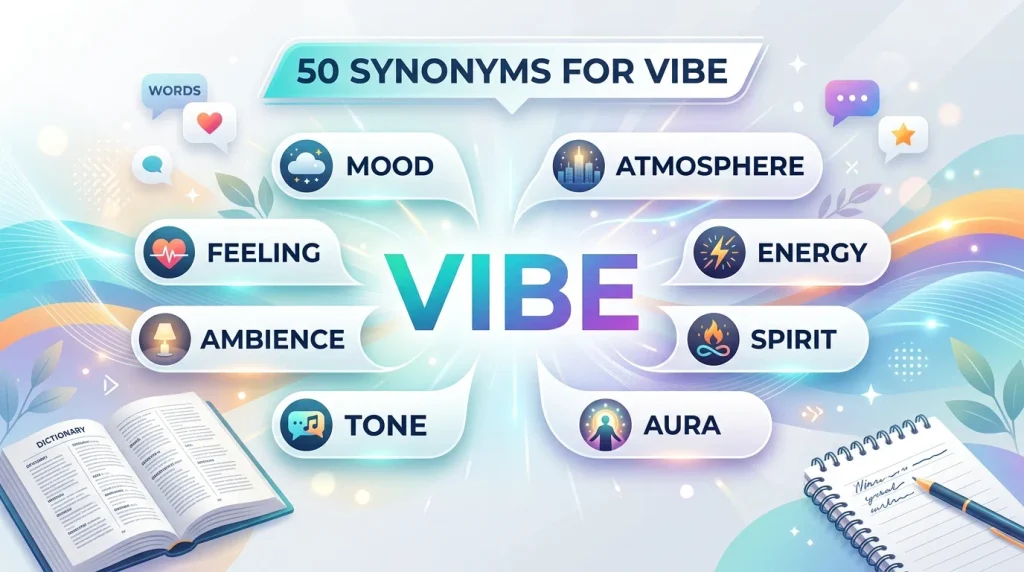
The café was small, warm, and full of soft music. People were smiling, talking quietly, and enjoying their coffee. You could feel something special the moment you walked inside. That simple feeling is often what people mean when they talk about a vibe.
For example, a quiet library can have a peaceful vibe, while a busy concert can have an exciting one. Learning different words for this idea helps you explain your thoughts with more detail.
Students can use these words to make essays and conversations more interesting. Bloggers can describe places, people, and experiences more clearly. Content writers can choose the exact word for a mood or setting. Daily English users can sound more natural and expressive.
“The right word can make a simple feeling easier to understand.”
You do not always need to say “vibe.” A more exact word can tell your reader or listener what you really mean.
“Good communication starts when your words match your feeling.”
50 Synonyms for Vibe
1. Mood
- Meaning: Mood describes the feeling that surrounds a person, place, or situation.
- Examples: The room had a calm mood.
Everyone was in a happy mood.
2. Feeling
- Meaning: Feeling describes the emotion or sense you get from something.
- Examples: I got a strange feeling.
The place gave me comfort.
3. Atmosphere
- Meaning: Atmosphere describes the overall feeling created by a place or situation.
- Examples: The restaurant had a friendly atmosphere.
Music changed the atmosphere quickly.
4. Energy
- Meaning: Energy describes the lively force you notice from someone or somewhere.
- Examples: She brings positive energy everywhere.
The crowd had amazing energy.
5. Tone
- Meaning: Tone describes the emotional quality or attitude behind words or actions.
- Examples: His tone felt warm today.
The message had a serious tone.
6. Spirit
- Meaning: Spirit describes the special feeling, attitude, or character of something.
- Examples: The team showed great spirit.
The festival had a joyful spirit.
7. Aura
- Meaning: Aura describes a special feeling that seems to surround someone.
- Examples: She has a peaceful aura.
The old house had a mysterious aura.
8. Ambiance
- Meaning: Ambiance describes the mood created by a place and its surroundings.
- Examples: The café has lovely ambiance.
Soft lights improved the ambiance.
9. Character
- Meaning: Character describes the special qualities that make something feel different.
- Examples: This town has strong character.
The house has plenty of character.
10. Air
- Meaning: Air describes the general feeling that seems present around something.
- Examples: There was an air of excitement.
The room had an air of peace.
11. Feel
- Meaning: Feel describes the overall impression or emotion something gives you.
- Examples: This room has a cozy feel.
The park has a fresh feel.
12. Atmospherics
- Meaning: Atmospherics describes details that create a certain mood or setting.
- Examples: The lighting created strong atmospherics.
Music added rich atmospherics.
13. Environment
- Meaning: Environment describes the surroundings and feeling created around someone.
- Examples: It is a friendly environment.
The office has a relaxed environment.
14. Setting
- Meaning: Setting describes the place and conditions that create a particular feeling.
- Examples: The setting felt peaceful.
It was a perfect setting.
15. Characteristic
- Meaning: Characteristic describes a quality that gives something its own special feel.
- Examples: Warm colors are characteristic here.
Kindness is characteristic of her.
16. Presence
- Meaning: Presence describes the noticeable feeling someone creates by being there.
- Examples: He has a strong presence.
Her presence made everyone comfortable.
17. Quality
- Meaning: Quality describes a noticeable feature that shapes how something feels.
- Examples: The room has a warm quality.
His voice has a gentle quality.
18. Impression
- Meaning: Impression describes the feeling or idea something leaves in your mind.
- Examples: The place left a good impression.
She made a friendly impression.
19. Attitude
- Meaning: Attitude describes the way someone thinks, feels, or behaves.
- Examples: His positive attitude helped everyone.
She has a relaxed attitude.
20. Emotion
- Meaning: Emotion describes a strong feeling connected to a person or experience.
- Examples: The song brought strong emotion.
Her voice showed real emotion.
21. Sentiment
- Meaning: Sentiment describes a feeling or opinion about someone or something.
- Examples: The letter showed warm sentiment.
People shared positive sentiment.
22. Temper
- Meaning: Temper describes the general emotional state or character of something.
- Examples: The meeting had a calm temper.
His words changed the temper.
23. Disposition
- Meaning: Disposition describes someone’s usual mood or natural way of behaving.
- Examples: She has a cheerful disposition.
His calm disposition helps others.
24. Nature
- Meaning: Nature describes the basic character or quality of something.
- Examples: The place has a peaceful nature.
Her kind nature attracts people.
25. Style
- Meaning: Style describes the special way something looks, feels, or behaves.
- Examples: This café has modern style.
Her style feels relaxed.
26. Flavor
- Meaning: Flavor describes a special quality that gives something its own feeling.
- Examples: The party had a fun flavor.
The town has local flavor.
27. Essence
- Meaning: Essence describes the most important quality that makes something what it is.
- Examples: Peace is the essence here.
Kindness captures her essence.
28. Spiritfulness
- Meaning: Spiritfulness describes a lively, warm, or positive quality in someone.
- Examples: Her spiritfulness brightened the room.
The children showed spiritfulness today.
29. Resonance
- Meaning: Resonance describes a deep feeling that stays with you after something.
- Examples: The story had emotional resonance.
Her words created strong resonance.
30. Appeal
- Meaning: Appeal describes the quality that makes something attractive or enjoyable.
- Examples: This place has strong appeal.
The design has modern appeal.
31. Charm
- Meaning: Charm describes a pleasant quality that makes someone or something attractive.
- Examples: The village has great charm.
Her smile adds natural charm.
32. Magic
- Meaning: Magic describes a special quality that makes an experience feel wonderful.
- Examples: The evening had real magic.
Music brought magic to dinner.
33. Buzz
- Meaning: Buzz describes an excited feeling caused by activity, people, or events.
- Examples: There was a buzz outside.
The festival created a huge buzz.
34. Pulse
- Meaning: Pulse describes the lively movement or energy of a place.
- Examples: You can feel the city’s pulse.
The market has a lively pulse.
35. Spark
- Meaning: Spark describes a small but strong feeling of excitement or connection.
- Examples: We felt an instant spark.
Her idea created a spark.
36. Glow
- Meaning: Glow describes a warm, happy, or positive feeling around someone.
- Examples: She had a happy glow.
The room had a warm glow.
37. Warmth
- Meaning: Warmth describes a friendly, kind, and welcoming feeling.
- Examples: Her smile showed real warmth.
The home was full of warmth.
38. Calmness
- Meaning: Calmness describes a peaceful feeling without stress, noise, or worry.
- Examples: The garden offered complete calmness.
Her voice brought calmness.
39. Excitement
- Meaning: Excitement describes a strong feeling of happiness and eager interest.
- Examples: The crowd showed great excitement.
There was excitement before the show.
40. Positivity
- Meaning: Positivity describes a hopeful, happy, and encouraging emotional feeling.
- Examples: Her positivity helped the team.
The room was filled with positivity.
41. Tension
- Meaning: Tension describes an uncomfortable feeling caused by stress or conflict.
- Examples: You could feel the tension.
The meeting had serious tension.
42. Romance
- Meaning: Romance describes a loving or emotionally attractive feeling between people.
- Examples: The restaurant had romantic romance.
Candlelight created a romantic feeling.
43. Mystery
- Meaning: Mystery describes a feeling that makes something seem unknown or interesting.
- Examples: The forest had a sense of mystery.
Her story created mystery.
44. Intensity
- Meaning: Intensity describes how strong or powerful a feeling seems.
- Examples: The game had great intensity.
His voice showed emotional intensity.
45. Vigor
- Meaning: Vigor describes strong energy, activity, and life in someone or something.
- Examples: She spoke with great vigor.
The performance had plenty of vigor.
46. Vitality
- Meaning: Vitality describes lively energy, health, and strength in something.
- Examples: The city has youthful vitality.
Her work shows real vitality.
47. Friendliness
- Meaning: Friendliness describes a warm and welcoming attitude toward other people.
- Examples: His friendliness helped me relax.
The staff showed great friendliness.
48. Harmony
- Meaning: Harmony describes a peaceful feeling where people or things work well together.
- Examples: The room felt full of harmony.
Their teamwork created harmony.
49. Connection
- Meaning: Connection describes a feeling of closeness between people, places, or experiences.
- Examples: We felt an instant connection.
The song created a strong connection.
50. Atmosphere
- Meaning: Atmosphere describes the overall emotional feeling created by a place or event.
- Examples: The party had a fun atmosphere.
Rain changed the atmosphere completely.
Choosing the Right Synonym for Vibe
Not every synonym for vibe works in every sentence. The best word depends on what you want to describe.
Use mood when talking about an emotional state. Use atmosphere or ambiance when describing a place. Choose energy when someone or a group feels lively. Aura works well when a person seems to have a special quality around them.
For writing, more exact words can make your message stronger. Instead of saying, “The restaurant had a nice vibe,” you could say, “The restaurant had a warm and welcoming atmosphere.” The second sentence gives the reader a clearer picture.
“A stronger vocabulary gives ordinary ideas a clearer shape.”
You can also use casual words such as buzz, spark, and magic when your writing is friendly and informal. For formal writing, words like atmosphere, tone, environment, and impression may fit better.
How to Use Vibe Synonyms in Everyday English
When speaking with friends, vibe, feel, energy, mood, and atmosphere are natural choices. You might say, “This place has a great vibe,” or “I like the energy here.”
In school or professional writing, you may want a more exact word. For example, “The meeting had a serious tone” sounds clearer than “The meeting had a serious vibe.”
Think about the feeling first. Then choose the word that describes it most clearly. This simple habit can improve both your speaking and writing.
Conclusion:
Learning synonyms for vibe gives you more ways to describe people, places, events, and feelings. The word is useful in casual English, but sometimes you need a more exact choice. Words such as mood, atmosphere, energy, tone, aura, ambiance, spirit, feeling, warmth, charm, and connection can help you explain what you mean.
For students, these words can make essays and assignments more interesting. For bloggers, they can help create stronger descriptions. For content writers, they can make articles sound more natural and detailed. In daily conversations, they give you more ways to express your thoughts.
Do not try to memorize all 50 words at once. Start with five or ten. Write simple sentences with them. Use them in emails, essays, social posts, and conversations. Notice how each word changes the meaning slightly.
“Every new word gives you another way to share your ideas.”
The more you practice, the easier word choice becomes. Soon, you will naturally know when to use mood instead of atmosphere, energy instead of spirit, or charm instead of appeal.
“Better words help your message feel clear, natural, and alive.”

I am Ryan Wilson, a passionate writer at SynonymNexts.com, sharing clear, useful, and engaging content about words, synonyms, and language.