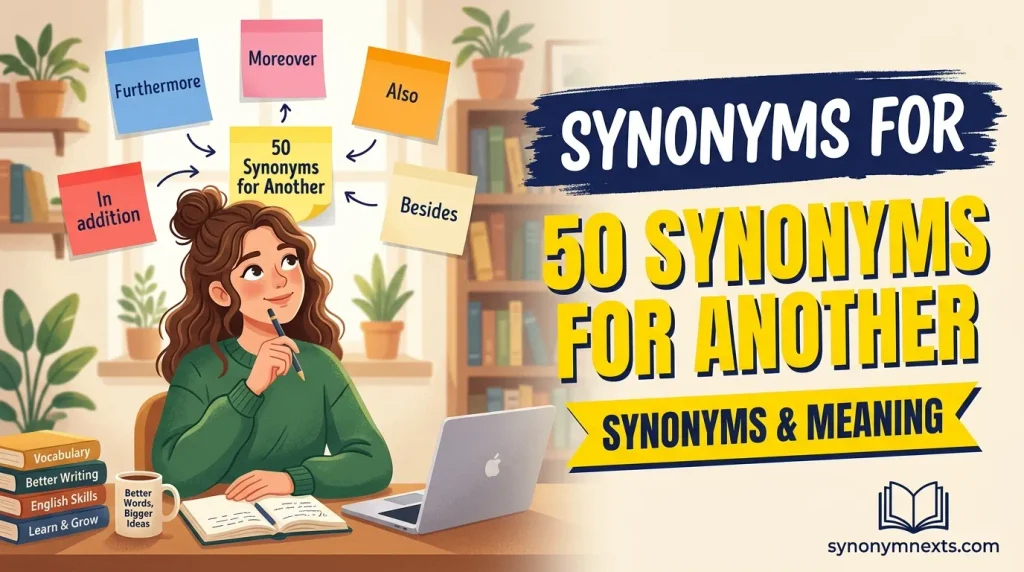
A synonym for another is a word that means one more or a different one. Common choices include additional, extra, further, alternative, and other. Which one fits best depends on whether you mean one more of the same or something different in your sentence.
Sam stared at his email. The word another appeared four times in one short paragraph: “Another report, another meeting, another deadline.” It sounded flat and tired, and he knew his reader would feel it too.
“The difference between the almost right word and the right word is really a large matter.” Mark Twain
Here is a quick fix. Instead of “I need another pen,” try “I need a spare pen.” The idea is the same, but the sentence feels fresh.
These words help everyone. Students use them to make essays sound smarter. Bloggers use them to keep readers interested. Content writers use them to avoid repeating one word again and again. Daily English users use them to sound clear and confident in chats and emails.
“Words are, of course, the most powerful drug used by humanity.” Rudyard Kipling.
50 Another Synonym
1. Additional
- Meaning: Used for something that is added to what you already have.
- Examples: Please bring an additional chair to the room. She asked for additional time to finish.
2. Extra
- Meaning: More than the usual amount, number, or what is needed.
- Examples: I packed an extra sweater for the trip. Can I get extra cheese on top?
3. Further
- Meaning: Going beyond what has already been said, done, or given.
- Examples: Do you need further help with homework? He made no further comment about it.
4. More
- Meaning: A greater number or amount added to something that exists.
- Examples: Could I have more tea, please, Mom? We need more time to finish this.
5. Other
- Meaning: A different person or thing from the one already mentioned.
- Examples: Try the other door, it is open. Where is the other shoe from this pair?
6. Alternative
- Meaning: Another choice that can be used instead of the first.
- Examples: We found an alternative route to school. Is there an alternative to this plan?
7. Different
- Meaning: Not the same as the one before; of another kind.
- Examples: She chose a different color this time. I want a different book to read.
8. Second
- Meaning: Coming right after the first one in order or time.
- Examples: He asked for a second slice of pizza. This is my second try at the test.
9. Fresh
- Meaning: New and different, just started and not used before.
- Examples: Let us start with a fresh page. She made a fresh cup of coffee.
10. New
- Meaning: Not seen, used, or known before; just made or found.
- Examples: I bought a new pen for class. He found a new way to solve it.
11. Added
- Meaning: Put in or joined to something that was already there.
- Examples: The added chapter makes the book longer. We saw an added benefit of walking daily.
12. Supplementary
- Meaning: Given in addition to help or complete the main thing.
- Examples: Students must read the supplementary notes after class. The teacher shared a supplementary worksheet with us today.
13. Spare
- Meaning: Kept in addition so you can use it when needed.
- Examples: I keep a spare key under the mat. Do you have a spare pencil I can borrow?
14. Separate
- Meaning: Not joined with others; set apart as its own thing.
- Examples: Please use a separate sheet for each answer. They live in separate houses near the park.
15. Distinct
- Meaning: Clearly different and easy to tell apart from the others.
- Examples: This is a distinct case from the last one. Each bird has a distinct song at dawn.
16. Alternate
- Meaning: Every other one; switching back and forth between two things.
- Examples: We meet on alternate Fridays at the library. She takes an alternate route home each week.
17. One More
- Meaning: A single extra item added to the ones you have.
- Examples: Just one more page and I am done. Can I try one more time, please?
18. Again
- Meaning: One more time; repeated after it happened before.
- Examples: Please say that again, a little slower. He read the letter again at night.
19. Else
- Meaning: Other than or different from what was already named.
- Examples: Does anyone else want to share an idea? Is there something else you need today?
20. Besides
- Meaning: In addition to what has been named; also as well.
- Examples: Who besides Tom is coming to the party? Besides math, she loves science and art.
21. Also
- Meaning: In addition; used to add one more point or thing.
- Examples: I also need to buy some fresh milk. She is also learning to play the guitar.
22. Plus
- Meaning: And in addition; used to add something to a list.
- Examples: Add two eggs, plus a little sugar. The phone is cheap, plus it looks great.
23. Bonus
- Meaning: Something extra and nice given on top of what is expected.
- Examples: Free shipping was a bonus with my order. The extra sunshine was a bonus for our trip.
24. Reserve
- Meaning: Kept back as an extra to be used later if needed.
- Examples: The team has a reserve player on the bench. We keep a reserve of water at home.
25. Backup
- Meaning: An extra copy or option ready in case the first fails.
- Examples: Always save a backup of your essay file. I have a backup plan if it rains.
26. Substitute
- Meaning: A person or thing that takes the place of another.
- Examples: We need a substitute teacher for Monday. You can use honey as a sugar substitute.
27. Replacement
- Meaning: Something new that is put in the place of the old.
- Examples: I ordered a replacement for my broken phone. The shop will send a replacement charger today.
28. Following
- Meaning: Coming next, right after the one just mentioned or seen.
- Examples: Read the following page before our class begins. She called me the following morning at nine.
29. Next
- Meaning: Coming right after this one in order, time, or place.
- Examples: Who is next in line at the counter? We will talk about it next week.
30. Subsequent
- Meaning: Coming after something else in time; happening later on.
- Examples: Subsequent chapters explain the idea in more detail. Subsequent visits to the clinic were much easier.
31. Successive
- Meaning: Following one after another in a row without a break.
- Examples: Our team won three successive games last month. It rained on four successive days this week.
32. Auxiliary
- Meaning: Giving extra help or support to the main one.
- Examples: The school built an auxiliary classroom for students. An auxiliary battery keeps the radio running longer.
33. Supplemental
- Meaning: Added to something to make it complete or better.
- Examples: He took supplemental classes to improve his grades. The company offers supplemental insurance to workers.
34. Ancillary
- Meaning: Giving support to the main part; less important but useful.
- Examples: Ancillary services include parking and free Wi-Fi. The hotel charges for ancillary items like towels.
35. Secondary
- Meaning: Less important than the first; coming second in order or rank.
- Examples: Price is a secondary concern for her. He chose a secondary school close to home.
36. Remaining
- Meaning: Still left after the others have been used or taken.
- Examples: Please finish the remaining work by Friday. Who wants the remaining slice of cake?
37. Opposite
- Meaning: Completely different, facing the other way or the other side.
- Examples: She sat on the opposite side of the table. They hold opposite views about the new rule.
38. Varied
- Meaning: Having many different kinds, not all the same or alike.
- Examples: The menu has varied dishes for every taste. He has a varied list of hobbies.
39. Diverse
- Meaning: Made of many different kinds of people or things.
- Examples: Our class has diverse ideas about the project. The park has a diverse group of birds.
40. Unlike
- Meaning: Not the same as; different from another person or thing.
- Examples: Unlike me, she loves waking up early. This song is unlike anything I heard before.
41. Otherwise
- Meaning: In a different way, or in another case or condition.
- Examples: He thought otherwise and made a new plan. Hurry up, otherwise we will miss the bus.
42. Anew
- Meaning: Once more in a new way; starting over again.
- Examples: She decided to begin her story anew. They built the old bridge anew last year.
43. Repeated
- Meaning: Done, said, or happening again, often more than once.
- Examples: Repeated practice helps you speak with more confidence. He made repeated calls but nobody answered.
44. Duplicate
- Meaning: An exact copy of something that you already have.
- Examples: I made a duplicate of my house key. Please delete the duplicate file from your folder.
45. Add-on
- Meaning: Something extra joined to the main thing to improve it.
- Examples: The game has a fun add-on for players. He bought an add-on for his old camera.
46. Surplus
- Meaning: An amount that is more than what you need or use.
- Examples: The farm has a surplus of apples this year. We gave our surplus food to the shelter.
47. Optional
- Meaning: Something extra that you can choose to have but need not.
- Examples: The extra homework is optional for the class. Sunscreen is optional, but I always wear it.
48. Contrasting
- Meaning: Showing a clear difference when put next to something else.
- Examples: She wore a contrasting scarf with her coat. The two books have contrasting views on life.
49. Divergent
- Meaning: Going in a different direction or growing apart from another.
- Examples: They took divergent paths after high school ended. Their divergent opinions led to a long debate.
50. Renewed
- Meaning: Made new again or started once more with fresh energy.
- Examples: She tried again with renewed hope and energy. He felt renewed after a long, calm rest.
Another Word for Another One
Looking for another word for another one? Try one more, an additional one, or a further one. These work well when you want to add a single item. For example, “Would you like an additional slice?” sounds polite and smooth. If you mean a different choice, use an alternative or a different one. Pick the option that matches your meaning, and your sentence will feel clear and natural.
Formal Synonyms for Another
In formal writing, another can sound too plain. Better choices include additional, further, supplementary, and subsequent. These fit reports, emails to managers, school essays, and business letters. For example, write “We need additional data” instead of “We need another data.” Formal words add a calm, professional tone. Just do not overuse them, because simple writing is still the easiest to read.
“The limits of my language mean the limits of my world.” Ludwig Wittgenstein
Synonyms for Another in a Sentence
Seeing a word inside a sentence makes it easier to remember. Replace another with extra, fresh, or alternative, and read the sentence aloud. “Let us try another approach” becomes “Let us try a fresh approach.” The meaning stays close, but the sentence feels livelier. Always check that the new word fits the idea, not just the grammar, before you use it.
Casual Ways to Say Another
In daily chat, people love short and easy words. Instead of another, you can say one more, again, plus, or also. Texting a friend, you might write “Can we meet one more time?” or “Plus, I need a spare charger.” These casual choices sound warm and relaxed. They are perfect for messages, social posts, and friendly talks with family and classmates.
FAQs:
What is a better word to use instead of “another”?
A better word depends on your meaning. Use additional, extra, or further when you want to add more. Use alternative, different, or other when you want a new choice. Strong writers match the word to the idea instead of picking one random option. Reading your sentence aloud also helps you hear whether the new word sounds smooth and natural.
Is “another” singular or plural?
Another is singular. It joins with one countable noun, such as “another book” or “another day.” You cannot say “another books.” The word comes from “an” plus “other,” which shows the single idea inside it. If you want a plural form, use other or more, like “other books” or “more books.” Keep this rule in mind to avoid common grammar errors.
Can I use “another” before a plural noun?
Usually no, but there is one smart exception. You can use another with a plural noun when a number comes first, such as “another five minutes” or “another three days.” Here, the time is seen as one block. Without a number, avoid it. Say “other days” or “more days” instead. This small rule makes your English sound polished and correct.
What is the difference between “another” and “other”?
Another means one more or a different one, and it is only singular. Other can be used with singular or plural nouns, usually with “the” or a plural word. For example, say “another cup,” “the other cup,” or “other cups.” Think of another as “an + other.” If one thing is added, choose another. If several are meant, choose other.
Conclusion:
Learning synonyms is one of the easiest ways to grow as a writer and speaker. When you know many words for another, you stop repeating yourself. Your essays sound smoother, your blog posts hold attention, and your speech feels more confident. Readers notice small choices like additional instead of “another” or fresh instead of “new.”
“Language is the road map of a culture.” Rita Mae Brown
Blogging and content writing benefit because varied words keep readers interested and help search engines understand your topic. Students earn better marks, because clear wording shows clear thinking. In daily talks, the right word helps people understand you faster and feel closer to you.
Now it is time to practice. Pick five synonyms from this list and use them in an email this week. Write one essay paragraph with three of them. Say one in a chat with a friend. Small steps, repeated daily, build a strong vocabulary that stays with you for life.
“The pen is mightier than the sword.” Edward Bulwer-Lytton
Keep this guide saved, come back often, and enjoy every new word you learn. Your writing will thank you.

I am Emily Carter, a passionate writer at SynonymNexts.com, creating simple, helpful, and engaging content about synonyms and words.