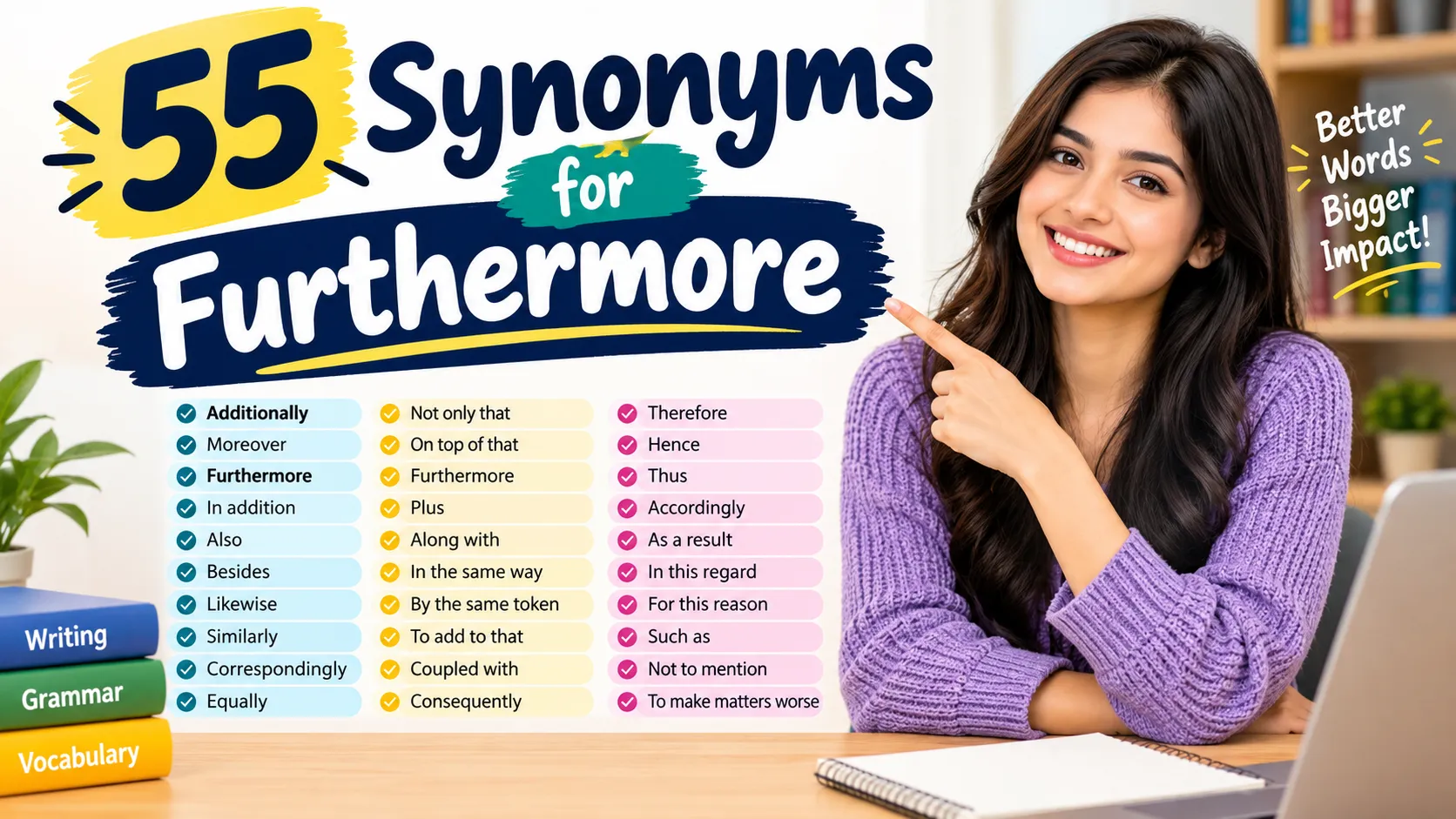
A synonym for furthermore is moreover. Other easy synonyms are also, besides, plus, and in addition. These words add one more idea to a sentence. Writers use these synonyms for furthermore to link points smoothly and avoid repeating the same word in essays, emails, and blog posts.
Mia stared at her essay. The word “furthermore” showed up four times on one page. It sounded stiff, and her writing felt tired.
Then she tried fresh words. Moreover fit the first spot. Besides worked in the second. Her essay suddenly flowed like a friendly talk.
“The limits of my language mean the limits of my world.” Ludwig Wittgenstein
Why does this matter? Students sound clearer in essays and exams. Bloggers keep readers moving down the page. Content writers avoid repeated words and polish their style. Daily English users sound natural in chats and emails.
“Never use a long word where a short one will do.” George Orwell
Ready to grow your word bank? Here are 55 simple options.
1. Moreover
- Meaning: Adds a stronger point that supports what you just said.
- Examples: The plan is cheap. Moreover, it saves time. She sings well. Moreover, she writes her own songs.
2. Additionally
- Meaning: Adds one more fact to the idea already given.
- Examples: Additionally, the hotel offers a free breakfast. We cleaned the room. Additionally, we washed the windows.
3. In addition
- Meaning: Joins one more thing to what has already been mentioned.
- Examples: In addition, bring a pen to class. He speaks French. In addition, he speaks Urdu.
4. Also
- Meaning: Shows that something else is true in the same way.
- Examples: I like tea and also love coffee. She also plays the guitar every evening.
5. Besides
- Meaning: Gives another reason or fact that supports your point.
- Examples: I’m tired. Besides, it is already very late. Besides, the bus ride costs less than a taxi.
6. What’s more
- Meaning: Adds a surprising or stronger detail in a friendly way.
- Examples: The pizza was hot. What’s more, it was free. What’s more, the staff remembered my name.
7. Plus
- Meaning: A casual word that adds one more good point.
- Examples: The phone is fast. Plus, the battery lasts long. Plus, the park is only five minutes away.
8. Likewise
- Meaning: Shows that the same thing is also true for another case.
- Examples: Ali washed the dishes. Likewise, Sara cleaned the kitchen. I respect my teacher, and likewise, she respects me.
9. Similarly
- Meaning: Connects two ideas that work in nearly the same way.
- Examples: Cats need care. Similarly, dogs need daily attention. Similarly, our second plan has a small cost.
10. As well
- Meaning: Means too and adds another person or thing to the list.
- Examples: Please invite your sister to the party as well. He bought a shirt and a hat as well.
11. On top of that
- Meaning: Piles another point onto the ones you already shared.
- Examples: It rained. On top of that, we got lost. On top of that, the food was delicious.
12. Equally important
- Meaning: Tells the reader the next point matters just as much.
- Examples: Equally important, drink enough water every day. Sleep is key. Equally important is a healthy meal.
13. Further
- Meaning: A formal word that moves the idea one step ahead.
- Examples: Further, the report shows a clear rise in sales. Further, students must submit the form by Friday.
14. Too
- Meaning: A small word that adds something at the end of a sentence.
- Examples: Can my little brother join the game too? The soup is tasty, and it is healthy too.
15. Not to mention
- Meaning: Adds an extra point that is clear and easy to see.
- Examples: The room is big, not to mention very clean. Not to mention, the view is lovely.
16. By the same token
- Meaning: Shows that the same reason also fits another case.
- Examples: He earned praise. By the same token, she did. By the same token, kids need rest too.
17. Beyond that
- Meaning: Points to what else is true after the main point.
- Examples: Beyond that, I have nothing else to add. The rent is low. Beyond that, it is quiet.
18. In the same way
- Meaning: Shows that two things follow the same pattern or rule.
- Examples: Fill the second cup in the same way. In the same way, he helped his neighbor.
19. Apart from that
- Meaning: Adds a point that sits outside the one just mentioned.
- Examples: Apart from that, I enjoyed the trip a lot. Apart from that, the exam was easy.
20. Over and above
- Meaning: Adds something extra that goes beyond what is normal or expected.
- Examples: Over and above rent, we pay for water. She did over and above her daily tasks.
21. Coupled with
- Meaning: Joins two facts that work together to make one result.
- Examples: Heavy rain, coupled with wind, closed the roads. Hard work, coupled with luck, brought him success.
22. Along with
- Meaning: Brings in another person or thing joined to the first.
- Examples: Bring a jacket along with your umbrella. Mia came along with her two cousins.
23. Again
- Meaning: Signals that the same point or idea is being repeated.
- Examples: Again, please keep your phone off in class. I must say again that safety comes first.
24. Even more
- Meaning: Adds a point that is stronger than the one before.
- Examples: Even more, the team gave us a free gift. He is kind, and even more, he is honest.
25. More than that
- Meaning: Moves to a bigger, more important point than the last.
- Examples: More than that, the course is totally free. She is smart. More than that, she is humble.
26. Aside from this
- Meaning: Brings up another point apart from the one just made.
- Examples: Aside from this, we have one more small problem. Aside from this, the house is in good shape.
27. Together with
- Meaning: Joins two things or people into one group or idea.
- Examples: Add the milk together with the sugar. Ben, together with his sister, cleaned the garage.
28. Add to that
- Meaning: Invites the reader to include one more fact.
- Examples: Add to that, the school is near my house. Add to that, the prices are really fair.
29. Further to this
- Meaning: A polite, formal phrase used in emails and office letters.
- Examples: Further to this, please check the attached file. Further to this, our team will call you tomorrow.
30. Another thing
- Meaning: A casual way to bring up one more point.
- Examples: Another thing, please lock the door when leaving. Another thing, I forgot to buy fresh bread.
31. In like manner
- Meaning: An old-style phrase that shows two things happen in similar ways.
- Examples: She smiled, and in like manner, he smiled. Roses need care. In like manner, tulips do too.
32. Correspondingly
- Meaning: Shows that one change matches another change in the same way.
- Examples: Prices rose. Correspondingly, sales dropped a little. Correspondingly, the heat rises as the sun climbs.
33. Along the same lines
- Meaning: Introduces a new point that follows a similar idea.
- Examples: Along the same lines, try reading a short story. Along the same lines, we should save water.
34. Not only that
- Meaning: Warns the reader that a bigger or better point follows.
- Examples: Not only that, he cooked dinner for everyone. Not only that, the seats were very soft.
35. Better yet
- Meaning: Adds an even nicer option than the one before.
- Examples: Better yet, we can walk there together. Take the bus. Better yet, ride your bike.
36. And
- Meaning: The simplest word to join one idea to another idea.
- Examples: I bought apples and oranges at the market. She smiled, and the room felt warm again.
37. As a bonus
- Meaning: Adds a small extra benefit to something already good.
- Examples: As a bonus, the hotel gives free breakfast. As a bonus, you also get a free bag.
38. To top it off
- Meaning: Adds a final point that makes things better or worse.
- Examples: To top it off, they gave us dessert. To top it off, our flight was late.
39. Not just that
- Meaning: A relaxed way to say there is even more.
- Examples: Not just that, she also fixed my laptop. Not just that, the app is free.
40. Also important
- Meaning: Tells the reader that the next point matters too.
- Examples: Also important, always read your essay twice. Also important, keep your sentences short and clear.
41. Next
- Meaning: Moves the reader to the following step or point.
- Examples: Next, mix the flour with two eggs. Next, write a short and clear title.
42. Finally
- Meaning: Introduces the last point in a list or series.
- Examples: Finally, thank everyone who helped you today. Finally, check your work for small mistakes.
43. Lastly
- Meaning: Signals that this is the final point being added.
- Examples: Lastly, remember to save your file before leaving. Lastly, I want to thank my parents.
44. Above all
- Meaning: Adds a point and says it matters most of all.
- Examples: Above all, be honest with your readers. Above all, stay calm during the test.
45. In particular
- Meaning: Adds a detail and makes one part stand out.
- Examples: I love summer fruit, mangoes in particular. In particular, check the first page for errors.
46. Along with that
- Meaning: Joins another fact right after the one before it.
- Examples: Along with that, he gave me a gift. Along with that, please send the final bill.
47. Then
- Meaning: Adds the next step or event in a clear order.
- Examples: First we ate, then we played cards. Then she opened the box and laughed.
48. To boot
- Meaning: A playful phrase that adds one more good thing.
- Examples: He is funny and kind to boot. The car is cheap, and fast to boot.
49. Into the bargain
- Meaning: Adds something extra without any extra cost or effort.
- Examples: We got free tea into the bargain. She won a medal and praise into the bargain.
55. On that note
- Meaning: Links your next idea smoothly to the one just shared.
- Examples: On that note, let’s start the lesson. On that note, I’ll end my talk here.
Formal Synonyms for Furthermore
Formal writing needs polished linking words. Moreover, additionally, and in addition fit reports, essays, and school projects well. Use further to this in office emails. These choices sound serious without feeling stiff. A teacher will enjoy moreover in a thesis, while a manager may prefer additionally in a summary. Match the word to your reader, and keep your sentences short.
Casual Synonyms for Furthermore
Friends do not say “furthermore” over lunch. They say plus, also, or what’s more. These words keep chats light and friendly. They work well in texts, social posts, and relaxed blogs. For example: “The cafe is cozy. Plus, the coffee is cheap.” Sounds natural, right? Choose casual links when your reader feels like a friend, not a judge.
Synonyms for Furthermore in Essays
Strong essays use linking words with care. Start with moreover to support your main claim. Use in addition for a new example and besides for a quick extra reason. Never repeat the same word twice in one paragraph. Mix them up. This keeps your argument clear, and your teacher will notice the smooth flow right away.
“Vigorous writing is concise.” William Strunk Jr.
Synonyms for Furthermore in Emails
Emails need clear, polite connectors. Additionally and further to this sound professional. Also and plus suit friendly notes to teammates. Keep each message short and focused. For instance, write, “Additionally, I have attached the invoice.” Avoid piling many linking words together. One well-placed word is enough to guide your reader through your message.
FAQs:
What is another word for furthermore?
The most common word is moreover. You can also use additionally, in addition, besides, or also. All of them add one more idea to a sentence. Pick moreover for serious writing and plus for casual chats. With so many choices, you never need to repeat “furthermore” again in the same paragraph.
Is furthermore formal or informal?
Furthermore is a formal word. It fits essays, reports, speeches, and business letters. In casual talk, it can sound too stiff, like wearing a suit to a picnic. For friendly messages, try plus, also, or what’s more. These feel warmer and more natural, so your reader stays relaxed and engaged.
Can I start a sentence with furthermore?
Yes, you can. Starting with furthermore is correct and very common. Add a comma right after it, as in “Furthermore, the team finished early.” It works best when the sentence adds a new point to the one before. Do not overuse it. One or two times per page is plenty.
What is the difference between furthermore and however?
Furthermore adds an idea that agrees with the last one. However shows a contrast or a surprise. For example: “The film was long. Furthermore, it was boring.” But: “The film was long. However, it was fun.” Mixing them up confuses readers, so check whether your next point supports or opposes the last one.
Conclusion:
Learning synonyms for furthermore may look like a small step, yet it makes a big difference. Fresh linking words make your writing smoother, your blogs more enjoyable, and your speaking more confident. When you stop repeating the same word, readers stay interested. Clear connections between ideas also make your message easier to understand.
“Words are, of course, the most powerful drug used by mankeind.” Rudyard Kipling
Now it is time to practice. Pick five words from this list and use them this week. Try moreover in an essay, additionally in an email, and plus in a text to a friend. Say a few of them out loud during daily conversations. The more you use them, the more natural they will feel.
Do not rush. Learn a few words at a time, and let them become part of your voice. Soon, choosing the right word will feel easy and even fun. Keep this list nearby, return to it often, and enjoy watching your English grow stronger.
“The difference between the almost right word and the right word is really a large matter.” Mark Twain

I am Ryan Wilson, a passionate writer at SynonymNexts.com, sharing clear, useful, and engaging content about words, synonyms, and language.