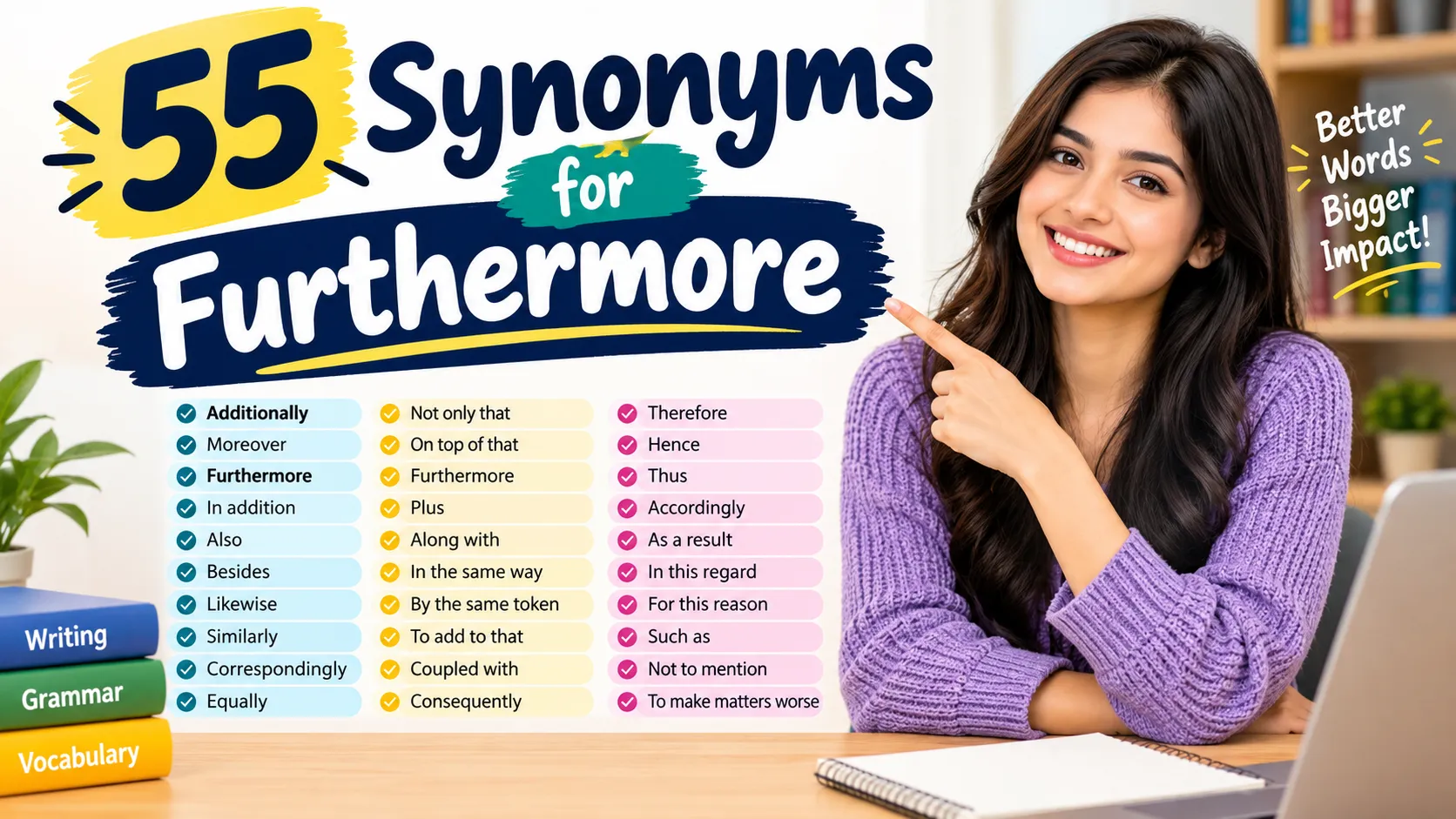
A synonym for show is a word that means the same thing, such as display, reveal, present, or demonstrate. The best choice depends on your sentence. Use display to put something in sight, reveal for hidden things, and demonstrate to explain by doing.
Maya stood in front of her class, stuck on one tiny word. Her essay used show five times in a single paragraph. It sounded flat, like a song with only one note. Then she swapped in display, reveal, and demonstrate. Suddenly her writing felt alive.
“The limits of my language mean the limits of my world.” Ludwig Wittgenstein
Here is a simple example. Instead of “The graph shows a rise in sales,” try “The graph reveals a rise in sales.” The idea is the same, but the voice is sharper. Learning synonyms for show and synonyms for showed is a quick way to fix this problem. It takes only a minute to learn one new word, and below you will find 65 easy choices with clear meanings and examples.
Students use these words to make essays and exams stronger. Bloggers use them to keep readers interested. Content writers use them to avoid repeating the same word. Daily English users use them to speak with more confidence.
“Words are, of course, the most powerful drug used by mankeind.” Rudyard Kipling
65 Show Synonym
1. Display
- Meaning: To put something where people can easily see it.
- Examples: She displayed her art on the wall. The shop will display new shoes today.
2. Exhibit
- Meaning: To show something to the public in a planned way.
- Examples: The museum will exhibit old coins this week. She exhibited great courage during the storm.
3. Reveal
- Meaning: To let people know something that was hidden before.
- Examples: The teacher revealed the test results today. He finally revealed his secret to his friend.
4. Present
- Meaning: To give or show something to a group of people.
- Examples: She will present her idea to the class. They presented the winner with a golden trophy.
5. Demonstrate
- Meaning: To clearly show people how something works by doing it.
- Examples: The chef demonstrated how to bake bread. He demonstrated the new phone to customers.
6. Illustrate
- Meaning: To make an idea clear using pictures or examples.
- Examples: Let me illustrate my point with a story. The book illustrates farm life with simple drawings.
7. Indicate
- Meaning: To point to something or make a fact known.
- Examples: The arrow indicates the way to the exit. Her smile indicated that she was very happy.
8. Prove
- Meaning: To show that something is true using facts.
- Examples: The photo proves that I was there. Tests proved that the new method really works.
9. Express
- Meaning: To show your thoughts or feelings with words or actions.
- Examples: She expressed her thanks with a warm hug. He expresses his love through small kind acts.
10. Showcase
- Meaning: To show the best parts of something to others.
- Examples: The fair will showcase local farmers and artists. She used her blog to showcase her writing.
11. Expose
- Meaning: To uncover something that was hidden, often a bad thing.
- Examples: The report exposed the company’s hidden problems. Reporters exposed the truth about the false claim.
12. Unveil
- Meaning: To show something new to the public for the first time.
- Examples: The company will unveil its new car tomorrow. They unveiled a statue in the town square.
13. Disclose
- Meaning: To share private information that was kept secret until now.
- Examples: He disclosed his plans to the whole team. Please disclose any health problems on this form.
14. Manifest
- Meaning: To show a feeling or quality clearly through actions.
- Examples: His kindness manifests in everything he does daily. Her fear manifested itself as shaking hands.
15. Parade
- Meaning: To show people or things proudly in a public way.
- Examples: The team paraded the trophy through the town. Kids paraded in colorful costumes down the street.
16. Flaunt
- Meaning: To show off something in a way that gets attention.
- Examples: She loves to flaunt her new red shoes. He flaunted his money at every single party.
17. Highlight
- Meaning: To make something stand out so people notice it.
- Examples: The teacher highlighted the key words in yellow. This chart highlights the biggest change this year.
18. Point Out
- Meaning: To call attention to a fact or detail.
- Examples: Can you point out the mistake for me? She pointed out a small error on page two.
19. Signal
- Meaning: To show or tell something using a sign or action.
- Examples: He signaled the driver to stop the bus. Dark clouds signal that rain is on the way.
20. Reflect
- Meaning: To show or be a sign of a quality or feeling.
- Examples: Her art reflects her love of nature. The test scores reflect how hard we worked.
21. Convey
- Meaning: To make a feeling or idea known to others.
- Examples: A smile can convey warmth without any words. He conveyed his message in a short note.
22. Evince
- Meaning: To show a feeling or quality clearly and strongly.
- Examples: The boy evinced real talent for playing music. She evinced no fear when the dog barked.
23. Establish
- Meaning: To show a fact is true so people accept it.
- Examples: Facts establish that the plan works well. The lawyer established that he was at home.
24. Confirm
- Meaning: To show that something is true or has been agreed.
- Examples: The email confirms our meeting at ten o’clock. Her test result confirmed that she was healthy.
25. Verify
- Meaning: To check carefully and then show that something is true.
- Examples: Please verify your name before you sign in. The guard verified my ticket at the gate.
26. Explain
- Meaning: To make something clear by telling how or why.
- Examples: Can you explain how this game is played? She explained the rules in very simple words.
27. Teach
- Meaning: To show someone how to do something they don’t know.
- Examples: My dad taught me how to ride a bike. She teaches kids how to draw cartoon animals.
28. Guide
- Meaning: To show someone the way or how to do something.
- Examples: He guided the tourists through the old city. She guided me through each step of the form.
29. Escort
- Meaning: To go with someone to show them the way.
- Examples: A guard escorted us to the waiting room. He escorted his guest to the front door.
30. Usher
- Meaning: To show someone politely to their seat or place.
- Examples: She ushered the guests into the big hall. A boy ushered us to our seats quickly.
31. Lead
- Meaning: To go first and show others where to go.
- Examples: Please lead us to the nearest bus stop. The scout led the group along the trail.
32. Appear
- Meaning: To come into sight so that people can see you.
- Examples: A rainbow appeared after the rain stopped. The singer appeared on stage at nine.
33. Emerge
- Meaning: To come out and become visible from a hidden place.
- Examples: The sun emerged from behind the dark clouds. A small cat emerged from under the car.
34. Turn Up
- Meaning: To show up or arrive at a place.
- Examples: Only five people turned up for the meeting. He always turns up late to class.
35. Perform
- Meaning: To show your talent by acting, singing, or playing.
- Examples: She will perform a song at the party. The band performs on stage every Friday night.
36. Stage
- Meaning: To organize and show a play or event publicly.
- Examples: The school will stage a play next month. They staged a small concert in the park.
37. Broadcast
- Meaning: To send a show or news out on TV or radio.
- Examples: The channel will broadcast the match live tonight. Radios broadcast the news every hour on the hour.
38. Screen
- Meaning: To show a film or video to an audience.
- Examples: The cinema will screen the movie on Friday. They screened a short film at school today.
39. Air
- Meaning: To show a program on TV or radio for viewers.
- Examples: The show airs every Sunday at eight. The channel aired a new cartoon this morning.
40. Publicize
- Meaning: To tell the public about something so many people know.
- Examples: They publicized the sale with posters around town. She publicized her book on social media.
41. Advertise
- Meaning: To show a product to people so they will buy it.
- Examples: The shop advertises its sale on the radio. They advertised the new phone on big billboards.
42. Introduce
- Meaning: To show or present something new for the first time.
- Examples: The company introduced a cheaper phone this year. Let me introduce you to my best friend.
43. Offer
- Meaning: To put something forward so others can take or see it.
- Examples: She offered her seat to the old man. The cafe offers a free drink on Mondays.
44. Depict
- Meaning: To show something in a picture or in words.
- Examples: The painting depicts a quiet village by a river. The movie depicts life in a small town.
45. Portray
- Meaning: To show someone or something in a certain way.
- Examples: The film portrays him as a brave hero. The writer portrayed the city as noisy and busy.
46. Represent
- Meaning: To show or stand for an idea, group, or thing.
- Examples: The red color represents love and strong energy. She represents our school at the speech contest.
47. Uncover
- Meaning: To find something that was hidden and show it to others.
- Examples: Police uncovered the missing money last night. The study uncovered a surprising fact about sleep.
48. Divulge
- Meaning: To tell a secret or private fact to others.
- Examples: She would not divulge where the gift was hidden. Never divulge your password to anyone online.
49. Exude
- Meaning: To show a strong feeling or quality very clearly.
- Examples: She exudes calm in every difficult moment. The coach exudes energy and joy each morning.
50. Testify
- Meaning: To show or give proof that something is true.
- Examples: Her smile testifies to how happy she is. The old photos testify to a long friendship.
“The difference between the almost right word and the right word is really a large matter.” Mark Twain
Synonyms for Show Off
Show off means to display your skills or things to get attention. Good synonyms for show off are flaunt, parade, and brag. Flaunt feels bold and proud. Parade feels public and loud. Use them in casual writing, but use them carefully, because they can sound negative. Say “He flaunted his new watch” to describe someone who wants every person to notice.
Another Word for Show in Formal Writing
In formal writing, plain words like show can feel weak. Better choices are demonstrate, indicate, illustrate, and establish. Each one adds a clear shade of meaning. Demonstrate works well for research. Indicate fits reports and data. Illustrate suits explanations with examples. Choose the word that matches your goal, and your essay, report, or email will sound polished, careful, and professional.
Synonyms for Showed in the Past Tense
Showed is the past tense of show. Synonyms for showed include displayed, revealed, demonstrated, and indicated. Most end in -ed, so they are easy to use. For example, “She showed her work” becomes “She presented her work.” Remember that shown is the past participle: “The test has shown results” becomes “The test has revealed results.”
Better Verbs Than Show in Essays
Essays need exact verbs. Instead of “the author shows,” try portrays, depicts, or conveys. Instead of “the data shows,” try reflects, indicates, or confirms. Exact verbs help readers understand your point faster. They also help teachers notice strong vocabulary. Try swapping one show per paragraph, then read your work aloud. If the sentence sounds smoother, keep the new word.
FAQs:
What is a stronger word than show?
A stronger word depends on the meaning you need. Use demonstrate when you prove something by action. Use reveal when you uncover a secret. Use showcase when you want to highlight the best parts of something. Use illustrate when you explain with examples. A strong word is a precise word, so match it to your exact sentence, not to how fancy it sounds.
Is “showed” or “shown” correct?
Both are correct, but they are used differently. Showed is the simple past: “She showed me the photo.” Shown is the past participle and needs a helper like has, have, or was: “The photo was shown to me.” Some writers also use showed as the participle, but shown is safer in formal writing. When in doubt, add has or have and choose shown.
Can I use display instead of show in every sentence?
No, display does not fit every sentence. It mainly means putting something where people can see it. You can display art, products, or data. But you cannot always display love or a feeling in the same natural way. For ideas and emotions, express or convey sounds better. For proof, choose demonstrate or prove. Always read the sentence aloud to test it.
What is a good word for showing feelings?
To show feelings, use express, convey, reflect, or manifest. Express is the most common and works in writing and speech. Convey suits messages that pass through tone or body language. Manifest is more formal and fits deep emotions. Try “He expressed his joy with a big smile” or “Her tone conveyed deep sadness.” Simple choices keep your writing clear and honest.
Conclusion
Learning synonyms for show is a small habit with a big reward. When you swap one plain word for a sharper one, your writing becomes clearer, livelier, and more honest. Bloggers hold readers longer. Students earn better marks. Speakers sound calm and confident. Even daily messages feel warmer when the right word fits.
“The pen is mightier than the sword.” Edward Bulwer-Lytton
Remember that no synonym is a perfect twin. Display, reveal, and demonstrate each carry a different shade of meaning. So read your sentence aloud and ask, “Does this word fit?” That small check will train your ear faster than any textbook.
Now it is time to practice. Pick five words from this list and use them in an email today. Add three to your next essay. Try two in a chat with a friend. Within a week, these words will feel natural, and you will stop repeating show again and again.
“Without knowing the force of words, it is impossible to know more of men.” Confucius
Keep this guide bookmarked, return to it whenever you feel stuck, and enjoy your progress. Every new word you learn gives your voice one more way to shine.

I am Lily Peterson, a passionate writer at SynonymNexts.com, creating clear, helpful, and engaging content about synonyms, words, and language.