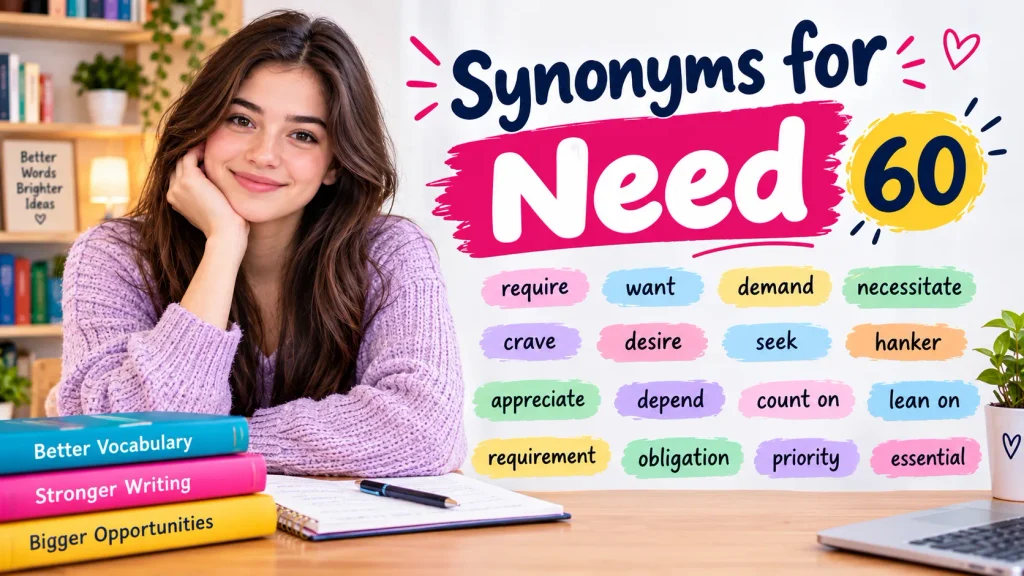
A synonym for need is “require.” Other synonyms for need include want, demand, crave, lack, and depend on. These words show that something is important or missing. Use “require” in formal writing, “want” in casual talk, and “crave” when the feeling is very strong.
Maya stared at her essay. The word need appeared five times in one paragraph. “I need help. We need more time. They need a plan.” It sounded tired and flat. She wanted her writing to sparkle, but she did not know where to start.
Maybe you have felt this too. A simple example: instead of “I need a break,” you can write “I crave a break” or “I require a break.” Each one gives a different feeling.
“The limits of my language mean the limits of my world.” Ludwig Wittgenstein
This is why synonyms matter. Students use them to score better in essays. Bloggers use them to keep readers interested. Content writers use them to avoid repeating words. Daily English users use them to sound clear and confident.
“The difference between the almost right word and the right word is really a large matter.” Mark Twain
Let us explore 60 simple, useful words you can use today.
60 Synonyms for Need
1. Require
- Meaning: To need something because a rule or situation makes it necessary.
- Examples: Every student must bring a pencil. This job requires patience and skill.
2. Want
- Meaning: To feel that you would like to have something.
- Examples: I want a glass of water. She wants more time to study.
3. Demand
- Meaning: To ask for something in a strong and firm way.
- Examples: The customers demand a full refund. This work demands a lot of focus.
4. Necessity
- Meaning: Something you must have because life or work depends on it.
- Examples: Water is a necessity for all people. A phone is a necessity today.
5. Requirement
- Meaning: Something that must be done or had to meet a rule.
- Examples: A passport is a requirement for travel. Good grades are a requirement here.
6. Lack
- Meaning: The state of not having enough of something important.
- Examples: The plant died from lack of sunlight. A lack of sleep makes me grumpy.
7. Call for
- Meaning: To make an action or response seem necessary.
- Examples: This problem calls for a quick answer. Rainy weather calls for a warm coat.
8. Depend on
- Meaning: To need something or someone to get a result.
- Examples: Plants depend on water to grow. We depend on you for this task.
9. Rely on
- Meaning: To trust someone or something because you cannot manage alone.
- Examples: I rely on my alarm every morning. Kids rely on their parents for love.
10. Count on
- Meaning: To expect help or support from a person or thing.
- Examples: You can count on me tomorrow. She counts on her team daily.
11. Lean on
- Meaning: To use someone as support when things become hard.
- Examples: I lean on my friends during exams. He leaned on his brother for help.
12. Crave
- Meaning: To need something very badly and feel strong hunger for it.
- Examples: I crave something sweet after dinner. The baby craves her mother’s attention.
13. Desire
- Meaning: A strong wish to have or do something.
- Examples: He has a deep desire to travel. She desires a quiet life.
14. Essential
- Meaning: Something that is absolutely needed and cannot be left out.
- Examples: Sleep is essential for good health. Salt is essential in this recipe.
15. Necessitate
- Meaning: To make something necessary as a result of another thing.
- Examples: The storm necessitated an early exit. Growth necessitates hard work.
16. Long for
- Meaning: To want something strongly, often something far away or missing.
- Examples: I long for a quiet holiday. She longs for her old home.
17. Yearn for
- Meaning: To feel deep and sad wanting for something you do not have.
- Examples: He yearns for his childhood days. We yearn for peaceful mornings.
18. Hunger for
- Meaning: To strongly want something, like success, love, or knowledge.
- Examples: She hungers for new knowledge. The team hungers for a big win.
19. Thirst for
- Meaning: To have a strong wish to learn, win, or achieve more.
- Examples: He has a thirst for adventure. Good readers thirst for new stories.
20. Pine for
- Meaning: To feel sad because you miss someone or something very much.
- Examples: The puppy pines for its owner. I pine for my hometown food.
21. Miss
- Meaning: To feel sad because someone or something is not with you.
- Examples: I miss my friends at school. We miss the sound of rain.
22. Wish for
- Meaning: To hope to have something that you do not have now.
- Examples: I wish for good health. Children wish for snow in winter.
23. Seek
- Meaning: To look for something because you need it.
- Examples: Many people seek calm in nature. He seeks advice from his teacher.
24. Prerequisite
- Meaning: Something that must come first before another thing can happen.
- Examples: Basic math is a prerequisite for this course. Trust is a prerequisite for friendship.
25. Requisite
- Meaning: Something that is needed for a certain purpose or goal.
- Examples: She has the requisite skills for this job. Bring the requisite forms tomorrow.
26. Obligation
- Meaning: A duty that you must do because it is right or required.
- Examples: Paying taxes is an obligation. I have an obligation to help her.
27. Essentials
- Meaning: The most important things that you cannot live or work without.
- Examples: Pack the essentials for your trip. Food and water are the essentials.
28. Necessary
- Meaning: Needed so that something can happen or be done properly.
- Examples: Is it necessary to wake up so early? Rest is necessary after work.
29. Vital
- Meaning: Extremely important and needed for life or success.
- Examples: Water is vital for every living thing. Your support is vital to us.
30. Crucial
- Meaning: Very important because everything else depends on it.
- Examples: Timing is crucial in this game. Good sleep is crucial before exams.
31. Imperative
- Meaning: Something that must be done right away because it is urgent.
- Examples: It is imperative that we leave now. Safety is imperative on the road.
32. Indispensable
- Meaning: So useful or important that you cannot do without it.
- Examples: My notebook is indispensable at work. She is an indispensable team member.
33. Compel
- Meaning: To force or strongly push someone to do something.
- Examples: Hunger compelled him to cook dinner. The rules compel us to wait.
34. Entail
- Meaning: To involve something as a needed part or result.
- Examples: This job entails long working hours. Success entails daily practice.
35. Take
- Meaning: To need a certain amount of time, effort, or skill.
- Examples: It takes courage to speak up. This recipe takes two hours.
36. Warrant
- Meaning: To make something seem right, fair, or necessary.
- Examples: This issue warrants a closer look. The problem warrants quick action.
37. Shortage
- Meaning: A situation where there is not enough of something needed.
- Examples: The town has a water shortage. There is a shortage of teachers.
38. Want of
- Meaning: The state of lacking something that would be useful.
- Examples: The garden died for want of rain. He failed for want of practice.
39. Deprivation
- Meaning: The state of being without things that people need.
- Examples: Sleep deprivation affects your mood. The village suffered from food deprivation.
40. Dependence
- Meaning: The state of needing someone or something for support.
- Examples: Our dependence on phones keeps growing. Baby birds show full dependence on parents.
41. Must-have
- Meaning: Something that is so useful that everyone should get it.
- Examples: A strong password is a must-have. This book is a must-have for writers.
42. Urgency
- Meaning: The feeling that something must be done very quickly.
- Examples: There is urgency in her voice. The task has no urgency today.
43. Priority
- Meaning: Something that is more important than other things and comes first.
- Examples: Health is my top priority. Finish the urgent work as a priority.
44. Have to
- Meaning: To be forced to do something because it must be done.
- Examples: I have to finish my homework. You have to wear a helmet.
45. Must
- Meaning: A strong word showing that something is needed or required.
- Examples: You must drink enough water. We must leave before it gets dark.
46. Ought to
- Meaning: A softer way to say something is right or needed.
- Examples: You ought to rest after lunch. We ought to call her today.
47. Be short of
- Meaning: To not have enough of something that you need.
- Examples: We are short of milk today. I am short of time this week.
48. Be in want of
- Meaning: A formal way to say you need something right now.
- Examples: The family is in want of food. I am in want of advice.
49. Press for
- Meaning: To push strongly and ask again and again for something.
- Examples: Workers pressed for better pay. She pressed for a quick reply.
60. Insist on
- Meaning: To demand something firmly and refuse to accept less.
- Examples: He insists on clear answers. I insist on paying for dinner.
Synonyms for Need in Formal Writing
In formal writing, simple words can sound too casual. Try require, necessitate, prerequisite, or imperative instead. For example, “This project requires approval” sounds more professional than “This project needs approval.” Formal words work well in reports, essays, and official letters. Keep your sentences short and clear, so the stronger word shines without making the text hard to read.
Another Word for Need in Business Emails
Business emails should sound polite and direct. Instead of “We need the file,” try “We require the file” or “We would appreciate the file by Friday.” Words like request, depend on, and count on feel respectful. Avoid demand unless the matter is serious. A calm tone builds trust and gets faster replies from busy readers.
Strong Synonyms for Need in Essays
Essays need strong, clear verbs. Replace “People need education” with “People require education” or “Education is essential to growth.” Words like vital, crucial, and indispensable add weight to your argument. Do not use them too often, though. If every point is “crucial,” none of them stands out. Choose one powerful word per paragraph.
Casual Words for Need in Daily Talk
When you talk with friends, short words work best. Say want, have to, must, or miss. For example, “I have to go now” sounds natural and friendly. Use crave for food and long for for feelings. Casual words keep conversations warm, relaxed, and easy to follow, so people feel comfortable talking with you.
“Language is a city to the building of which every human being brought a stone.” Ralph Waldo Emerson
People Also Ask: Synonyms for Need
What is the difference between need and want?
A need is something you must have to live or work well, like food, water, or sleep. A want is something you would like but can live without, like a new phone or a snack. Need is about survival and duty, while want is about choice and pleasure. Knowing the difference helps you pick the right word.
What is a formal word for need?
The most common formal word for need is “require.” You can also use necessitate, prerequisite, or be in want of in serious writing. For example, “The course requires basic math” sounds polished and professional. Use these words in reports, business letters, and school essays. In daily chats, simple words like “need” or “want” still work well.
Can I use “require” instead of “need” in every sentence?
Not always. Require fits best when a rule, law, or situation makes something necessary, like “Entry requires a ticket.” It sounds odd for personal feelings, such as “I require a hug.” In that case, need or crave feels more natural. Always check the tone of your sentence before you swap the word.
What is a word for a strong need?
For a strong need, you can use crave, yearn for, hunger for, or desperate. These words show deep feeling. For example, “She hungers for success” is more powerful than “She needs success.” Use them with care, because strong words can sound dramatic if you use them too often in plain, everyday writing.
Conclusion
Learning synonyms for need is a small step that makes a big difference. When you replace one tired word with a better one, your writing becomes clearer, richer, and more interesting. Blogging gets easier. Speaking feels more confident. Messages and emails sound more thoughtful, and people enjoy reading what you write.
Remember, you do not need to learn all 60 words today. Pick five words that you like. Use them in an email, a short essay, or a chat with a friend. After a week, add five more. Small, steady practice always beats a big rush.
“Good prose is like a windowpane.” George Orwell
That is the goal: clear words that let your ideas shine through. Keep a small notebook, write down new words, and use them often. Every new word you master gives you one more way to say exactly what you mean.
“Language is the dress of thought.” Samuel Johnson
So the next time you feel stuck on the word need, pause for a moment. Think about the feeling you want to share, then pick the word that fits. Your readers will notice, and your confidence will grow with every sentence you write.

I am Ryan Wilson, a passionate writer at SynonymNexts.com, sharing clear, useful, and engaging content about words, synonyms, and language.