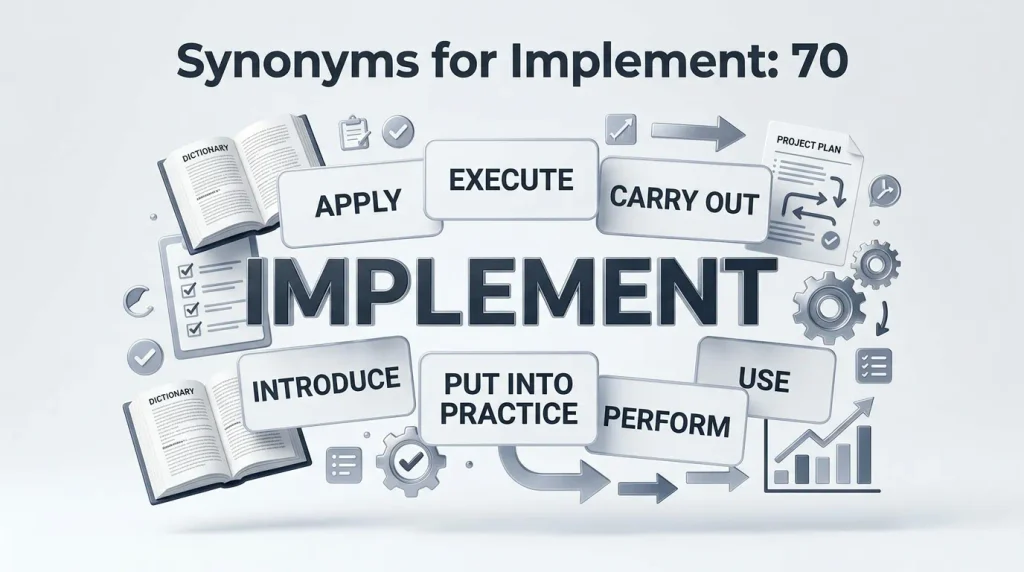
Common synonyms for “implement” include apply, execute, carry out, put into practice, introduce, enforce, use, and adopt. These words can describe putting a plan, rule, idea, method, or decision into action. The best choice depends on whether you are talking about work, rules, plans, systems, or daily actions.
The team had a good plan on paper, but nothing changed until someone took action. A manager shared a new work process, showed everyone how it worked, and then made sure the team used it every day. That simple step turned an idea into real action.
For example, a school may decide to add a new reading program. The teachers then put the program into practice with their students. This is where the right word can make your writing clearer and stronger.
Students can use these words to write better essays and explain plans clearly.
Bloggers can avoid repeating the same word in articles and guides.
Content writers can choose precise words for business, education, and professional topics.
Daily English users can sound more natural when talking about plans and actions.
“A good plan becomes useful when people act on it.”
Learning several alternatives also helps you understand small differences in meaning. Some words sound formal, while others fit simple daily conversations. Knowing these differences makes your writing more flexible.
“Clear words make clear ideas easier to share.”
70 Implement Synonym
1. Apply
- Meaning: To use an idea, method, rule, or plan in a real situation.
- Examples: We will apply the new safety rules.
- The teacher helped students apply this method.
2. Execute
- Meaning: To carry out a planned action carefully and successfully.
- Examples: The team will execute the new plan.
- She knows how to execute each step.
3. Carry Out
- Meaning: To complete a planned task, action, order, or instruction.
- Examples: Workers will carry out the repairs.
- We must carry out the plan.
4. Enact
- Meaning: To officially put a rule, law, or decision into effect.
- Examples: The government will enact new rules.
- The law was enacted last year.
5. Enforce
- Meaning: To make sure people follow a rule, law, or policy.
- Examples: Schools must enforce their safety rules.
- Police enforce the new traffic law.
6. Introduce
- Meaning: To bring a new idea, system, plan, or method into use.
- Examples: The company will introduce a new system.
- Our school introduced a reading program.
7. Adopt
- Meaning: To officially accept and begin using a plan, method, or system.
- Examples: The team decided to adopt this approach.
- Many schools adopt new teaching methods.
8. Use
- Meaning: To put something into action for a particular purpose.
- Examples: We can use this strategy today.
- They used the new system.
9. Employ
- Meaning: To use a method, skill, tool, or plan for a purpose.
- Examples: The team employed a simple strategy.
- We can employ this method here.
10. Put Into Practice
- Meaning: To start using an idea or plan in real life.
- Examples: Teachers put the plan into practice.
- She put her ideas into practice.
11. Realize
- Meaning: To make an idea, goal, or plan become real through action.
- Examples: The project helped realize their goals.
- Hard work can realize big plans.
12. Initiate
- Meaning: To officially start a process, action, program, or new plan.
- Examples: The manager initiated a new project.
- They initiated changes last month.
13. Launch
- Meaning: To officially start a new program, system, project, or service.
- Examples: The company will launch its program.
- They launched the new service.
14. Institute
- Meaning: To officially establish a new rule, system, practice, or policy.
- Examples: The school instituted new safety rules.
- Leaders instituted a better process.
15. Establish
- Meaning: To create and put a system, practice, or rule into operation.
- Examples: They established a new procedure.
- The company established clear guidelines.
16. Put Into Effect
- Meaning: To make a rule, decision, or plan start working officially.
- Examples: The policy was put into effect.
- They put the decision into effect.
17. Put Into Action
- Meaning: To begin using an idea or plan through real actions.
- Examples: The team put the plan into action.
- We finally put our ideas into action.
18. Activate
- Meaning: To make a plan, system, process, or feature begin working.
- Examples: Staff will activate the new system.
- The manager activated the safety plan.
19. Deploy
- Meaning: To put a system, tool, resource, or method into practical use.
- Examples: The company will deploy new software.
- Engineers deployed the updated system.
20. Initiate
- Meaning: To begin carrying out a planned process or organized activity.
- Examples: They initiated the new training plan.
- The school initiated extra classes.
21. Perform
- Meaning: To carry out an action, task, or required procedure.
- Examples: Workers performed the required checks.
- She performed every task correctly.
22. Accomplish
- Meaning: To successfully complete a planned task, goal, or action.
- Examples: The team accomplished its main goal.
- We accomplished the task together.
23. Complete
- Meaning: To finish a planned action, task, or process as required.
- Examples: Please complete the new process.
- They completed every required step.
24. Fulfill
- Meaning: To carry out a duty, promise, requirement, or planned purpose.
- Examples: The company fulfilled its new requirements.
- She fulfilled every project duty.
25. Administer
- Meaning: To manage and apply a program, process, system, or policy.
- Examples: Staff administer the new program.
- She administered the test carefully.
26. Manage
- Meaning: To organize and control actions needed to make something work.
- Examples: He managed the new process.
- She managed the project well.
27. Operate
- Meaning: To use and control a system, process, or method in practice.
- Examples: Staff operate the new system.
- They operate the program daily.
28. Introduce
- Meaning: To start using something new within a group or organization.
- Examples: The school introduced new rules.
- Managers introduced a better process.
29. Integrate
- Meaning: To combine a new idea, system, or method with existing work.
- Examples: We integrated the new software.
- The team integrated new tools.
30. Incorporate
- Meaning: To add an idea, method, or feature into an existing system.
- Examples: We incorporated new safety steps.
- The plan incorporates useful ideas.
31. Adopt
- Meaning: To choose and begin using something as part of regular practice.
- Examples: The team adopted a new policy.
- Students adopted better study habits.
32. Enforce
- Meaning: To actively require people to obey a rule or policy.
- Examples: Managers enforce workplace rules.
- Schools enforce attendance policies.
33. Effectuate
- Meaning: To cause a plan, decision, or agreement to become active or real.
- Examples: Leaders effectuated the approved changes.
- The decision effectuated major reforms.
34. Materialize
- Meaning: To make a planned idea or hope become a real result.
- Examples: Their plans finally materialized.
- Hard work helped materialize the idea.
35. Accomplish
- Meaning: To successfully bring a planned action or goal to completion.
- Examples: We accomplished the main objective.
- The team accomplished its mission.
36. Pursue
- Meaning: To actively work toward a plan, goal, purpose, or desired result.
- Examples: They pursued the new strategy.
- She pursued her project goals.
37. Advance
- Meaning: To move a plan, project, idea, or goal toward completion.
- Examples: The changes advanced the project.
- New tools advanced their work.
38. Fulfill
- Meaning: To complete what a plan, promise, duty, or requirement calls for.
- Examples: The team fulfilled its commitments.
- Workers fulfilled the new duties.
39. Exercise
- Meaning: To use a right, power, rule, or authority in practice.
- Examples: Leaders exercised their new authority.
- She exercised her legal rights.
40. Apply
- Meaning: To use a rule, idea, method, or process for practical results.
- Examples: Students apply the lesson daily.
- Managers apply these simple rules.
41. Practice
- Meaning: To regularly use an idea, method, skill, or rule in action.
- Examples: Teachers practice the new method.
- We practice these steps daily.
42. Realize
- Meaning: To turn a goal, plan, or idea into an actual result.
- Examples: The project realized our main goals.
- Their work realized the original vision.
43. Bring About
- Meaning: To cause a planned change, result, or improvement to happen.
- Examples: The policy brought about major changes.
- Teamwork brought about better results.
44. Bring Into Effect
- Meaning: To make a rule, decision, or plan officially active.
- Examples: Officials brought the policy into effect.
- The change was brought into effect.
45. Put in Place
- Meaning: To create and arrange something so it can begin working.
- Examples: Managers put new rules in place.
- We put safety steps in place.
46. Set Up
- Meaning: To create and arrange a system, process, or plan for use.
- Examples: They set up a new system.
- We set up clear procedures.
47. Establish
- Meaning: To create a working system, process, practice, or rule.
- Examples: The company established new procedures.
- Leaders established clear goals.
48. Organize
- Meaning: To arrange people, tasks, and resources so a plan can work.
- Examples: She organized the project carefully.
- They organized the new process.
49. Initiate
- Meaning: To begin an organized action, program, process, or planned change.
- Examples: Leaders initiated the improvement plan.
- The team initiated a new project.
50. Put to Use
- Meaning: To begin using something practical after preparing or planning it.
- Examples: We put the new system to use.
- They put the training to use.
How to Choose the Right Synonym for Implement
The best synonym depends on what you are describing. Apply works well when you use an idea or method. Enforce fits rules and laws. Execute often describes carrying out a plan. Introduce works when something new is brought into use. Adopt means accepting a method or system for regular use.
In professional writing, words such as implement, execute, establish, deploy, integrate, and enforce can sound precise. In everyday English, phrases such as put into practice, put into action, set up, and put in place are often easier to understand.
Implement vs. Apply
Implement usually focuses on putting a plan, system, or decision into action. Apply often means using a rule, idea, skill, or method in a specific situation. For example, a company may implement a new training program, while an employee may apply what they learned during work.
Implement vs. Execute
These words are close, but they can have different focus. Implement often means starting and putting a plan or system into practical use. Execute commonly emphasizes carrying out the planned steps correctly. A manager may implement a strategy, while a team executes the strategy.
Implement vs. Enforce
Implement means putting something into action, while enforce means making sure people follow it. A school can implement a new attendance policy. Teachers and administrators may then enforce that policy by checking attendance and responding when rules are broken.
Implement vs. Adopt
Adopt means accepting or choosing something for use. Implement goes further by putting that choice into practice. An organization may adopt a new policy during a meeting and then implement it through training, procedures, software, and daily work.
How to Use Implement in Better Writing
When writing an essay, article, report, or business message, avoid replacing implement with a synonym simply to sound different. First, consider the exact action. If a plan is being started, put into action may work. If a law must be followed, enforce may be better. If software is being introduced into a working environment, deploy can be more precise.
Using the right synonym also makes your writing more natural. A student can write, “The school implemented a new reading program.” A blogger might write, “The website put the new strategy into practice.” A business writer may say, “The company deployed the updated system.”
“The right word can turn a simple sentence into a clear message.”
Why Synonyms for Implement Matter
Learning synonyms gives you more control over your language. Instead of using implement in every sentence, you can choose a word that shows the exact action. This is especially helpful when the subject changes from a law to a business plan, a classroom method, a software system, or a personal goal.
For example, enact is often connected with laws, deploy with systems and technology, adopt with choices, and apply with practical use. These small differences help readers understand your meaning faster.
Conclusion:
Learning synonyms for implement can make your writing clearer, more natural, and more precise. The word implement is useful, but it does not fit every situation in exactly the same way. Sometimes apply is better. Sometimes execute, enforce, adopt, introduce, deploy, or put into practice gives the reader a clearer picture.
Students can use these alternatives in essays and assignments. Bloggers can avoid repeated wording in long articles. Content writers can choose stronger words for professional topics. People using everyday English can also speak with more variety and confidence.
Try practicing these words in simple sentences. Write an email using put into action. Write an essay using apply. Describe a workplace rule with enforce. Talk about software using deploy. Small practice sessions can help these words become easier to remember.
“Good writing grows when you choose words with care.”
You do not need to memorize all 70 synonyms at once. Start with five or six, learn their differences, and use them in real sentences. Over time, your vocabulary will become richer, your ideas will become easier to express, and your communication will feel more natural.
“Every new useful word gives you another way to express an idea.”

I am Ryan Wilson, a passionate writer at SynonymNexts.com, sharing clear, useful, and engaging content about words, synonyms, and language.